Loading…
"Best products with niacinamide" isn't really one product, it's a decision about format, strength and what else is in the bottle. Niacinamide (also called nicotinamide) is a form of vitamin B3 that shows up in serums, moisturisers, toners and spot treatments, and the right pick depends on your skin type and what you're already using alongside it.
Niacinamide is mainly used for two things: supporting the skin's barrier and calming the look of uneven tone. Cleveland Clinic states that "niacinamide may enhance the function of your skin's lipid barrier, a layer of water and oil that protects your skin." UPMC HealthBeat adds that "niacinamide can stimulate the production of ceramides, which are lipid (fat) molecules that form part of the skin barrier." That barrier-supporting role is why niacinamide is used across formats, from lightweight serums to richer moisturisers, rather than in one single "best" product.
Results aren't instant. UPMC HealthBeat is direct about this: "but you do have to have realistic expectations, and it's not going to change your skin overnight." Healthline notes that "although most of the available research looked at the use of niacinamide for around 4 to 12 weeks, there's no exact timeline." Judge any niacinamide product over at least a few weeks of consistent use, not a few days.
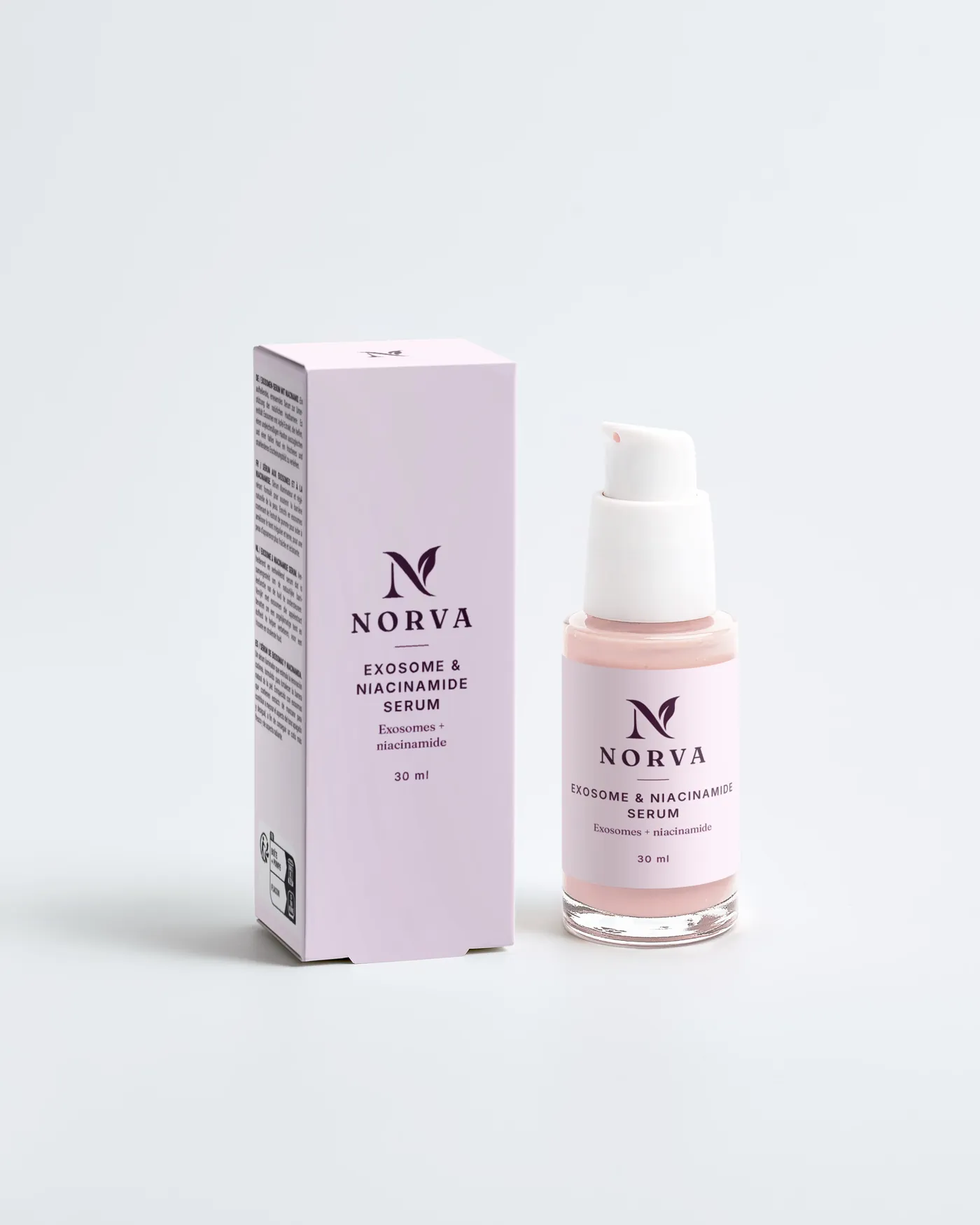
A niacinamide serum sits underneath your moisturiser and is easiest to layer with other actives, such as vitamin C or hyaluronic acid, because you control the amount and order. Norva's Exosome & Niacinamide Serum is this kind of lightweight, layerable step; see our niacinamide serum strength guide for how concentration is usually tested, and how to use a niacinamide serum for application order.
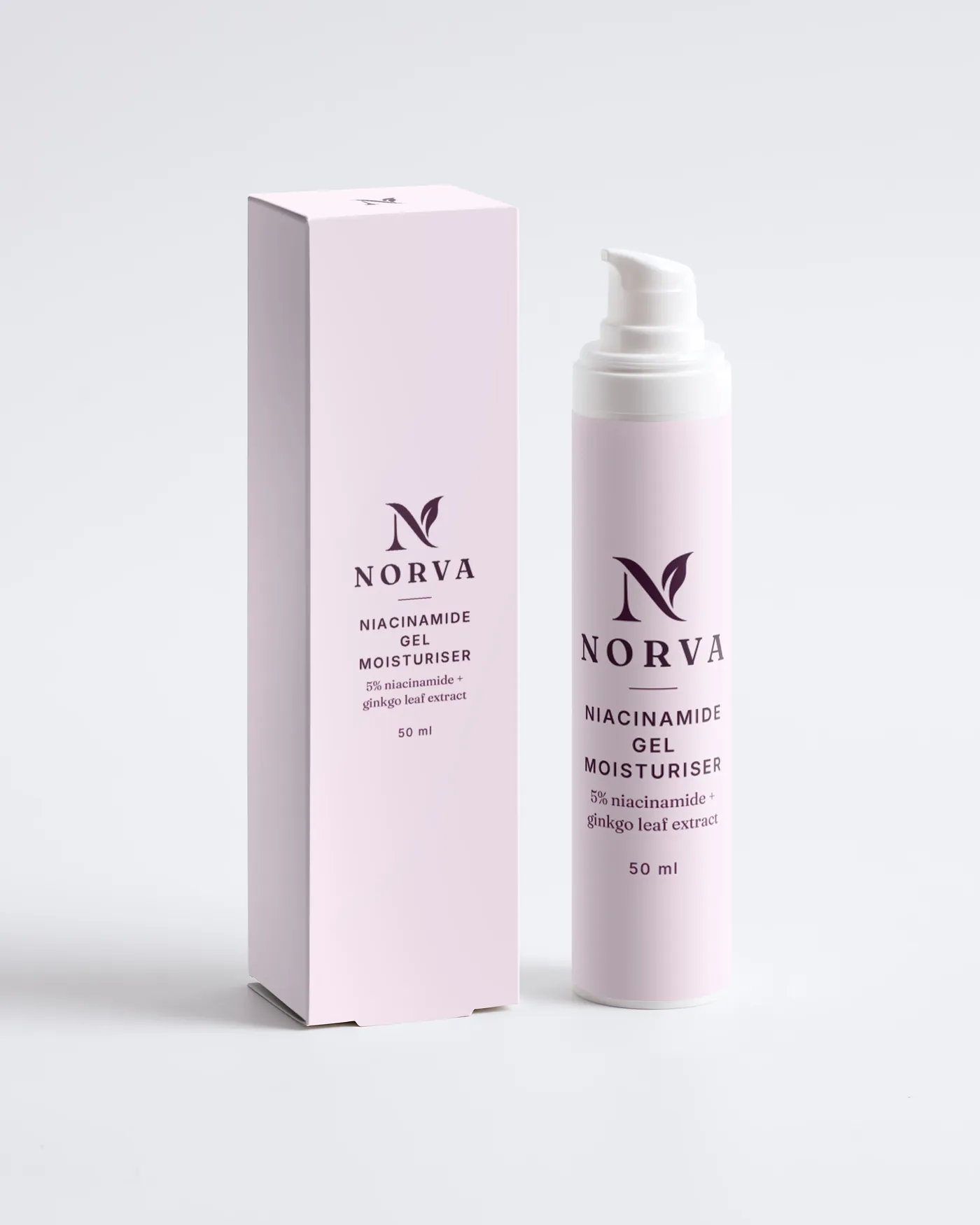
A niacinamide moisturiser combines the ingredient with the hydration step itself, which suits people who want fewer steps in their routine. Norva's Niacinamide Gel Moisturiser is formulated this way. If you're comparing named niacinamide serums specifically, including Norva's alongside other UK brands, see our niacinamide serum comparison.
Neither format is objectively better; it depends on how many steps you want in your routine and whether you're layering niacinamide with other actives or using it as your main hydrator.
Cleveland Clinic notes that "most skin care products contain 5% or less niacinamide, but amounts can vary." A clearly stated percentage, rather than just "with niacinamide" on the front of pack, is a reasonable first filter. Beyond concentration, check:
Start by patch testing a new product, and introduce it on its own for the first week or two before adding other actives. If you have reactive or eczema-prone skin, introducing one new product at a time makes it easier to identify what is causing any reaction, rather than starting several actives together. Give the product the 4 to 12 week window that Healthline notes most of the available research covers before deciding it isn't working, and drop back to every other day if you notice tightness or redness.
Norva is a UK and EU online skincare brand, made and shipped from our EU partner lab, with single products priced £20 to £34 and most lines available on subscribe and save that you can pause, skip or cancel at any time. If you're not sure whether a serum or a moisturiser fits your current routine, the skincare quiz points you toward a routine based on your main goal, and the serums collection and moisturisers collection let you compare formats and other key actives side by side.
This article is for general information and is not medical advice. Skincare products are not medical treatments. If symptoms persist or worsen, speak with a GP or dermatologist.
Neither is universally better. A serum layers more easily with other actives like vitamin C or hyaluronic acid because you control the order and amount, while a moisturiser combines niacinamide with hydration in one step, which suits a simpler routine. Choose based on how many steps you want and what else you're using.
Cleveland Clinic notes that most skin care products contain 5% or less niacinamide, but amounts can vary, so a clearly labelled percentage is a reasonable starting filter rather than just a front of pack claim. Source: https://health.clevelandclinic.org/niacinamide
Healthline notes that most of the available research looked at niacinamide use for around 4 to 12 weeks, with no exact timeline for results. Judge a product over several weeks of consistent use rather than a few days. Source: https://www.healthline.com/health/beauty-skin-care/niacinamide
Niacinamide is commonly paired with these actives, but how you layer them affects comfort and results. See our dedicated guides on niacinamide and vitamin C, and niacinamide and salicylic acid, for application order and timing.
Niacinamide products are available in fragrance-free formulas for anyone who prefers to avoid added fragrance. A patch test and introducing it on its own before adding other actives can help you identify what suits your skin.
How to use niacinamide serum: morning or night, how much to apply, how to patch test, and what to expect at two, four and twelve weeks, based on the trials.
Niacinamide serum benefits, graded by evidence: tone, dark spots, fine lines, oil, redness and barrier. What the trials show, what they do not, and for whom.
Should you buy 5%, 10% or 20% niacinamide serum? We read the published trials to see which strengths were actually tested, and what happens above 5%.
Niacinamide and hyaluronic acid work well together. What each does, one bottle or two, the order to layer them, and which of our products contain both.
Can you use niacinamide and vitamin C together? Yes. Where the flushing myth came from, which order to apply them, and how to split them morning and night.
Can you use niacinamide and salicylic acid together? Usually, yes. What each does, which is better for your skin, how to layer them, and when to see a GP.
Which is the best niacinamide serum in the UK? The Ordinary 10% + Zinc, The INKEY List 10% and our own, compared on price and stated strength, checked today.
What a niacinamide body serum can do for tone and dry skin on the body, what the evidence covers, how to use one, and why we sell a body cream instead.