Loading…
Comparison
Best Niacinamide Serum UK 2026: The Ordinary, INKEY and Norva
13 min read
Verdict: For most people who simply want niacinamide, The Ordinary Niacinamide 10% + Zinc 1% is the sensible buy: a stated 10% for £5, and nothing we sell competes with that on price. The INKEY List 10% Niacinamide Serum, at £12, is the pick if you want the same stated strength in a fragrance-free formula with hyaluronic acid. Our Exosome & Niacinamide Serum is £30 and does not publish its niacinamide percentage, so it loses on both price and disclosure. It is the choice only if you want a fragrance-free, creamier serum that combines niacinamide with ferments, lactic acid and centella for sensitive skin.
| Feature | The Ordinary Niacinamide 10% + Zinc 1% | Norva Exosome & Niacinamide Serum |
|---|---|---|
| Price for 30 ml (checked 30 September 2026) | £5.00, on offer at £4.50 | £30, or £27 a month on subscription |
| Niacinamide strength | 10%, stated | Not published |
| Other named ingredients | 1% zinc PCA | Apple-derived exosomes, lactobacillus ferment, lactic acid, centella asiatica, hyaluronic acid |
| Fragrance | None in the ingredient list | Fragrance-free |
| Texture | Water-based serum, stated oil-free | Emulsion serum with jojoba oil |
| Skin type | All skin types | All skin types, including sensitive |
| Made in | Not checked on the product page | EU |
We sell a serum with niacinamide in it, so a page from us about the best niacinamide serum in the UK needs to come with a warning. We have a horse in this race, and it is not the favourite. What we have done is open each competitor's own UK product page today, write down only the price and the percentages listed there, and give the verdict we would give a friend.
Which is the best niacinamide serum in the UK?
For most people, the best niacinamide serum in the UK is The Ordinary Niacinamide 10% + Zinc 1%. It states its strength, it has a short ingredient list, and it was £5 for 30 ml when we checked on 30 September 2026. If you want the same stated 10% in a fragrance-free formula with hyaluronic acid, The INKEY List 10% Niacinamide Serum was £12. Ours, the Exosome & Niacinamide Serum, is £30 and does not publish a niacinamide percentage, so on price and disclosure it comes third. It suits a narrower buyer: sensitive skin that wants a fragrance-free, creamier serum with niacinamide as one ingredient among several.
That is the short answer. The reasoning, and the details we checked, are below.
How we chose and checked these three
We picked two competitors that are sold widely in the UK and publish full ingredient lists and stated strengths. We fetched each brand's own UK product page on 30 September 2026 and recorded the price, size, stated percentages and ingredients shown there. We did not use retailer listings, because their prices move independently, and we have not repeated any claim we could not see on the page. Prices will drift, so treat every figure as a snapshot of one day.
There is no ranking on "results" here. Nobody has run a head-to-head trial of these three, and we are not going to pretend our opinion is one.
What the research says a niacinamide serum can do
It helps to know what you are buying before comparing bottles.
Niacinamide is vitamin B3. The human studies behind it are better than for most cosmetic ingredients, and they used moderate strengths.
Tone and fine lines. Fifty women with signs of facial photoageing applied 5% niacinamide to one half of the face and a plain vehicle to the other, twice a day for 12 weeks, in a double-blind design. The niacinamide side showed significant reductions in fine lines and wrinkles, hyperpigmented spots, red blotchiness and sallowness, and improved elasticity (Bissett, Oblong and Berge, 2005).
Dark spots. In a paired trial, 18 people with hyperpigmentation used a 5% niacinamide moisturiser against a vehicle moisturiser, and niacinamide significantly decreased hyperpigmentation and increased skin lightness after four weeks. A second part of the study used 2% with sunscreen in 120 people (Hakozaki and colleagues, 2002).
Oil. A 2% niacinamide moisturiser significantly lowered sebum excretion rate after two and four weeks in a placebo-controlled study of 100 Japanese participants. In a smaller group of 30 Caucasian participants the picture was mixed: casual sebum levels fell after six weeks but the excretion rate did not change significantly (Draelos, Matsubara and Smiles, 2006).
Barrier. In laboratory work on skin cells, niacinamide increased ceramide production, and applied to dry skin it reduced water loss through the skin (Tanno and colleagues, 2000).
Tolerance. A safety review reports no stinging in clinical testing at up to 10% and no irritation in use tests at up to 5% (Cosmetic Ingredient Review, 2005).
Notice the numbers: 2% and 5%. Several of those studies were run by companies that sell niacinamide products, which is normal in this field; our guide to reading small skincare trials explains how to weigh that. The question of whether 10% does more than 5% is a separate topic, and we cover it fully in niacinamide at 5%, 10% or 20%. For this page, the point is only that all three serums below are built on an ingredient with real evidence, and that a higher number on the label is not proof of a better result.
The Ordinary Niacinamide 10% + Zinc 1%
Price checked 30 September 2026: £5.00 for 30 ml, on offer at £4.50 on the day we looked. A 60 ml size is also listed.
Stated percentages: 10% niacinamide and 1% zinc PCA.
What else the page says. It is a water-based serum with a stated pH of 5.00 to 6.50, listed as alcohol-free, oil-free, silicone-free and vegan, for all skin types, to be applied morning and evening. The page says it targets signs of congestion, dryness, dullness, textural irregularities and visible shine. It describes the product as non-comedogenic in a clinical study of 35 subjects who applied it twice a day for eight weeks. The ingredient list has eleven entries, starting with water, niacinamide, pentylene glycol and zinc PCA, and contains no fragrance. The page also lists vitamin C products under "do not use with".
Our take. This is the one to beat, and we cannot beat it. A stated 10% of a well-studied ingredient for a fiver is extraordinary value, and the formula is about as simple as a serum gets. If you have oily or combination skin and want to find out whether niacinamide does anything for you, start here.
Where it may not suit: a thin water serum with no oils does nothing for dryness by itself, so drier skin will need a good moisturiser over it. Some people find 10% tingles or flushes, and if that is you, a lower strength is the fix, not a different brand at the same strength. We have not tested the product ourselves, and everything above is from The Ordinary's own page.
The INKEY List 10% Niacinamide Serum
Price checked 30 September 2026: £12.00 for 30 ml.
Stated percentages: 10% niacinamide and 1% hyaluronic acid.
What else the page says. It is described as fragrance-free and suitable for all skin types, sensitive skin, and pregnancy and breastfeeding. The page says it visibly reduces excess oil, blemishes and enlarged pores. Directions are morning and evening after cleansing, a pea-sized amount for face and neck, followed by moisturiser and then SPF in the morning. The ingredient list starts with water, niacinamide, glycerin and propanediol, and further down includes squalane, panthenol, allantoin and phospholipids.
Our take. Same headline strength as The Ordinary at a bit over twice the price, with more in the base to make it comfortable: hyaluronic acid, glycerin, squalane and panthenol. If the plain water serum leaves your skin wanting, this is the natural step up, and "fragrance-free" is stated outright on the page. At £12 it is still less than half the price of ours.
The blemish and pore claims are INKEY's and we are reporting them as such. We have not seen the studies behind them.
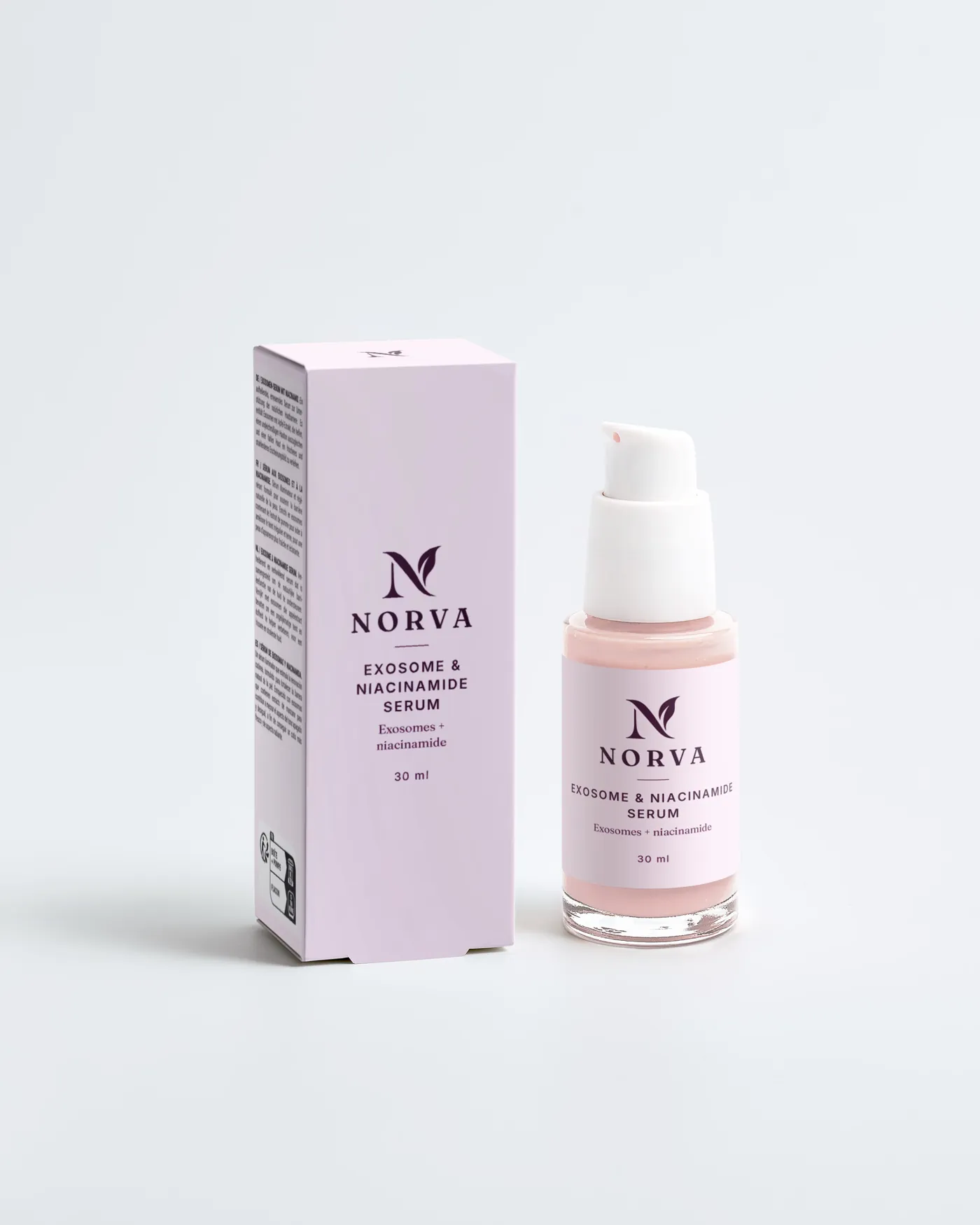
Norva Exosome & Niacinamide Serum
Price: £30 for 30 ml. On a subscription, £27 every 30 days for one bottle (10% off), £51 every 60 days for two (15% off), or £72 every 90 days for three (20% off).
Stated percentages: none for niacinamide. We do not publish it. Niacinamide is eighth in the ingredient list, after water, the emollient base and the glycols, and ahead of the jojoba oil and extracts.
What is in it. Niacinamide, apple-derived exosomes, a lactobacillus ferment, lactic acid, centella asiatica leaf extract and two forms of hyaluronic acid, in an emulsion base with jojoba oil and phospholipids. It is fragrance-free and vegan, made in the EU, for all skin types including sensitive.
Our take, trying to be fair. This is a different kind of product from the other two. They are single-active serums: niacinamide, stated, in a simple base. Ours is a glow serum for dullness and uneven tone in which niacinamide is one of several ingredients, in a creamier texture.
The case for it: it is fragrance-free, it is made with sensitive skin in mind, and it has some oil in the base, so drier skin does not feel stripped. If 10% niacinamide has made your face flush in the past, a formula that is not chasing a high number may simply be more comfortable.
Against it, the case is plain. We do not tell you the percentage, and both competitors do. We cost six times what The Ordinary does. "Exosomes" is a fashionable word, and we are not going to make claims for it here that we cannot cite. And the formula contains lactic acid, a mild exfoliating acid, which most people will not notice but which is worth knowing if your skin is over-exfoliated already.
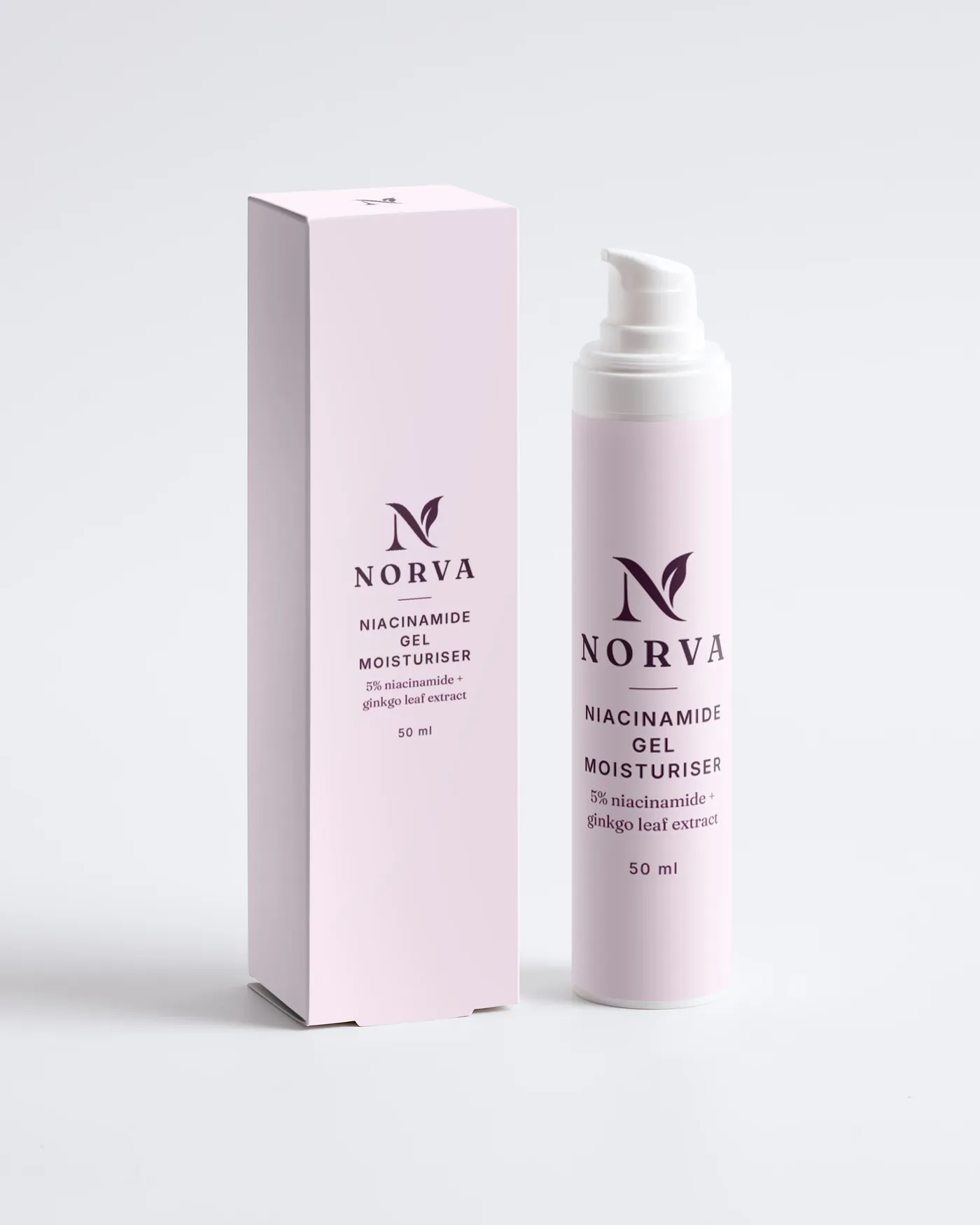
If a stated niacinamide percentage from us is what you want, it is on a different product: our Niacinamide Gel Moisturiser is £28 for 50 ml with a stated 5%, the strength used in the tone and fine-line trials above. It is a moisturiser, not a serum, and unlike the serum it is fragranced and lists alcohol second in its ingredients.
Side by side: all three
| | The Ordinary Niacinamide 10% + Zinc 1% | The INKEY List 10% Niacinamide Serum | Norva Exosome & Niacinamide Serum | |---|---|---|---| | Price, 30 ml (30 Sep 2026) | £5.00 (offer £4.50) | £12.00 | £30 (£27 on monthly plan) | | Niacinamide | 10%, stated | 10%, stated | Not published | | Other stated percentages | 1% zinc PCA | 1% hyaluronic acid | None | | Fragrance | None listed | Fragrance-free (stated) | Fragrance-free | | Base | Water-based, oil-free | Water-based with squalane and panthenol | Emulsion with jojoba oil | | Exfoliating acid in formula | No | No | Lactic acid | | Skin type, as stated | All | All, sensitive | All, including sensitive | | Subscription | Not on page | Not on page | 10% to 20% off |
Why the highest percentage is not automatically the best
It would be easy to rank these by the number on the front. Two say 10% and one says nothing, so the two win. On disclosure, that is right, and we have said so.
On results it is less clear. The trials that showed niacinamide improving tone, spots and fine lines used 5%. The oil study used 2%. We are not aware of a published trial showing 10% does more than 5% for any of those, and the safety review's use tests went up to 5%. So a 10% serum is not twice as effective as a 5% one as far as anyone has shown. It is a higher dose of something that already worked at a lower one.
For choosing, that means this. If your skin is happy at 10%, there is no reason to avoid it, and at £5 there is every reason to try it. If 10% makes you flush or tingle, you have lost nothing by dropping down. A lower-strength product you use twice a day for twelve weeks will do more than a stronger one you give up on.
Who should buy which
Buy The Ordinary if: you want niacinamide at a stated strength for the least money, your skin is oily or combination, or you are trying the ingredient for the first time. This is most people.
Buy The INKEY List if: you want a stated 10% and a bit more comfort in the base, you want "fragrance-free" stated on the page, and £12 is fine.
Buy ours if: your skin is sensitive or on the dry side, you want a fragrance-free serum with a creamier feel, you like the idea of niacinamide alongside ferments and centella, and you are comfortable not knowing the exact percentage. Be honest with yourself about that last part. If it bothers you, buy one of the other two.
Buy our gel moisturiser instead if: you want a stated 5% from us and would rather have it in your moisturiser than add a serum.
Buy none of them if: you are hoping to treat acne, rosacea or melasma. Those are medical conditions, and a GP or dermatologist is the right starting point. These are cosmetics that help skin look more even and feel more comfortable.
How to use any of them
Morning and evening on clean skin, before moisturiser. A few drops or a pea-sized amount is enough.
Follow each brand's own notes on layering. The Ordinary's page lists vitamin C products under "do not use with" for its niacinamide serum, so if you own that one, use your vitamin C at a different time of day.
Give it twelve weeks before you judge. That is how long the main tone and fine-line trial ran. Take a photo in the same light at the start.
Wear sunscreen every morning. Any evening-out of tone will not hold without it.
Delivery, returns and the bundle
Ours is made to order and shipped from the EU, typically in 6 to 10 working days, which is slower than ordering from most UK retailers. Delivery is free in the UK and EU on orders over £55, so a single £30 serum does not qualify by itself. Unused items can be returned within 30 days.
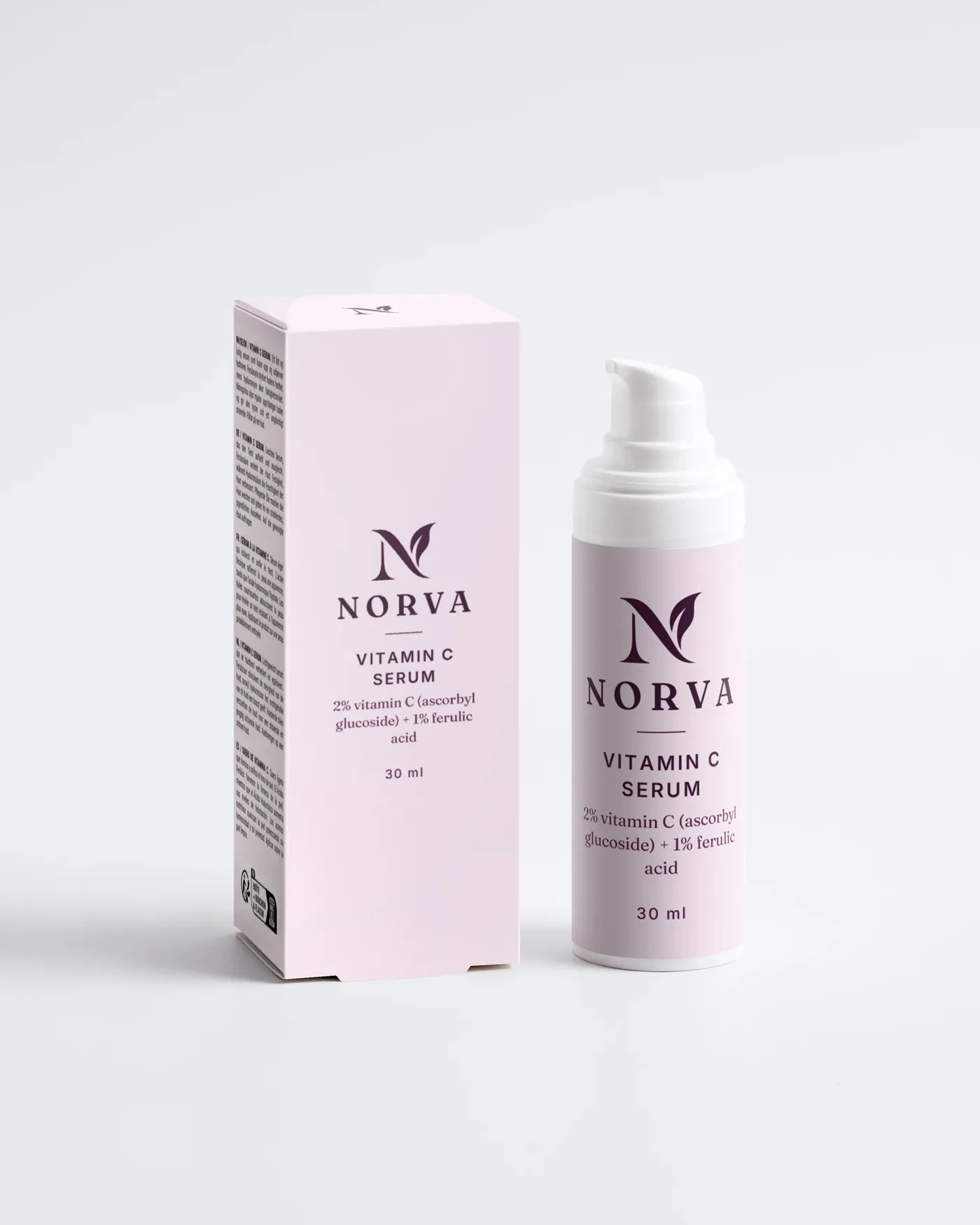
The serum also comes with our Vitamin C Serum as The Glow Duo for £51, which is £9 less than the two bought separately. The Vitamin C Serum is fragranced, so the duo as a whole is not fragrance-free.
What we could not check
We did not buy or lab-test the competitors' serums. The percentages are the brands' own statements, and so are ours where we make them. We could not see the studies behind The Ordinary's non-comedogenic statement or INKEY's claims on oil and pores, so we have reported them as the brands' claims. We did not record where either competitor's product is made, because we did not find it stated on the pages we read.
The same limit applies to us. We have not run a trial on our finished serum, and the studies cited on this page are about niacinamide as an ingredient, at strengths we cannot confirm for our own bottle because we do not publish the figure. That is a real gap, and it is the main reason ours is not the top pick on this page.
If you want to know whether "fragrance-free" on a label means what you think it means, our piece on fragrance-free versus unscented is worth two minutes.
Who this page is not for
Anyone wanting a lab-verified ranking will not find one here; it is a comparison of what three brands state about their own products on one day. If you are looking for the strongest possible niacinamide, 20% serums exist and none of these is one. And if you have a diagnosed skin condition, none of these serums is a treatment for it.
The short version
The Ordinary Niacinamide 10% + Zinc 1% is the best niacinamide serum for most people in the UK: stated strength, simple formula, £5. The INKEY List's is a more cushioned, fragrance-free 10% at £12. Our Exosome & Niacinamide Serum is £30, fragrance-free, creamier, and does not state its percentage, so choose it for the texture and the sensitive-skin formula, not for the number. Whichever you buy, patch test on the inner arm for 24 hours, use it twice a day, and give it twelve weeks.
Sources
- 1.The Ordinary Niacinamide 10% + Zinc 1% — checked 30 September 2026
- 2.The INKEY List 10% Niacinamide Serum — checked 30 September 2026
This page is for general information and does not constitute medical advice. Cold water immersion is not a medical treatment. Consult a professional if you have cardiovascular conditions. Competitor prices and policies were checked at the date shown above and may have changed since.
Gear for this
Related reading
Niacinamide Serum: 5%, 10% or 20%? What the Studies Used
Should you buy 5%, 10% or 20% niacinamide serum? We read the published trials to see which strengths were actually tested, and what happens above 5%.
Why a Small 28-Day Skincare Trial Is Weak Evidence: A Worked Example
A 49-person, 28-day study of a peptide cream reported dermatologist-assessed improvements. Using it as a case study in how to read the clinical claims on any product page.
Fragrance-Free, Unscented and Clean: Reading a Vegan Serum's Ingredient List
The difference between fragrance-free and unscented, what vegan and clean do and do not guarantee, and how to read an INCI list without a chemistry degree.