Loading…
Guide
Niacinamide and Hyaluronic Acid: How to Use Them Together
11 min read
Niacinamide and hyaluronic acid is the pairing we would call boring, and we mean that kindly. There is no myth to bust, no pH clash, no timing rule. People still ask how to use niacinamide and hyaluronic acid together, mostly because they have one serum of each and are not sure which goes first, or because they have a niacinamide serum with hyaluronic acid already in it and wonder whether they need a second bottle. This page answers both.
Can you use niacinamide and hyaluronic acid together?
Yes, and easily. Hyaluronic acid is a humectant: it holds water in the top layer of skin, so skin looks plumper and feels less tight. Niacinamide is a form of vitamin B3 that helps skin make more of its own barrier lipids and helps the look of uneven tone. Neither is a strong acid, and there is no known interaction between them. Put the thinner product on first, moisturiser after, sunscreen last in the morning. If a single serum contains both, that is one step, not two.
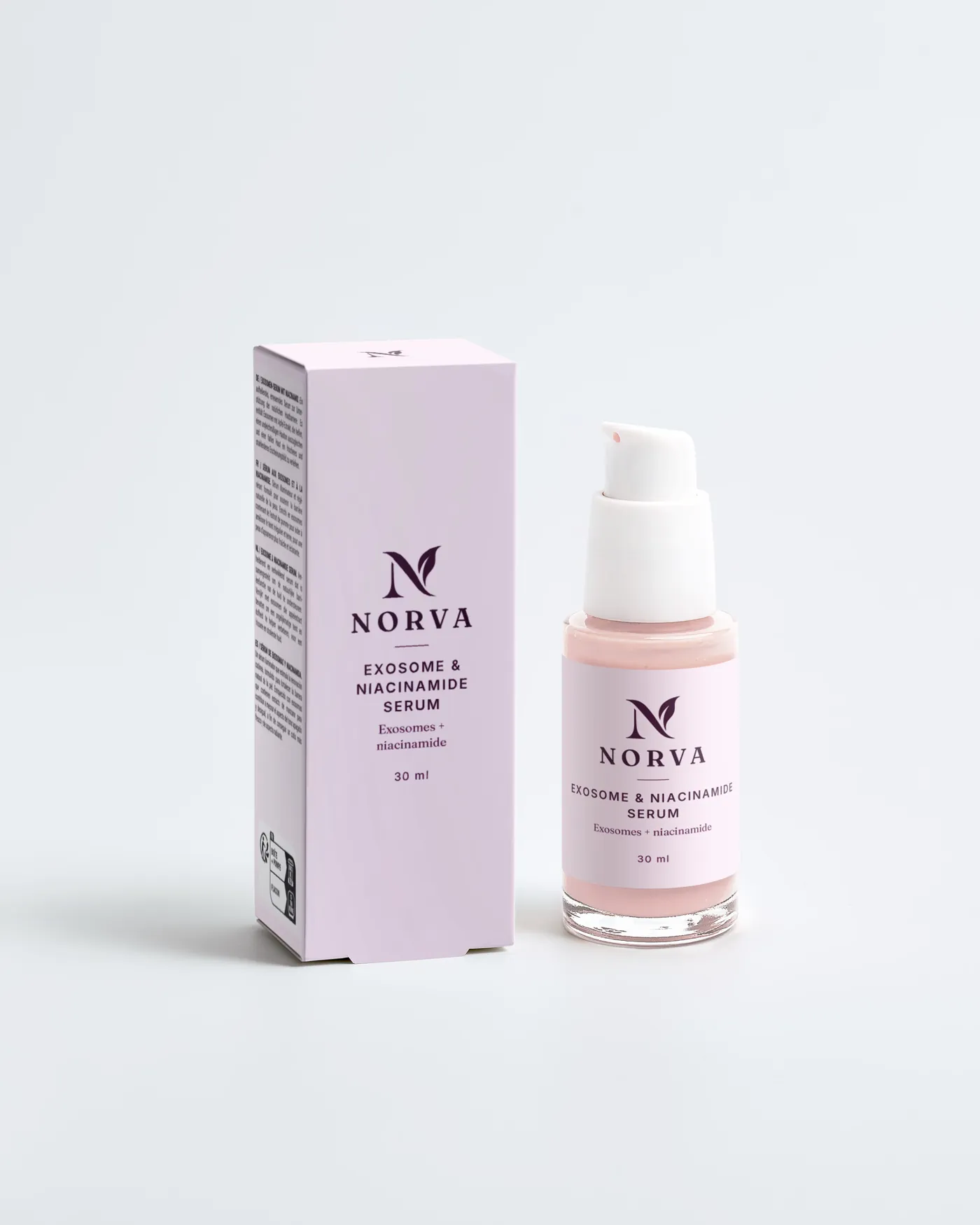
Our Exosome & Niacinamide Serum (£30, 30 ml, fragrance-free) is one of those single serums: niacinamide with two forms of hyaluronic acid in the same bottle. More on that further down.
What hyaluronic acid does in a serum
Hyaluronic acid is a sugar-based molecule your own skin already makes. In a serum it acts as a water magnet on the surface. The best recent evidence is a study of 40 women aged 30 to 65 who used a hyaluronic acid serum twice a day with sunscreen for six weeks. Skin hydration, measured with a corneometer, rose by 134% straight after application and was still 55% above baseline at week six. The dermatologist grading the photos also saw improvements in smoothness, plumping and fine lines, and there was no sign of irritation (Draelos and colleagues, 2021). There was no placebo group, which is a real limitation, but the hydration numbers are instrument readings, not opinions.
The size of the molecule matters. In a trial of 76 women, creams with 0.1% hyaluronic acid at five different molecular weights were applied around one eye for 60 days, with a plain cream around the other. All of them improved hydration and elasticity compared with the plain cream, but only the two smallest sizes significantly reduced wrinkle depth, probably because smaller pieces get further into the skin (Pavicic and colleagues, 2011).
That is why you often see two hyaluronic ingredients on a label. Sodium hyaluronate is the larger form that sits on the surface and holds water there. Hydrolysed hyaluronic acid has been broken into smaller pieces. Most of our serums list both.
What hyaluronic acid does not do is add oil or seal water in. On its own it is a hydrator, not a moisturiser in the full sense, which is why a cream or lotion over the top still matters on dry skin.
What niacinamide does
Niacinamide works more slowly and more deeply. In a 12-week, split-face trial of 50 women, 5% niacinamide applied twice daily significantly reduced the look of fine lines, dark spots, red blotchiness and sallowness compared with the base cream on the other side (Bissett, Oblong and Berge, 2005).
The barrier side is the part that fits so neatly with hyaluronic acid. In cultured skin cells, nicotinamide increased ceramide production four- to five-and-a-half-fold, and applied to dry skin it raised ceramide and fatty acid levels in the outer layer and reduced water loss (Tanno and colleagues, 2000). In a left-right study of 28 people with atopic dry skin on both forearms, a 2% nicotinamide cream reduced water loss through the skin while plain petroleum jelly did not, and it raised hydration more than the petroleum jelly did (Soma and colleagues, 2005).
For the strengths used in those studies, and whether you need 10% or 20%, see niacinamide at 5%, 10% or 20%. The short answer is that the trials sit at 2% to 5%.
Why the two work well together
Think of it as two timescales.
Hyaluronic acid works in minutes. It draws water to the surface, and your skin looks and feels better the same morning. It does not change how your skin behaves next week.
Niacinamide works in weeks. It nudges your skin to make more of the lipids that stop water escaping in the first place. That is slower and you will not feel it on day one.
Put together, one gives you comfort now and the other supports the barrier that keeps that comfort. There is also a practical reason. Niacinamide at higher strengths can tingle on some people, and a well-hydrated surface tends to feel calmer. We would not claim hyaluronic acid prevents irritation, because we have not seen a study showing that, but the pairing is comfortable in practice, which is why so many brands put them in one bottle.
Glycerin often turns up alongside both and deserves a mention. It is a humectant too, and a review in the British Journal of Dermatology describes it improving hydration and barrier function and protecting against irritating stimuli (Fluhr, Darlenski and Surber, 2008). Our Exosome & Niacinamide Serum has glycerin third in its list.
One bottle or two?
One bottle if you want a short routine. A niacinamide serum that also lists sodium hyaluronate or hydrolysed hyaluronic acid covers both jobs in one step. Most people do not need more.
Two bottles if you want to control each part. Maybe your skin is very dehydrated and you want a dedicated hyaluronic serum morning and night, but only want niacinamide once a day. Or you already own a hyaluronic serum you like and just want to add niacinamide.
Signs you need a separate hyaluronic step: skin still feels tight an hour after your routine, fine dehydration lines look worse by afternoon, or you live and work somewhere with central heating and dry air. Try the single serum for a few weeks first.
Signs you do not: your skin feels comfortable after your moisturiser. Adding a second humectant layer to comfortable skin is spending money on a feeling you already have.
How to layer niacinamide and hyaluronic acid
- Cleanse, and leave skin slightly damp. Humectants like a little water to hold onto.
- Hyaluronic acid serum first if it is the thinner, more watery product.
- Niacinamide serum next.
- Moisturiser. This is what keeps the water hyaluronic acid pulled in from simply evaporating.
- Sunscreen, morning only, last.
If your niacinamide serum is the thinner one, flip steps 2 and 3. The rule is thinnest to thickest, not a fixed order of ingredients. Our longer piece on how to apply serums and in what order covers three- and four-serum routines.
Both can be used morning and night. The niacinamide trial and the hyaluronic serum study both applied twice daily. If you use a retinoid or an acid at night, you can keep niacinamide and hyaluronic acid in the morning and let the evening be about the other active. For how much to apply and when, see how to use niacinamide serum.
If you are also using a peptide serum, we wrote a separate page on peptides and hyaluronic acid; the same thinnest-first rule applies.
What to check on the label
- Where niacinamide sits in the list. UK labelling rules require ingredients above 1% to be listed in descending order of amount (Cosmetics Regulation, Article 19). If niacinamide is near the end, it is a small amount.
- Which hyaluronic forms are there. Sodium hyaluronate, hydrolysed hyaluronic acid, or both.
- Fragrance. Parfum, aroma, essential oils, and allergens like linalool and limonene. Irrelevant for some people, a deal-breaker for others.
- Alcohol near the top. Listed as alcohol or alcohol denat. It can make a serum feel light and quick-drying, and it can sting dry or irritated skin.
- Exfoliating acids. Lactic, glycolic or salicylic acid in a "hydrating" serum is worth spotting if your skin is already sensitised.
What we sell with niacinamide, hyaluronic acid, or both
Here is our range as it relates to this pairing, including the parts that do not flatter us.
Exosome & Niacinamide Serum, £30 for 30 ml. Both ingredients in one bottle: niacinamide, sodium hyaluronate and hydrolysed hyaluronic acid, plus apple-derived exosomes, a lactobacillus ferment, centella asiatica and a little lactic acid, in a creamy base with jojoba oil. Fragrance-free, vegan, for all skin types including sensitive. We do not publish the niacinamide percentage, so we will not quote one; niacinamide is eighth on the ingredient list. The lactic acid is a mild exfoliating acid, worth knowing if your skin is currently over-exfoliated. This is the product this page points to.
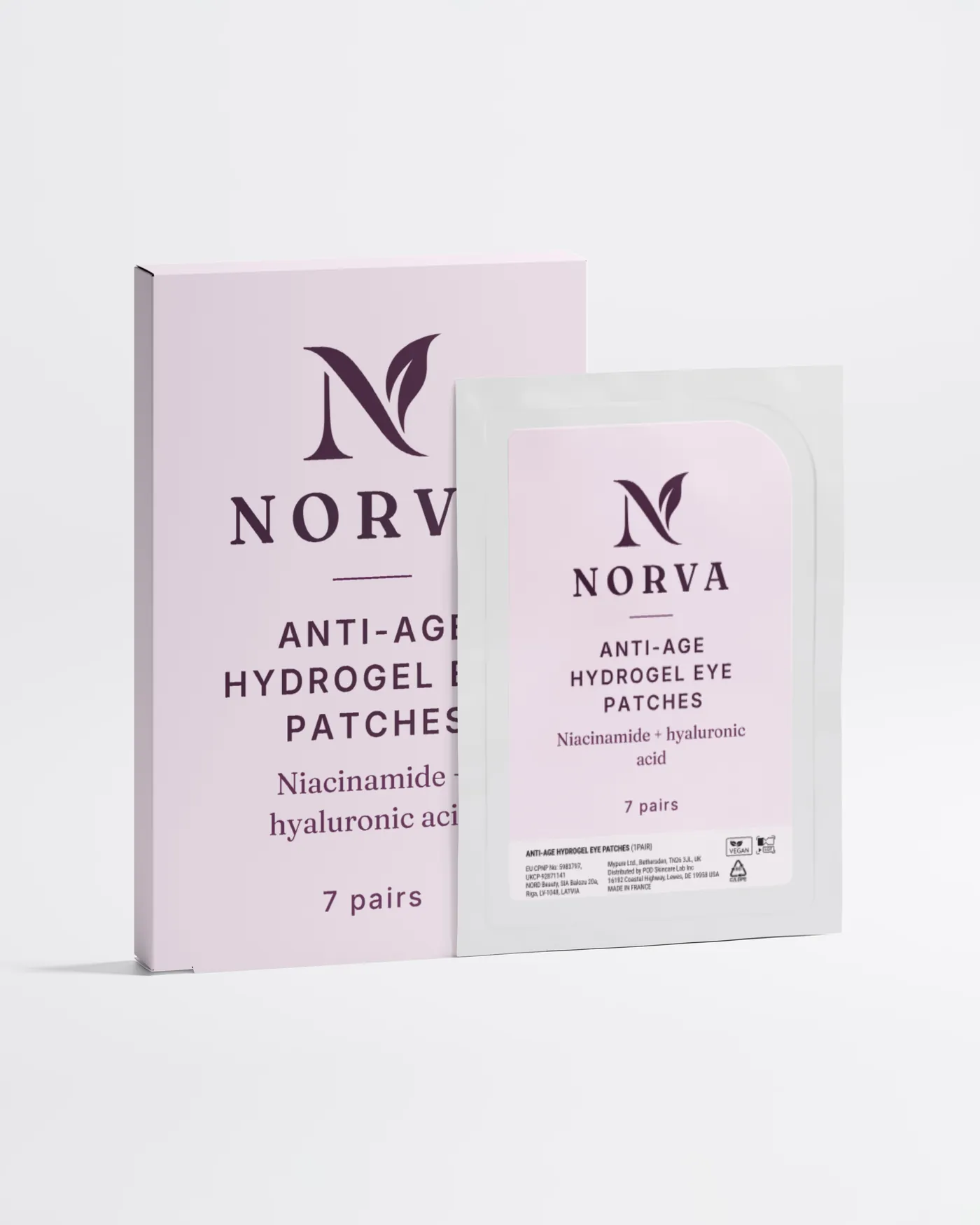
Anti-Age Hydrogel Eye Patches, £26 for 7 pairs. Niacinamide and hyaluronic acid again, with aloe juice and panthenol, in cooling hydrogel patches you leave under the eyes for 15 minutes. Fragrance-free and dermatologically tested. A small treat rather than a daily routine step.
Hydrating Serum, £30 for 30 ml. Hyaluronic acid with aloe juice, jojoba oil, rose flower water and bisabolol. No niacinamide. It is fragranced (soft cotton and flowers), and its ingredient list includes fragrance allergens such as limonene, geraniol, coumarin and linalool. If you want a separate hyaluronic step and fragrance does not bother you, this pairs with the niacinamide serum. It also comes with our Hydrating Toner as The Hydration Duo for £45, £7 less than separately.
Hyaluronic Boost Serum, £30 for 30 ml. Hyaluronic acid, sodium PCA and sunflower oil, for dry, dehydrated and mature skin. No niacinamide, and fragranced (powdery iris and violet).
Niacinamide Gel Moisturiser, £28 for 50 ml. A stated 5% niacinamide with ginkgo leaf extract. It does not list hyaluronic acid, it lists alcohol second, and it is fragranced. It works as the moisturiser step over a hyaluronic serum, but it is not the gentlest option for reactive skin.
So if you want niacinamide and hyaluronic acid together without fragrance, the Exosome & Niacinamide Serum is our answer, with a plain fragrance-free moisturiser such as our Sensitive Skin Moisturiser (£32) over it.
Everything is made in the EU, made to order and shipped in typically 6 to 10 working days, with free UK and EU delivery over £55 and 30-day returns on unused items. The serums can be put on subscription at 10% off every 30 days, 15% off two every 60 days, or 20% off three every 90 days. Patch test anything new on the inner arm for 24 hours first.
What to expect, and when
Same day: hyaluronic acid makes skin feel softer and look a touch plumper. That is the humectant working.
Two to six weeks: in the hyaluronic serum study, hydration was still raised at week six, alongside visible smoothness (Draelos and colleagues, 2021).
Twelve weeks: the niacinamide tone and fine-line results were measured at twelve weeks of twice-daily use (Bissett, Oblong and Berge, 2005). Photograph your face in the same light on day one.
Tolerance is generally good. The cosmetic safety review of niacinamide found no stinging in clinical testing at up to 10% and no irritation in use tests at up to 5% (Cosmetic Ingredient Review, 2005). If you do get lasting redness or burning, stop, and try each product alone to find the one responsible.
Mistakes we see
Hyaluronic acid on bone-dry skin, nothing on top. It pulls water from wherever it can. Apply to damp skin and seal with a moisturiser.
Three hydrating serums in a row. A hyaluronic serum, a niacinamide serum with hyaluronic acid and a hyaluronic toner is a lot of product doing the same job. Pick one hyaluronic source.
Chasing a higher niacinamide percentage. If your niacinamide serum tingles, drop the strength rather than adding more hyaluronic acid to calm it.
Judging at week two. Hydration shows up quickly, tone does not.
Who this is not for
If your skin is comfortable and you already use a moisturiser you like, you may not need a hyaluronic step at all. If you are looking for a stated niacinamide percentage from us, our serum does not publish one; the gel moisturiser states 5% but is fragranced and contains alcohol. If you want the cheapest niacinamide and hyaluronic serum available, several high-street brands will undercut our £30, and we compared some of them in best niacinamide serums in the UK. And if your dryness comes with cracking, weeping or intense itching, that may be eczema, and a GP or pharmacist is the right first stop.
The short version
Niacinamide and hyaluronic acid are an easy pair: hyaluronic acid hydrates the surface in minutes, niacinamide supports the barrier over weeks, and there is no conflict between them. Apply the thinner serum first on damp skin, moisturiser after, sunscreen in the morning. If you want both in one fragrance-free bottle, our Exosome & Niacinamide Serum is £30 for 30 ml.
References
- 1.Draelos et al. (2021). Efficacy Evaluation of a Topical Hyaluronic Acid Serum in Facial Photoaging. Dermatology and Therapy.
- 2.Pavicic et al. (2011). Efficacy of cream-based novel formulations of hyaluronic acid of different molecular weights in anti-wrinkle treatment. Journal of Drugs in Dermatology.
- 3.Bissett, Oblong and Berge (2005). Niacinamide: a B vitamin that improves aging facial skin appearance. Dermatologic Surgery.
- 4.Tanno et al. (2000). Nicotinamide increases biosynthesis of ceramides as well as other stratum corneum lipids to improve the epidermal permeability barrier. British Journal of Dermatology.
- 5.Soma et al. (2005). Moisturizing effects of topical nicotinamide on atopic dry skin. International Journal of Dermatology.
- 6.Fluhr, Darlenski and Surber (2008). Glycerol and the skin: holistic approach to its origin and functions. British Journal of Dermatology.
- 7.Cosmetic Ingredient Review Expert Panel (2005). Final report of the safety assessment of niacinamide and niacin. International Journal of Toxicology.
- 8.Regulation (EC) No 1223/2009 on cosmetic products (as retained in UK law), Article 19: labelling.
Frequently asked questions
Can you use niacinamide and hyaluronic acid together?
Yes. They are one of the easiest pairings in skincare. Hyaluronic acid holds water in the top layer of skin; niacinamide helps skin make more of its own barrier lipids. Neither is strongly acidic and there is no known conflict between them. Many serums contain both.
Which goes first, niacinamide or hyaluronic acid?
Thinnest first. A watery hyaluronic acid serum usually goes on first, onto slightly damp skin, then niacinamide, then moisturiser. If one product contains both, you only have one step.
Can I use niacinamide and hyaluronic acid morning and night?
Yes. The main niacinamide trial applied it twice daily for 12 weeks, and the hyaluronic acid serum study also used twice-daily application. In the morning, finish with sunscreen.
Do I need hyaluronic acid if my niacinamide serum already has it?
Usually not. If your niacinamide serum lists sodium hyaluronate or hydrolysed hyaluronic acid, adding a separate hyaluronic serum is optional. Add one only if your skin still feels tight or dehydrated after a few weeks.
Which Norva products contain niacinamide and hyaluronic acid?
The Exosome & Niacinamide Serum (£30, fragrance-free) and the Anti-Age Hydrogel Eye Patches (£26 for 7 pairs, fragrance-free). Our Hydrating Serum and Hyaluronic Boost Serum contain hyaluronic acid without niacinamide, and both are fragranced.
Gear for this
Related reading
Peptide Serum With Hyaluronic Acid: One Bottle or Two?
A peptide serum with hyaluronic acid does two jobs in one step. What each ingredient does, how to layer them if you buy separately, and what to check.
Beta-Glucan or Hyaluronic Acid: Choosing a Hydrator for Sensitive Skin
How beta-glucan and hyaluronic acid differ as humectants, which situations tend to suit each, and why the answer often depends on your climate and your moisturiser.
Niacinamide Serum: 5%, 10% or 20%? What the Studies Used
Should you buy 5%, 10% or 20% niacinamide serum? We read the published trials to see which strengths were actually tested, and what happens above 5%.
How to Apply Your Skincare, and in What Order
Where each Norva product sits in a morning and evening routine, how to layer a serum under a cream without pilling, and the order for the Peptide Routine, the Barrier Reset Routine and Sensitive Skin Essentials.