Loading…
Science
Niacinamide Serum Benefits: What the Evidence Supports
10 min read
Niacinamide has a long list of claimed benefits, and most niacinamide serum pages repeat all of them with equal confidence. Brighter, smoother, less oily, smaller pores, calmer, firmer, stronger barrier. Some of that is well supported. Some of it is a stretch. We sell niacinamide, so we have every reason to repeat the whole list. We would rather grade it, so you know what you are actually paying for.
What are the benefits of niacinamide serum?
The best-supported benefits of niacinamide serum are a more even-looking skin tone with fewer visible dark spots, and a softer look to fine lines, red blotchiness and sallowness. Those come from controlled, split-face trials lasting twelve weeks. There is decent but smaller evidence that it reduces oiliness and supports the skin barrier, helping skin hold water. It is well tolerated by most skin, including sensitive skin at moderate strengths. The weakest claims are about pores and "firming". All of these are cosmetic effects on how skin looks and feels; niacinamide in a serum is not a treatment for acne, rosacea or melasma.
How we graded the evidence
We used three simple grades, and we are strict about them.
Good: at least one controlled trial on human faces, with a comparison (placebo, vehicle or the other side of the face), and ideally more than one.
Some: a smaller or less controlled human study, mixed results, or strong lab work with limited human confirmation.
Weak: little or no direct evidence, or evidence only for a related effect.
Most of the good-grade trials were run or funded by companies that sell niacinamide products. That is normal in cosmetics, and it does not make them wrong, but it is worth knowing. Our guide to reading small skincare trials explains how to weigh that.
Benefit 1: more even-looking tone and fewer visible dark spots (Good)
This is the headline benefit and the best evidenced.
In a paired trial, 18 people with hyperpigmentation used a 5% niacinamide moisturiser against a plain one. After four weeks, niacinamide significantly decreased hyperpigmentation and increased skin lightness compared with the plain moisturiser. A second arm with 120 people tested 2% niacinamide plus sunscreen on facial tanning. The same paper's lab work showed how: niacinamide cut the transfer of pigment from pigment cells to surrounding skin cells by 35% to 68% (Hakozaki and colleagues, 2002).
Two 12-week, split-face trials, each of 50 women with signs of sun ageing, found 5% niacinamide twice daily significantly reduced the look of hyperpigmented spots compared with the vehicle side (Bissett and colleagues, 2004; Bissett, Oblong and Berge, 2005).
There is also a trial in melasma, which is a medical condition. In 27 people, 4% niacinamide on one side of the face was compared with 4% hydroquinone, a prescription lightener, on the other, for eight weeks. Both improved. Niacinamide gave good-to-excellent results in 44% of patients against 55% for hydroquinone, with side effects in 18% versus 29% (Navarrete-Solis and colleagues, 2011). That is encouraging, but if you have melasma, a GP or dermatologist should plan the treatment.
What it means for you: a niacinamide serum can help dark spots and patchy tone look more even over weeks to months, provided you wear sunscreen every day.
Benefit 2: softer-looking fine lines, blotchiness and sallowness (Good)
The same two 12-week trials measured more than spots. In the 2005 study, the niacinamide side showed significant reductions in fine lines and wrinkles, red blotchiness and sallowness (the yellowish, tired look skin can take on), and improved elasticity measured by an instrument (Bissett, Oblong and Berge, 2005). The 2004 study found improvements in fine lines, texture and red blotchiness, and specifically in yellowing (Bissett and colleagues, 2004).
What it means for you: modest, gradual improvements in how lines and sallowness look, at twelve weeks, not overnight. Niacinamide is not a substitute for a retinoid if lines are your main concern, and nothing replaces sunscreen.
Benefit 3: less oiliness and shine (Some)
A 2% niacinamide moisturiser significantly lowered the rate of sebum production after two and four weeks in a placebo-controlled study of 100 Japanese participants. In a split-face study of 30 Caucasian participants, surface oil levels were significantly lower after six weeks, but the production rate did not change significantly (Draelos, Matsubara and Smiles, 2006).
That is a real effect with a mixed second result, which is why it gets "some" rather than "good". A 2025 consensus of 62 cosmetic dermatologists listed salicylic acid, retinoids and benzoyl peroxide for oily skin, and niacinamide for redness and dark spots (Alvarez and colleagues, 2025). If shine is your main problem, niacinamide is worth trying, and our page on niacinamide and salicylic acid covers pairing it with an oil-focused exfoliant.
Benefit 4: barrier support and hydration (Some)
In cultured human skin cells, nicotinamide increased ceramide production four- to five-and-a-half-fold, along with other barrier lipids. Applied to dry skin, it increased ceramides and free fatty acids in the outer layer and reduced water loss through the skin (Tanno and colleagues, 2000). A review in the Journal of Cosmetic Dermatology described topical niacinamide as having a stabilising effect on barrier function, with reduced water loss and better moisture in the outer layer (Gehring, 2004).
The best human study here is small. Twenty-eight people with dry, atopic skin applied 2% nicotinamide cream to one forearm and plain petroleum jelly to the other, twice daily for four or eight weeks. Nicotinamide significantly reduced water loss; the petroleum jelly did not. Both increased hydration, but nicotinamide more so (Soma and colleagues, 2005).
What it means for you: a sensible supporting ingredient for dry, tight or barrier-stressed skin, alongside a proper moisturiser. Not a replacement for one. If you are working on a damaged barrier, start with what skin barrier repair means.
Benefit 5: calmer-looking redness (Some)
Red blotchiness improved in both 12-week trials (Bissett and colleagues, 2004; Bissett, Oblong and Berge, 2005), and the 2025 dermatologist consensus listed niacinamide for redness (Alvarez and colleagues, 2025). Gehring's review notes anti-inflammatory effects in acne and rosacea (Gehring, 2004).
The catch: "red blotchiness" in an ageing-skin trial is not the same as rosacea, and high-strength niacinamide can itself cause flushing in some people. If your redness comes with burning, bumps or visible vessels, see a GP. The NHS advice is to see a GP if you have symptoms of rosacea, and it can get worse if it is not treated (NHS, rosacea).
Benefit 6: fewer breakouts (Weak, as a cosmetic claim)
There is a genuine trial here, but it was a medical one. In 76 people with moderate inflammatory acne, a 4% nicotinamide gel twice daily for eight weeks performed comparably to 1% clindamycin gel, an antibiotic (Shalita and colleagues, 1995). That tells you the molecule has an effect on inflamed spots. It does not tell you a cosmetic niacinamide serum is an acne treatment, and we would not sell ours as one. For acne, the NHS route is a pharmacist first, then a GP if it is not improving.
Claims we would not rely on
Smaller pores. The trials we read did not measure pore size as a main outcome. Less oil can make pores look less obvious. That is as far as we would go.
Firming and collagen. Elasticity improved in one 12-week trial by instrument (Bissett, Oblong and Berge, 2005). That is not the same as "boosts collagen", which is a claim you will see on a lot of boxes.
Anything medical. Niacinamide tablets are used in some medical settings. A serum is a cosmetic.
Higher strength, more benefit. The trials above used 2% to 5%. We cover why 10% and 20% are not proven to do more in niacinamide at 5%, 10% or 20%.
Which benefit matters for which person
The same serum does different things for different faces, so it helps to know which benefit you are buying it for. That also tells you what to watch for, and when to judge it.
Uneven tone or dark spots after summer. This is where the evidence is strongest. Use it daily, wear sunscreen, and compare photos at four and twelve weeks.
Dull, sallow skin in your forties or fifties. The twelve-week trials were run on women with signs of sun ageing, so this is close to the tested group. Expect a gradual change in how fresh skin looks, not a transformation.
Oily T-zone, shiny by lunchtime. Worth a try, with a realistic expectation: one good study, one mixed. Give it a month.
Dry, tight skin that stings easily. Niacinamide can support the barrier, but your moisturiser matters more. Treat the serum as a helper.
Breakouts. A cosmetic serum is not your treatment. See a pharmacist, and use niacinamide alongside whatever they suggest if you like it.
Red cheeks that flush with heat or wine. Talk to a GP about rosacea before you buy anything.
Niacinamide for sensitive skin
This is the question our old sensitive-skin article tried to answer, so here is the evidence-only version.
Niacinamide is one of the better-tolerated actives. The cosmetic safety review found no stinging in clinical testing at up to 10%, no irritation in repeated-use tests at up to 5%, and that it was neither a sensitiser nor a photosensitiser (Cosmetic Ingredient Review, 2005). The 12-week trials described it as well tolerated.
Two practical points for sensitive skin. First, strength: flushing is more common with high-percentage serums, so stay low. Second, the rest of the bottle: fragrance, alcohol high in the list, and exfoliating acids are more likely to cause stinging than the niacinamide itself. Turn the bottle over and read the whole ingredient list.
Getting the benefits: the basics
- Apply to clean skin once or twice a day, before moisturiser. The main trials used twice daily.
- Wear sunscreen every morning, or the tone benefits will not hold.
- Give it twelve weeks. Photograph day one.
- Patch test on the inner arm for 24 hours before first use.
The full step-by-step, including how much to use and what to expect week by week, is in how to use niacinamide serum.
Our niacinamide serum
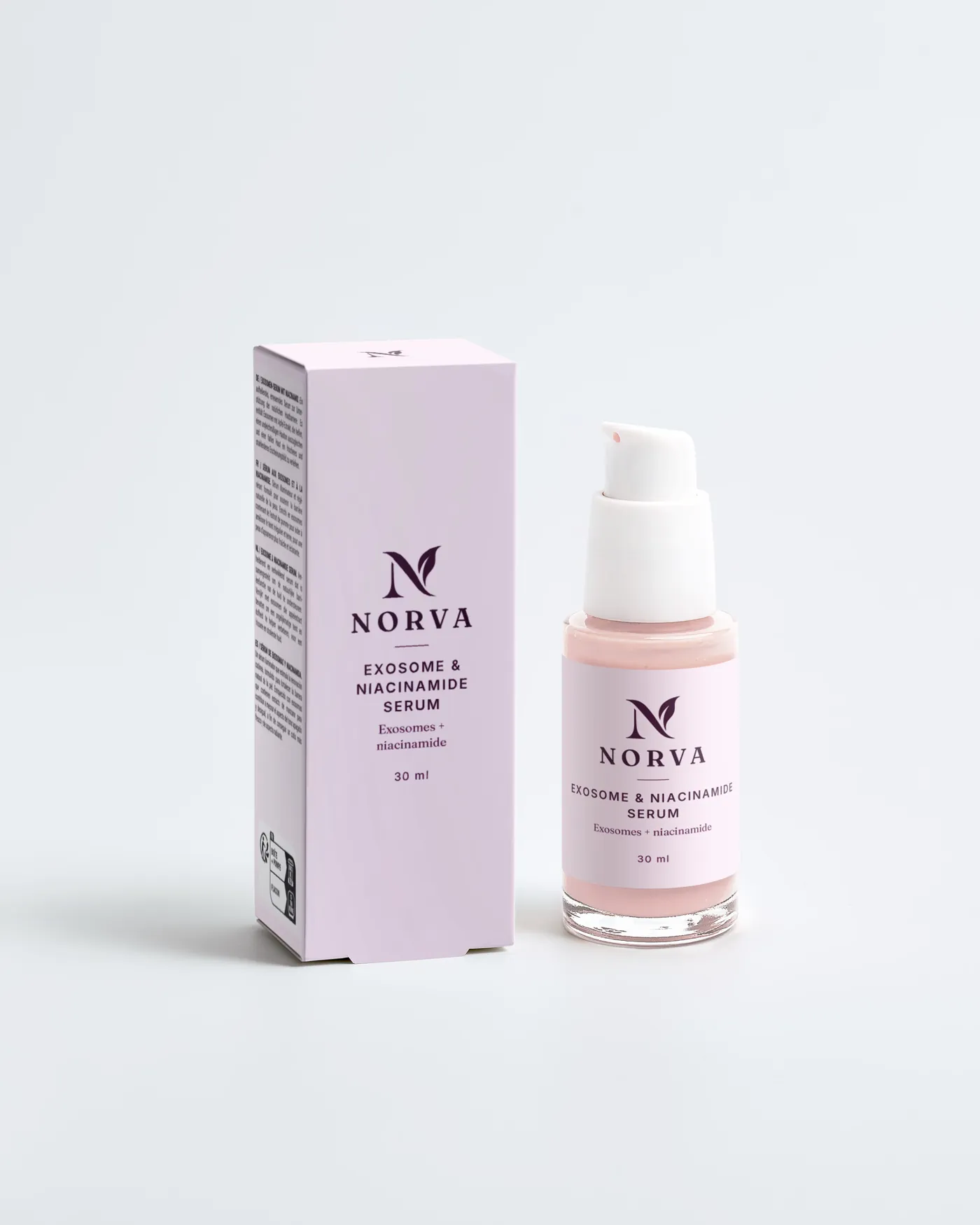
The Exosome & Niacinamide Serum is £30 for 30 ml, a creamy, fragrance-free glow serum for dullness and uneven tone, suitable for all skin types including sensitive. Alongside niacinamide it contains apple-derived exosomes, a lactobacillus ferment, centella asiatica, hyaluronic acid for light hydration, and a little lactic acid. It is vegan and made in the EU.
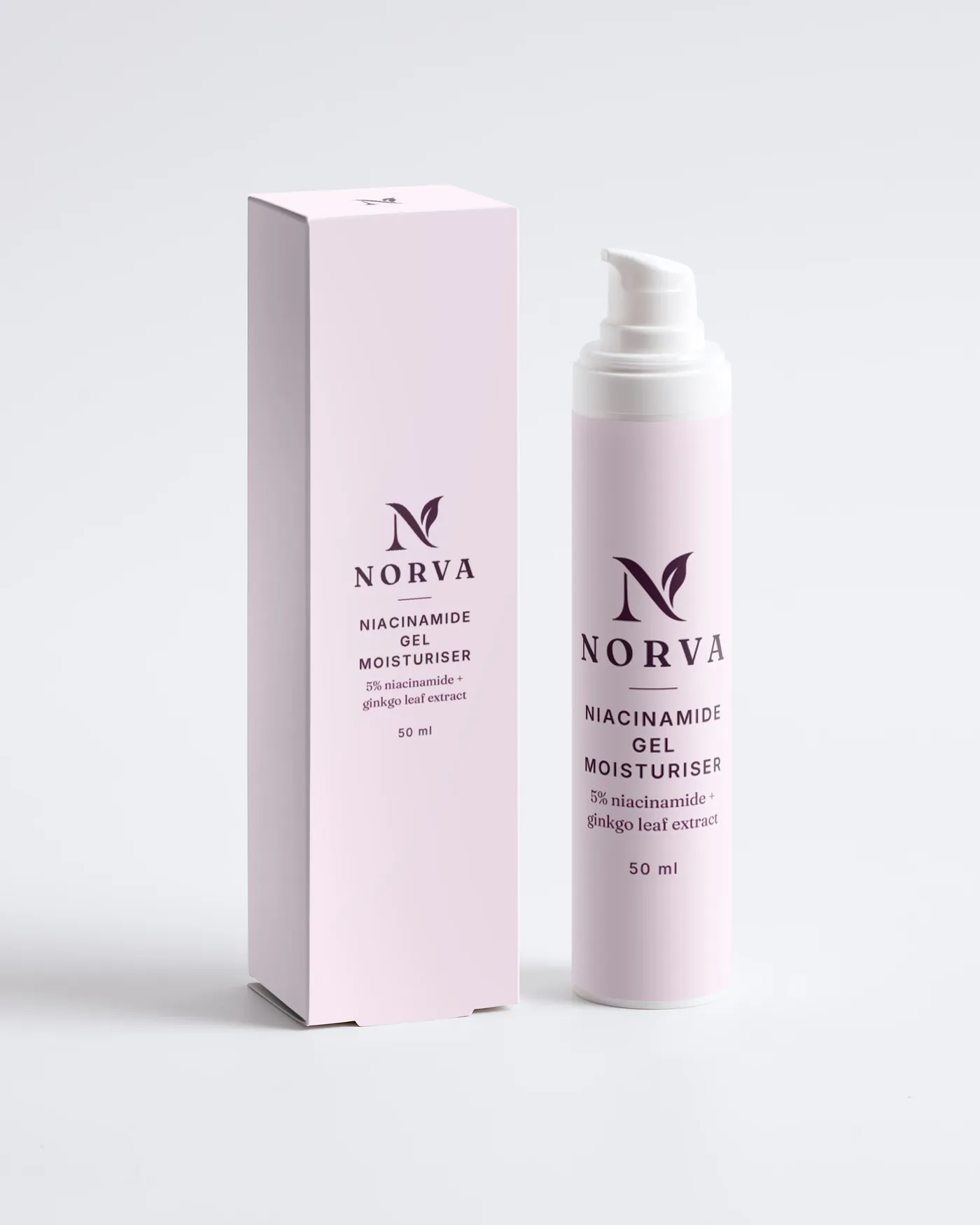
We do not publish its niacinamide percentage, and we are not going to imply one. Niacinamide is eighth in the ingredient list. The trials on this page tested niacinamide on its own at stated strengths, so they tell you what the ingredient can do, not what our formula has been proven to do. If you want a stated percentage from us, the Niacinamide Gel Moisturiser (£28, 50 ml) has 5%, the strength in the tone and fine-line trials; it is fragranced and lists alcohol second, so the serum is the gentler choice for sensitive skin.
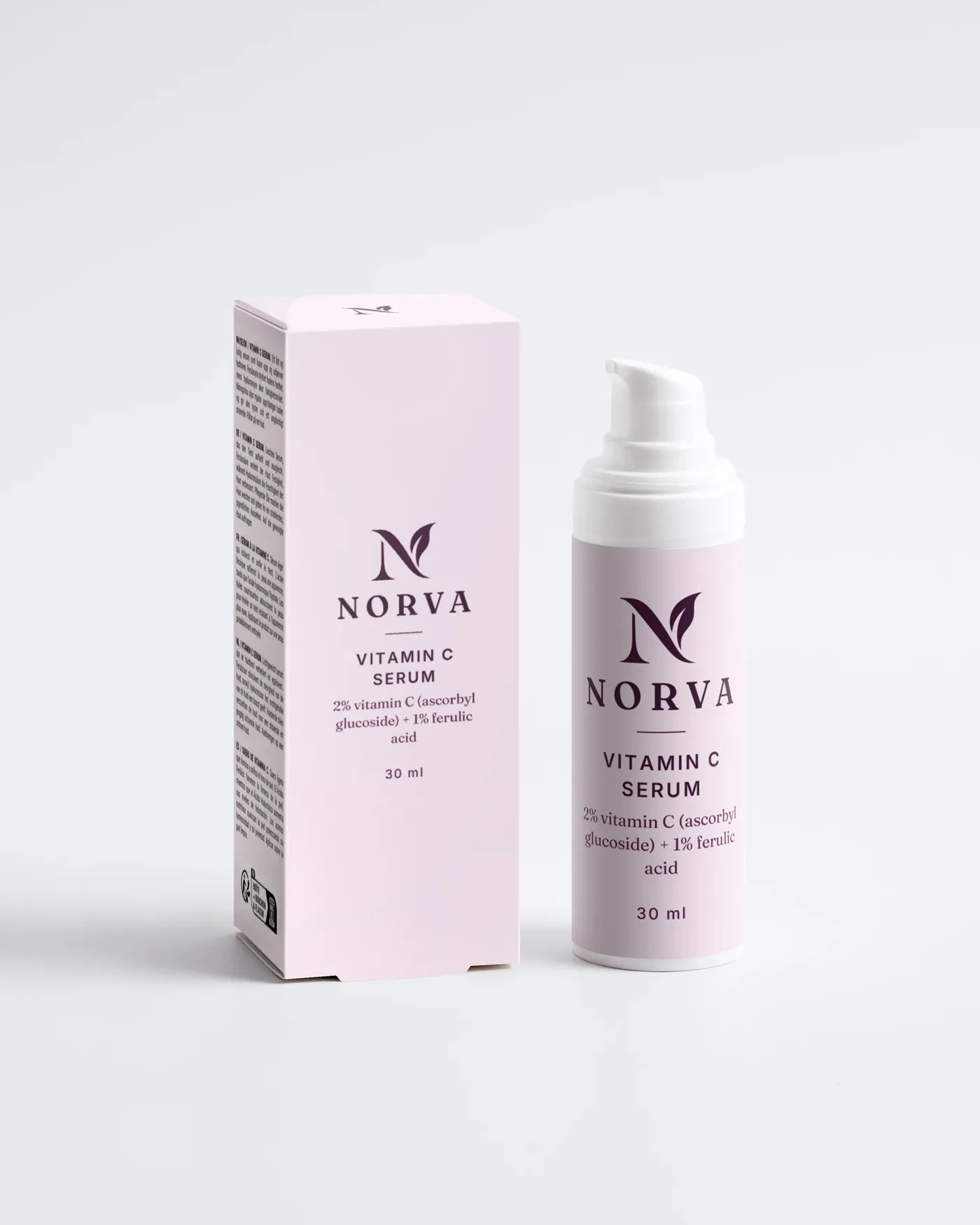
The serum pairs with our Vitamin C Serum as The Glow Duo for £51, £9 less than separately. Everything ships to order from the EU in typically 6 to 10 working days, with free UK and EU delivery over £55 and 30-day returns on unused items. Subscriptions save 10% every 30 days, 15% on two every 60 days, or 20% on three every 90 days.
Who this is not for
If you want a niacinamide serum with a stated percentage and the lowest price, ours is not it; we compared the options honestly in best niacinamide serums in the UK. If you have acne, rosacea or melasma, the trials above are interesting but a GP or dermatologist should lead. If you expect visible change in a fortnight, niacinamide will disappoint you. And if you are hoping to shrink pores, the evidence is not there.
The short version
The benefits of niacinamide serum with the best evidence are a more even-looking tone, fewer visible dark spots, and softer-looking fine lines, blotchiness and sallowness over twelve weeks. Less oiliness and better barrier function have smaller studies behind them. Pores and firming are the weakest claims. It is well tolerated by most skin at moderate strengths. Our fragrance-free Exosome & Niacinamide Serum is £30.
References
- 1.Bissett, Oblong and Berge (2005). Niacinamide: a B vitamin that improves aging facial skin appearance. Dermatologic Surgery.
- 2.Bissett et al. (2004). Topical niacinamide reduces yellowing, wrinkling, red blotchiness, and hyperpigmented spots in aging facial skin. International Journal of Cosmetic Science.
- 3.Hakozaki et al. (2002). The effect of niacinamide on reducing cutaneous pigmentation and suppression of melanosome transfer. British Journal of Dermatology.
- 4.Navarrete-Solis et al. (2011). A double-blind, randomized clinical trial of niacinamide 4% versus hydroquinone 4% in the treatment of melasma. Dermatology Research and Practice.
- 5.Draelos, Matsubara and Smiles (2006). The effect of 2% niacinamide on facial sebum production. Journal of Cosmetic and Laser Therapy.
- 6.Tanno et al. (2000). Nicotinamide increases biosynthesis of ceramides as well as other stratum corneum lipids to improve the epidermal permeability barrier. British Journal of Dermatology.
- 7.Soma et al. (2005). Moisturizing effects of topical nicotinamide on atopic dry skin. International Journal of Dermatology.
- 8.Shalita et al. (1995). Topical nicotinamide compared with clindamycin gel in the treatment of inflammatory acne vulgaris. International Journal of Dermatology.
- 9.Gehring (2004). Nicotinic acid/niacinamide and the skin. Journal of Cosmetic Dermatology.
- 10.Alvarez et al. (2025). Skincare ingredients recommended by cosmetic dermatologists: a Delphi consensus study. Journal of the American Academy of Dermatology.
- 11.Cosmetic Ingredient Review Expert Panel (2005). Final report of the safety assessment of niacinamide and niacin. International Journal of Toxicology.
- 12.NHS. Rosacea: symptoms, triggers and when to see a GP.
Frequently asked questions
What are the main benefits of niacinamide serum?
The best-supported benefits are a more even-looking tone with fewer visible dark spots, and a reduction in the look of fine lines, red blotchiness and sallowness, from 12-week split-face trials. Evidence for less oiliness and better barrier function is decent but smaller. Claims about pores are the weakest.
Is niacinamide good for sensitive skin?
Generally, yes. In safety testing it caused no stinging at up to 10% and no irritation in repeated-use tests at up to 5%, and it was not a sensitiser. High-strength serums can still cause flushing in some people, so sensitive skin usually does best at lower strengths and in fragrance-free formulas.
Does niacinamide help with redness?
It helped the look of red blotchiness in the 12-week trials, and a 2025 consensus of cosmetic dermatologists listed it for redness. It is not a treatment for rosacea, which needs a GP.
Does niacinamide shrink pores?
The trials we could find did not measure pore size as a main outcome. Less oil can make pores look less obvious, but we would not buy niacinamide for pores alone.
How long before I see the benefits of niacinamide serum?
Changes in oiliness showed at two to four weeks in one study, and tone at four weeks in another. The fine-line and blotchiness results were measured at twelve weeks of twice-daily use.
Gear for this
Related reading
Niacinamide Serum: 5%, 10% or 20%? What the Studies Used
Should you buy 5%, 10% or 20% niacinamide serum? We read the published trials to see which strengths were actually tested, and what happens above 5%.
Why a Small 28-Day Skincare Trial Is Weak Evidence: A Worked Example
A 49-person, 28-day study of a peptide cream reported improvements in firmness and wrinkles. Using it as a case study in how to read the clinical claims on any product page.
Skin Barrier Repair: What It Means and How to Do It
How to repair your skin barrier, plainly: what the barrier is, what damages it, the signs, the ingredients with evidence, and a routine that works in weeks.