Loading…
Peptide eye creams sit at a specific price point and make a specific promise: firmer, smoother-looking skin around the eyes. Whether that is worth paying for depends on what the evidence actually supports, and what a dedicated eye product can do that a face cream or serum cannot.
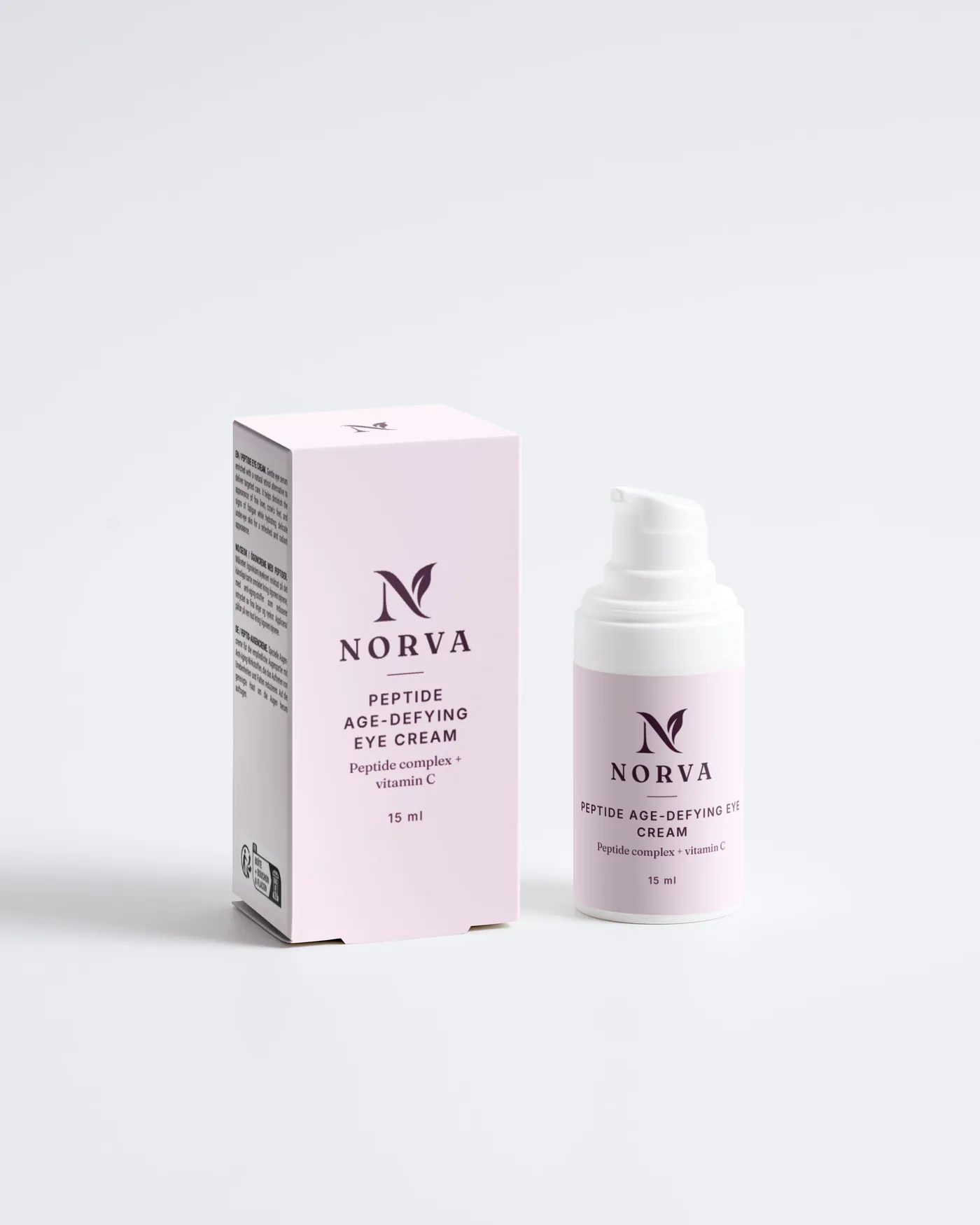
Peptide eye creams are formulated to be used on the thin skin around the eyes, usually at a lighter texture and lower irritant load than a face moisturiser, so you can apply them close to the lash line. They typically combine peptides with hydrating ingredients such as hyaluronic acid, plus humectants and emollients to reduce the look of dryness and fine lines.
This is the strongest practical argument for a dedicated eye product. The periorbital area is structurally different from the rest of the face: "The periorbital skin is thinner than the other areas of facial skin, and contains fewer sweat and sebaceous glands" (Periorbital skin index as a biomarker for biological aging and health status). Thinner skin with fewer oil-producing glands tends to lose moisture faster and show dryness and fine lines more readily, which is why many people find a lighter, more frequently reapplied product comfortable in this area even if the actives inside it are similar to their face products.
That structural difference explains why a separate texture can make sense. It does not, on its own, prove that a peptide-specific formula outperforms a well-tolerated face moisturiser used carefully around the eyes.
Peptide research covers a mix of oral supplements and topical creams and serums, and the two are not interchangeable. A 2026 systematic review and meta-analysis of randomised controlled trials looking at both oral and topical peptides found that "only two high-quality topical peptide studies met the inclusion criteria and were analysed alongside predominantly oral trials to provide a complete overview of available evidence," and cautioned that "this limited representation of topical formulations should be considered when interpreting results, as findings primarily reflect oral peptide efficacy" (Oral and topical peptides for skin aging: systematic review and meta-analysis of randomized controlled trials). The same review concluded that "peptides appear to be safe, non-invasive anti-aging agents, though larger RCTs with standardized outcomes and histopathologic assessment are warranted" (Oral and topical peptides for skin aging: systematic review and meta-analysis of randomized controlled trials).
In practical terms: the published evidence base for topical peptides, including peptide eye creams specifically, is thinner than the evidence base for oral peptide supplements, and the review's own authors are asking for larger, better-standardised trials with histopathologic assessment before stronger claims can be made (Oral and topical peptides for skin aging: systematic review and meta-analysis of randomized controlled trials). Peptides are not unproven, but no study establishes that any single branded eye cream, including Norva's, works or ranks among the best on the market.
There is a reasonable case for buying one if:
There is a reasonable case for skipping a dedicated eye cream if:
If you decide a dedicated product makes sense, it usually sits after a face serum and before a richer night cream, applied with a light tapping motion rather than rubbing. Norva's Peptide Age-Defying Eye Cream costs £24. It is part of the wider Peptide Routine, a bundle that costs £73. Most Norva products, including the eye cream, can be bought on subscribe and save, which can be cancelled, skipped or paused at any time, and orders qualify for free delivery over £100 or a flat £4.95 fee below that.
If you are not sure whether to add a separate eye product at all, our guide on using a peptide eye cream covers application in more detail, and our comparison on peptide eye serum or eye cream walks through the format decision. For a wider look at how small skincare trials should be read, see why a small trial is weak evidence.
A peptide eye cream is a reasonable, low-risk purchase for someone who wants a lighter, eye-area-specific texture and already tolerates peptides well on the rest of their face. Published evidence for topical peptides remains limited: only two high-quality topical peptide trials met the inclusion criteria of the 2026 systematic review discussed above (Oral and topical peptides for skin aging: systematic review and meta-analysis of randomized controlled trials), so whether it is worth it for you comes down to comfort, texture preference and budget rather than a settled performance advantage over a well-chosen face product used carefully around the eyes.
This article is for general information and is not medical advice. Skincare products are not medical treatments. If symptoms persist or worsen, speak with a GP or dermatologist.
There is no strong evidence that a peptide eye cream specifically outperforms a well-tolerated peptide face moisturiser used carefully around the eyes. A 2026 systematic review of peptide trials found that only two high-quality topical peptide studies met its inclusion criteria, with most evidence coming from oral peptide trials instead, so topical, eye-area-specific research is still limited. The practical case for a separate eye cream is texture and comfort on thinner skin, not proven extra performance.
Not necessarily. Many people can use a gentle, fragrance-free face serum or moisturiser right up to the orbital bone if it does not irritate that area. A dedicated eye cream is mainly useful if your face products feel too heavy, too active or slightly irritating when applied near the eyes, since the periorbital skin is thinner and has fewer oil-producing glands than the rest of the face.
There is no reliable published timeline specific to peptide eye creams, so we cannot give you a precise number of days or weeks. Peptides are generally used as a steady, ongoing part of a routine rather than a fast fix, and consistent daily use alongside sun protection matters more than any single product.
Look at the actual ingredient list and percentages where listed, whether it is fragrance-free if you have sensitive skin, and whether it fits your existing routine without duplicating actives you already use on your face. Checking return and subscription terms, such as whether you can pause or cancel, also helps if you are not sure it will suit you.
A straight guide to peptide eye cream: why the eye area ages first, what peptides can do for fine lines, how to apply it, and how to pick one in the UK.
A peptide eye serum is lighter and suits oily or puffy eye areas; an eye cream suits dry, lined skin. How to choose, and whether face serum works near eyes.
A 49-person, 28-day study of a peptide cream reported improvements in firmness and wrinkles. Using it as a case study in how to read the clinical claims on any product page.
What is a peptide serum, and does it actually work? A plain UK guide to what peptides do for how skin looks, what to check on the ingredient label, a fair UK price, and how to use one properly, including why we name our own peptide and state its percentage.
Three peptide face creams compared on facts checked today: Medik8 at £82, Paula's Choice at £49 and ours at £32. Peptides, fragrance, texture, who each suits.