Loading…
Guide
Peptide Eye Cream: What to Expect and How to Apply It
10 min read
The skin around your eyes is the first place most of us notice a change, and the first place we start buying products for. Peptide eye cream sits right in the middle of that market: gentler than retinol, more targeted than a face moisturiser, and priced from a few pounds to a small fortune. We make one. Here is what we tell customers who ask whether it is worth it.
What does a peptide eye cream actually do?
A peptide eye cream is a light moisturiser made for the thin skin around the eyes, carrying peptides alongside hydrating and softening ingredients. Used twice a day, it helps that skin look smoother and more hydrated, so fine lines and crow's feet appear softer. That is a cosmetic promise about how skin looks, and it is the honest limit of what any eye cream does. It does not remove wrinkles, lift eyelids or shift puffiness that comes from fluid, sleep or allergies.
The reason people buy eye creams rather than just using their face cream is the skin itself. In a 2025 ultrasound study that measured 38 sites on the faces of 45 adults, the upper eyelid was the thinnest skin on the whole face at a median of about 0.57 mm, compared with around 1.9 mm at the tip of the nose (Korzekwa and colleagues, 2025). Thinner skin shows creasing sooner and tends to react more to products that the rest of the face tolerates. An eye cream is a way of giving that area something gentler, in a smaller amount, with fewer things in it that might sting.
Why peptides for the eye area
Peptides are short chains of amino acids. Cosmetic chemists use them in anti-ageing products because they can be formulated to be very gentle, which matters around the eyes where retinol and acids are often too much.
The evidence for topical peptides is real but modest. A review of controlled studies in the International Journal of Cosmetic Science grouped cosmetic peptides into signal peptides, carrier peptides, enzyme-inhibitor peptides and neurotransmitter-inhibitor peptides, and found small studies supporting several of them, usually funded by the ingredient maker (Gorouhi and Maibach, 2009). That does not make the results wrong. It does mean "clinically proven" on an eye cream box is doing a lot of work.
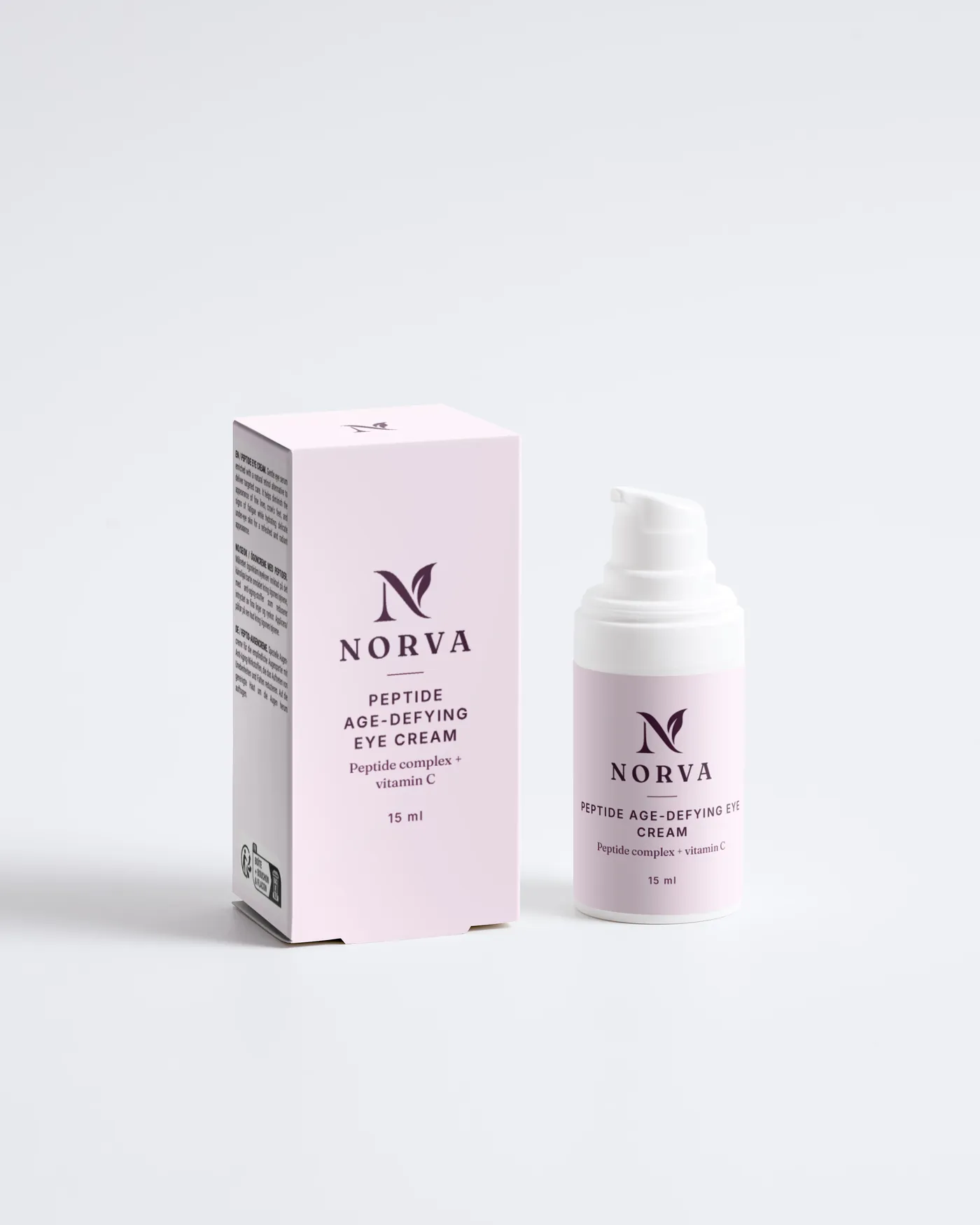
Our Peptide Age-Defying Eye Cream (£24, 15 ml) uses hexapeptide-11, the same peptide as our face serum, in a light base with vitamins C and E and sodium PCA. Hexapeptide-11 has a published study behind it: on human skin fibroblasts it activated genes tied to the cell's own repair and antioxidant systems and protected cells against stress-induced premature ageing in the lab, and in human skin deformation tests it improved measured skin elasticity (Sklirou and colleagues, 2015). We should be clear that the elasticity test was not specifically on eye-area skin, so we are telling you what has been shown for the peptide, not making a claim about crow's feet.
What is doing the work in week one
The hydration you feel straight away is not the peptide. It is the humectants and emollients in the base. In the eye cream that means sodium PCA, glycerin, jojoba oil and borage seed oil. Hydrated skin looks plumper, and plumper skin shows fine lines less. That is why almost every eye cream, cheap or expensive, seems to "work" for a few days: it is doing what a moisturiser does.
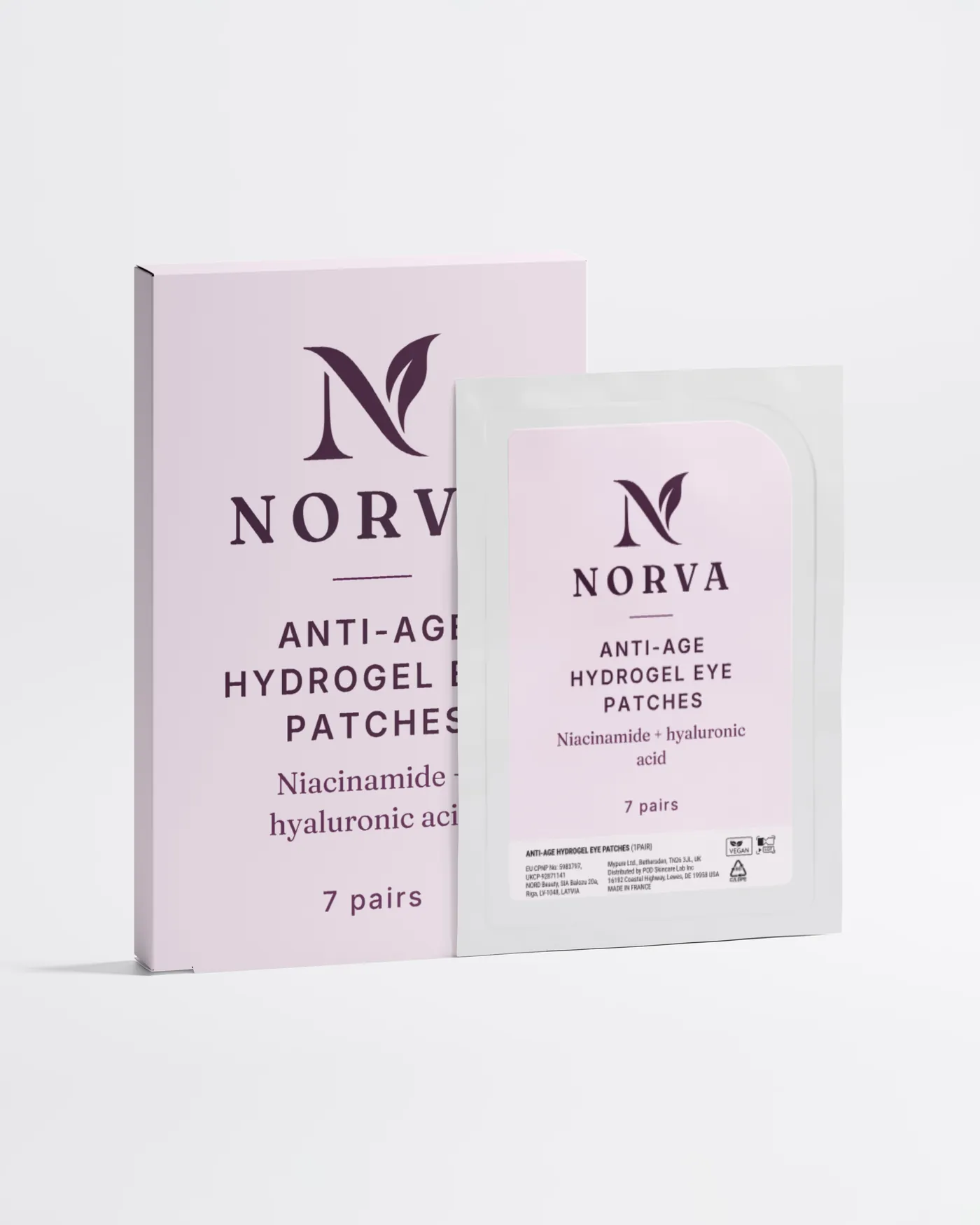
The published research on hyaluronic acid around the eyes is worth knowing about even though our eye cream is not built around it. In a 60-day study of 76 women aged 30 to 60 with periocular wrinkles, creams with 0.1% hyaluronic acid significantly improved hydration and elasticity compared with placebo, and the lower molecular weight versions also reduced measured wrinkle depth (Pavicic and colleagues, 2011). If eye-area hydration is your main concern, our Anti-Age Hydrogel Eye Patches (£26 for 7 pairs) use hyaluronic acid and niacinamide in a 15-minute patch and are fragrance-free.
How to apply peptide eye cream
Most people use too much and put it in the wrong place. Here is what we do.
- Cleanse and apply your serum first. Eye cream goes after serum and before or with your moisturiser. Our guide to applying serums in order has the full running order.
- Take a rice-grain amount per eye. Genuinely that small. In our experience a 15 ml tube lasts two to three months at twice a day.
- Dot it along the orbital bone. That is the bony ridge you can feel under the eye and out towards the temple. Products migrate towards the eye as skin warms, so you do not need to apply close to the lashes, and doing so is the usual reason eye creams sting.
- Pat, do not rub. Use your ring finger, which has the lightest touch. Work from the inner corner outwards.
- Morning and evening. Peptides do not need a run-in period, so you can start at full frequency.
- Sunscreen in the morning, over the top. Take it right up to the eye area. This is the step that matters most, and we will come back to it.
Skip the moving eyelid unless a product specifically says it is safe there. And if you wear contact lenses, put them in before you apply, not after.
What to look for when buying a peptide eye cream
A named peptide. "Peptide complex" is not information. Look for an INCI name such as hexapeptide-11, palmitoyl tripeptide-1 or acetyl hexapeptide-8. Ours lists hexapeptide-11.
A texture your eye area gets on with. Very rich balms can cause milia (tiny white bumps) on some people. Very light gels can feel like nothing in winter. Ours is a light cream, which is the middle ground.
Fragrance. Our eye cream is fragranced, with a soft rose and geranium scent, and the ingredient list includes linalyl acetate, geranyl acetate, linalool, geraniol and citronellol from natural essential oils. Most people are fine with that around the eyes. Some are not. If you have reactive eyes or know you react to fragrance, our fragrance-free hydrogel patches are the better first step from our range, or choose an unfragranced eye cream elsewhere. Patch test on the inner arm for 24 hours before first use whichever you buy.
Size and price per ml. Eye creams are sold in 15 ml because you use so little. £24 for 15 ml sounds steep next to a 50 ml face cream at £32, but per use it works out cheaper than most people expect.
Realistic claims. Any eye cream promising to remove wrinkles, lift eyelids or erase dark circles is overpromising. Dark circles are mostly about blood vessels and pigment under thin skin, and a cream can only change how the surface looks.
What a peptide eye cream costs in the UK
Prices run from supermarket own-brand to department-store prestige, mostly for 15 ml, and price follows brand and packaging far more than it follows evidence. Ours is £24 for 15 ml. Subscribing takes 10% off every 30 days, 15% off on the 60-day plan for two, and 20% off on the 90-day plan for three. It comes as part of The Peptide Routine too, alongside the face serum and the day-to-night cream, for £73 in total, which is £13 less than the three bought separately.
Delivery is made to order from the EU in typically 6 to 10 working days, free in the UK and EU over £55, with 30-day returns on unused items.
What results to expect, and when
Days one to seven: the eye area feels more comfortable and looks a little plumper. That is the hydration.
Weeks two to four: concealer creases less. Fine lines under the eye look softer in good light.
Weeks six to eight: this is the earliest we would judge the peptide. Take a photo on day one, in daylight, with no make-up, and another at week eight. Memory flatters and it also forgets.
If you see nothing by twelve weeks, it is not your product. Our 30-day return window covers unused items, so if the scent or texture is wrong for you in the first fortnight, send it back.
The step that beats any eye cream
Crow's feet are largely a sun story. Squinting plays a part, but the reason the lines set in is a lifetime of UV on thin skin. In a randomised trial of 903 adults followed for four and a half years, the group told to use sunscreen every day showed 24% less skin ageing than the group who used it at their own discretion (Hughes and colleagues, 2013). Nothing in a 15 ml tube gets near that.
So the honest ranking of what to do for the eye area is: sunscreen up to the lashes every morning, sunglasses when it is bright, then whatever eye cream you like. If money is tight, buy the SPF first and come back to peptides later.
Peptide eye cream or eye serum?
Eye serums are thinner and usually water-based; eye creams have more emollient in them. If your under-eye skin is dry or you are over about 35, a cream tends to feel better and last longer on the skin. If you are younger or oily, or you want something under make-up in summer, a serum or a patch may suit you. Our Retinol Alternative Eye Serum (£24, 15 ml) uses 2% bidens pilosa for people who want a gentle retinol alternative around the eyes instead of a peptide; our guide to bidens pilosa explains the difference.
Eye cream and eye patches: do you need both?
No, but they do different things and plenty of our customers use both. An eye cream is the daily step: twice a day, every day, a small amount, for months. Hydrogel patches are an occasional step: fifteen minutes on a Sunday evening, or the morning of something you want to look awake for. The patches deliver a concentrated dose of humectants under an occlusive gel, so the effect is a short, visible plumping of the under-eye that fades over the day. The cream is what changes how the area looks over eight weeks.
If your budget is one product, make it the cream, because consistency is what moves fine lines. If you already have a cream you like and want an occasional boost, the Anti-Age Hydrogel Eye Patches are £26 for 7 pairs, fragrance-free, with niacinamide and hyaluronic acid. Use them on clean skin, then apply your eye cream afterwards while the area is still damp. Do not apply patches over eye cream, because the cream stops the gel making contact.
One practical note from our own bathroom: keep patches in the fridge. They go on cooler, which is most of what makes them feel good first thing in the morning, and it costs nothing.
Who this is not for
If you are under about 25 and your only concern is looking tired, an eye cream is not the answer; sleep, water and a cold spoon in the morning are. If you have deep, set crow's feet or noticeable loose skin on the eyelid, no cream will change that, and an honest conversation with a dermatologist or aesthetic clinic is a better use of £24. If your eye area is currently red, itchy or flaking, that could be eczema or an allergy and is a GP question, not a peptide question. And if you react to fragrance, skip ours and choose an unfragranced product.
The short version
Peptide eye cream helps the thin skin around the eyes look smoother and more hydrated, which softens how fine lines appear. It is gentle enough for twice-daily use and layers with everything. Our Peptide Age-Defying Eye Cream is £24 for 15 ml, made in the EU, with hexapeptide-11, vitamins C and E and a soft rose and geranium scent. Rice-grain amount, orbital bone, pat with the ring finger, SPF over the top in the morning. Give it eight weeks and a photo.
References
- 1.Korzekwa et al. (2025). Quantitative Analysis of the Human Face Skin Thickness: A High-Frequency Ultrasound Study. Journal of Clinical Medicine.
- 2.Gorouhi and Maibach (2009). Role of topical peptides in preventing or treating aged skin. International Journal of Cosmetic Science.
- 3.Sklirou et al. (2015). Hexapeptide-11 is a novel modulator of the proteostasis network in human diploid fibroblasts. Redox Biology.
- 4.Pavicic et al. (2011). Efficacy of cream-based novel formulations of hyaluronic acid of different molecular weights in anti-wrinkle treatment. Journal of Drugs in Dermatology.
- 5.Hughes et al. (2013). Sunscreen and prevention of skin aging: a randomized trial. Annals of Internal Medicine.
Frequently asked questions
Do I actually need a separate eye cream?
Not always. If your face moisturiser is gentle and does not sting your eyes, you can use it around the eye area. A dedicated eye cream makes sense if your regular products irritate the eye area, or if you want a peptide product sized and textured for that skin.
What does a peptide eye cream do for crow's feet?
It helps the skin around the eyes look smoother and more hydrated, which softens how fine lines and crow's feet appear. It is a cosmetic effect on appearance. It does not remove lines, and it will not fix deep set wrinkles or loose skin.
How much peptide eye cream should I use?
A rice-grain amount per eye is plenty. Dot it along the orbital bone, under the eye and out to the temple, and pat it in with your ring finger. Do not apply it onto the moving eyelid or close to the lash line.
How long does a 15 ml eye cream last?
In our experience, used twice a day at a rice-grain amount per eye, 15 ml lasts around two to three months. Our Peptide Age-Defying Eye Cream is £24 for 15 ml.
Can I use peptide eye cream with retinol?
Yes. Peptides are gentle and layer well with retinol and retinol alternatives. If you use retinol around the eyes, apply the peptide eye cream on top as the moisturising step, and introduce one new product at a time.
Gear for this
Related reading
Peptide Skincare Routine: When to Use Peptide Serum, AM and PM
When to use peptide serum: morning and night, on clean skin, before cream. A simple peptide skincare routine with the order of serum, eye cream and cream.
Retinol Alternatives: What Bidens Pilosa Can and Can't Do
Bidens pilosa is sold as a gentle, plant-based retinol alternative. Here is what the research shows, where it falls short of retinol, and who it suits.
How to Apply Your Skincare, and in What Order
Where each Norva product sits in a morning and evening routine, how to layer a serum under a cream without pilling, and the order for the Peptide Routine, the Barrier Reset Routine and Sensitive Skin Essentials.