Loading…
Guide
Peptide Skincare Routine: When to Use Peptide Serum, AM and PM
12 min read
If you have bought one and are standing at the sink wondering when to use peptide serum, this page is for you. It is the peptide skincare routine we recommend to customers, written out step by step, with the reasons.
When should you use peptide serum?
Use peptide serum twice a day, morning and night, on clean skin, straight after cleansing and before your moisturiser. Peptides are gentle, so there is no building up and no need to keep them to the evening. In the morning the order is cleanser, peptide serum, eye cream, moisturiser, sunscreen. At night it is the same without the sunscreen. If twice a day is more than you will keep up, once a day at the same time every day is better than twice a day for a week and then nothing.
That is the whole routine. Three treatment steps, used together, morning and night. We sell the three as The Peptide Routine for £73, but the order and the timing hold for any brand.
Morning or night: why the answer is both
With retinol, the usual answer to "morning or night" is night. With vitamin C, it is usually morning. Peptides are the easy one: either, and ideally both.
There are two reasons. The first is tolerance. Peptides do not tend to irritate, so nothing is gained by rationing them. In one 12-week trial of a peptide moisturiser on 93 women, the authors reported it was well tolerated by the skin (Robinson and colleagues, 2005). The second is that the studies which showed anything were run on steady, repeated use over weeks. Nobody has shown that a peptide used now and then does much.
If you have to choose one, choose the time you are least likely to skip. For most people that is the morning, because it is attached to getting ready. Shift workers and new parents often do better with the evening. The clock time matters far less than the streak.
The order: serum, eye cream, cream
The rule behind every layering order is thinnest first, richest last. For a peptide routine that gives you:
- Peptide serum. The lightest, most concentrated step. It goes on bare, clean skin so nothing sits between it and your face.
- Eye cream. A small amount around the eyes, before the face cream, so the eye area gets its own product and not a diluted layer of everything else.
- Moisturiser. Over the face and neck, to hold the serum in and keep skin comfortable.
- Sunscreen, mornings only, last.
Some people put eye cream on after moisturiser. It is not wrong. We put it before because it is easier to keep face cream out of the eye area if the eye cream is already there, and because the eye cream is the lighter of the two.
For the general rules on layering any set of products, including what to do when they pill, see how to apply your skincare, and in what order.
The morning routine, step by step
1. Cleanse. A gentle cleanser and lukewarm water. If your skin is dry, a splash of water alone is fine in the morning. Pat your face with a towel and leave it slightly damp.
2. Peptide serum. Two or three pumps for the face and neck. Warm it between your fingers and press it in. Do not rub hard and do not forget the neck. Slightly damp skin helps, because the hyaluronic acid in most peptide serums holds on to water, and there needs to be some there for it to hold.
3. Eye cream. About a grain of rice for both eyes. Dot it along the bone under the eye and out towards the temple, then pat with your ring finger until it is gone. Stay off the lash line. Eyelid skin is the thinnest on the face: an ultrasound study of 45 adults measured a median of roughly 0.57 mm on the upper eyelid against about 1.9 mm at the tip of the nose (Korzekwa and colleagues, 2025). Thin skin does not need pressure or much product.
4. Moisturiser. A pea to a hazelnut, depending on how dry you are. Wait until the serum no longer feels wet, which takes about half a minute.
5. Sunscreen. This is the step that does the most for how skin ages, and it is not close. In a randomised trial of 903 adults followed for four and a half years, the group told to use sunscreen every day showed no detectable increase in skin ageing, and 24% less than the group who used it at their own discretion (Hughes and colleagues, 2013). No peptide has a result like that. If you do the other four steps and skip this one, you are doing the routine backwards.
The whole thing takes a few minutes once you know it.
The evening routine
1. Cleanse properly. Sunscreen and make-up need taking off. If you wear heavy make-up or a water-resistant SPF, cleanse twice: once to break it down, once to clean the skin.
2. Peptide serum. Same amount, same pressing.
3. Eye cream.
4. Moisturiser. You can use a little more at night, since it does not need to sit under make-up.
Same three treatment steps, twice a day. It is deliberately boring. Routines that change every evening are the ones people drop.
How much, and how long a bottle lasts
Less than you think. Two or three pumps of serum, a grain of rice of eye cream, a pea of moisturiser. Using more does not make anything work faster. It makes the next layer pill and the bottle run out.
We cannot give you an exact number of days per bottle, because it depends on your face and your hand. If you want a bottle to turn up before the last one runs out, the subscription options are one every 30 days, two every 60 days or three every 90 days, and you can cancel whenever you like.
Where other actives fit
A peptide routine is a base. Other things slot in around it without much trouble.
Vitamin C goes in the morning, before the peptide serum. We have a whole page on using vitamin C and peptide serum together, including the one case where they are better kept apart.
Niacinamide can go before or after the peptide serum. Put the thinner one on first.
Retinol, if you use it, goes in the evening, one or two nights a week to begin with. The peptide serum can go on first or you can keep it to the morning on retinol nights. Retinol and peptide serum: can you use both has the detail.
A retinol alternative such as bidens pilosa can be used morning or evening alongside peptides. See our guide to bidens pilosa.
Exfoliating acids are best on a different night from everything else, and no more than a couple of times a week.
One rule covers all of them: add one new thing at a time, and leave a fortnight before adding the next. When something stings, you want to know which bottle it was.
Adjusting for your skin
Dry or dehydrated. Run the routine as written. Apply the serum to damp skin and do not skimp on the cream. If you are still tight by lunchtime, the fix is more moisturiser, not more serum.
Oily or combination. Use the serum morning and night but go lighter on the cream, or keep the cream for the evening and let the serum and sunscreen do the morning. Our peptide serum has jojoba and seed oils in the base, so on very oily skin it may be enough on its own under SPF.
Sensitive or reactive. Peptides themselves are rarely the problem. Fragrance can be. All three products in our peptide range are fragranced, so patch test on the inner arm for 24 hours first, and if you know fragrance sets you off, this range is not the one for you.
Mature skin. The routine is the same. The cream matters more, because older skin tends to be drier. Our AM/PM cream is made for all skin types and especially mature skin.
Under 25 with no particular concerns. You do not need this routine. Cleanser, moisturiser, sunscreen.
The first eight weeks
Knowing what to expect stops people quitting in week three.
Days one to seven. Skin feels more hydrated and looks a little plumper after each application. This is the hyaluronic acid, and it is real. In a controlled 60-day study of 76 women, creams with 0.1% hyaluronic acid significantly improved skin hydration and elasticity against a plain cream (Pavicic and colleagues, 2011). It is also temporary, which is why you keep applying it.
Weeks two to four. Make-up goes on more evenly. Skin feels smoother when you wash your face. Some people see nothing yet, and that is normal.
Weeks six to eight. The first fair point to judge the peptide itself. Hexapeptide-11, the peptide in our serum, improved skin elasticity in deformation tests on human volunteers in a published study (Sklirou and colleagues, 2015), but a measured change in elasticity and a change you can see in the mirror are different things. Take a photo on day one, bare-faced, by the same window, and another at week eight.
Week twelve. If the two photos look the same and your skin does not feel any different, stop. A review of the controlled peptide studies makes clear the evidence differs a lot from one peptide to the next (Gorouhi and Maibach, 2009), and not every peptide suits every face. Spend the money on sunscreen and a moisturiser you like.
Mistakes that undo a peptide routine
Skipping evenings. Half the applications is half the routine.
Putting serum over moisturiser. A cream is designed to sit on top and slow things passing through it, in both directions. Serum goes underneath.
Changing two products at once. If you swap cleanser and start a new serum in the same week, a breakout tells you nothing.
Rubbing eye cream in like hand cream. Pat.
Stopping at week three because nothing dramatic has happened. Nothing dramatic is supposed to happen. The changes a cosmetic routine can make are gradual, and you will only see them in a photo.
Leaving out sunscreen because the moisturiser "has actives in it". It does not have SPF in it.
Our peptide range, and what it costs
The three products are made to be used in this order.
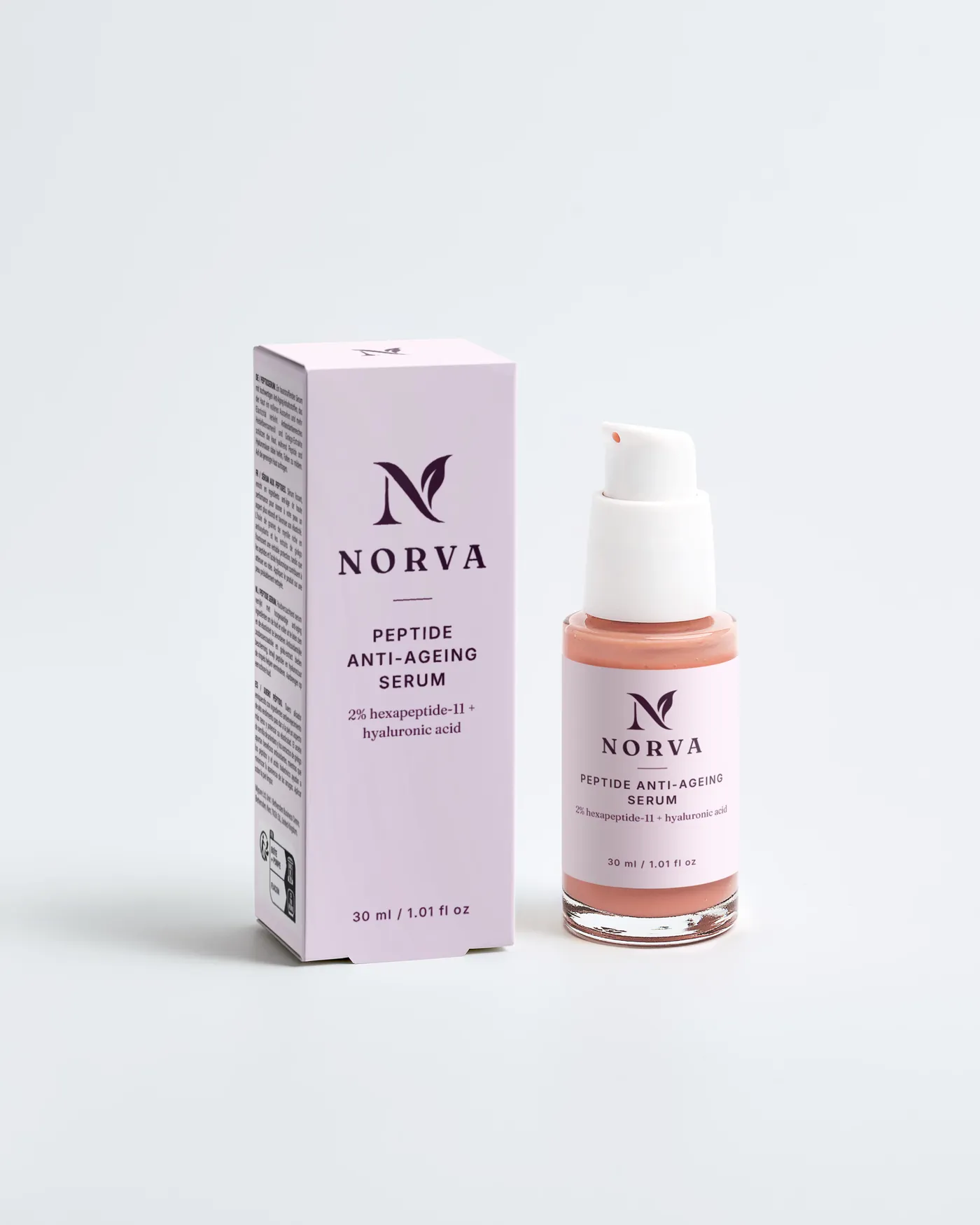
- Peptide Anti-Ageing Serum: 2% hexapeptide-11 with hyaluronic acid, 1% ginkgo biloba extract, and blueberry and strawberry seed oils. £30 for 30 ml. For normal, dry and dehydrated skin. Scent: delicate floral with soft amber notes.
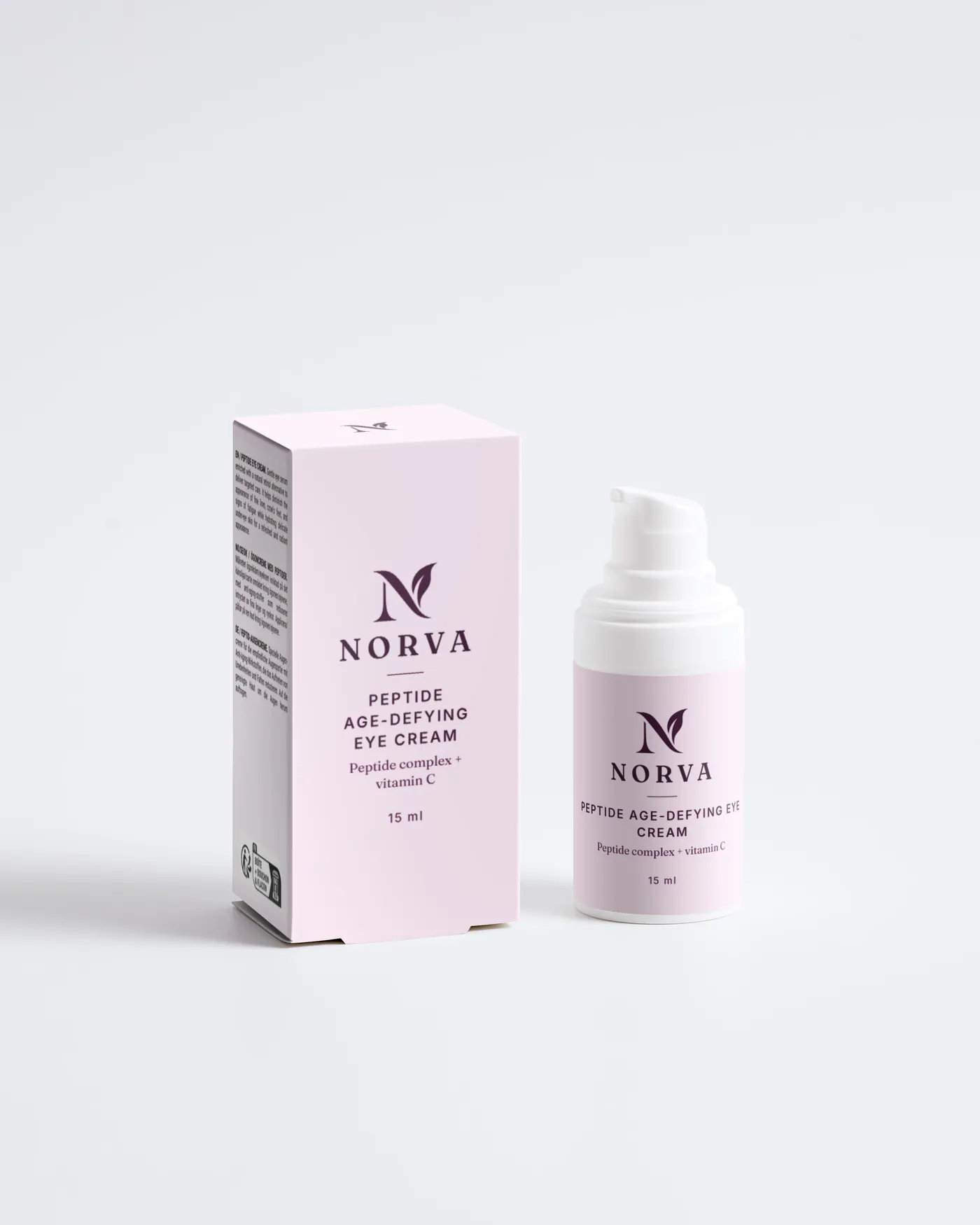
- Peptide Age-Defying Eye Cream: a light eye cream with a peptide complex, vitamins C and E and sodium PCA. £24 for 15 ml. Scent: soft rose with a touch of geranium. Our peptide eye cream guide covers how to apply it.
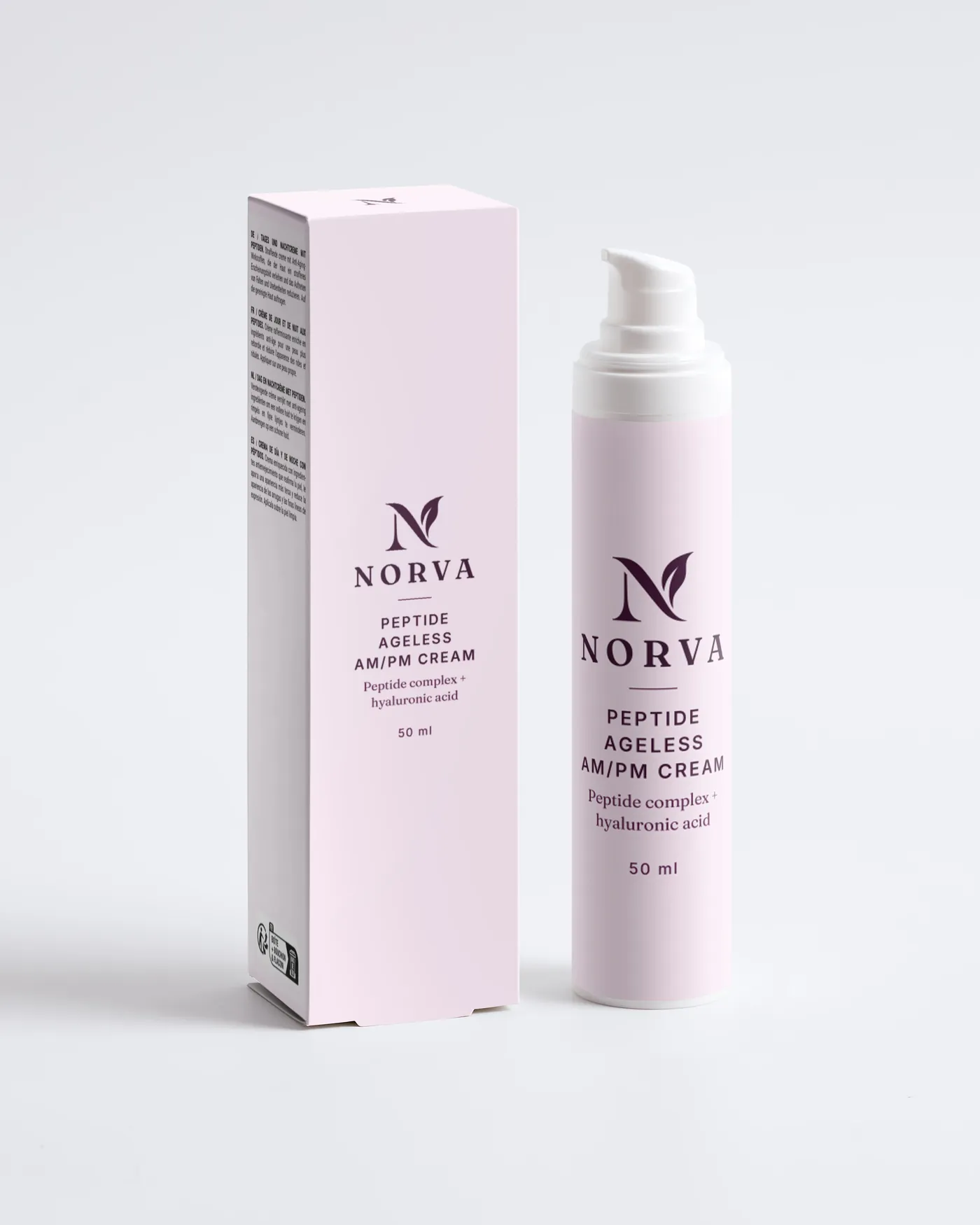
- Peptide Ageless AM/PM Cream: a lightweight day-to-night cream with a peptide complex, hyaluronic acid, vitamins C and E and sodium PCA. £32 for 50 ml. Scent: delicate floral with a soft sweetness.
Bought one by one, that is £86. Together as The Peptide Routine they are £73, a saving of £13. On a subscription the routine is 10% off every 30 days, which works out at £65.70, or 15% off for two sets every 60 days, or 20% off for three sets every 90 days. At £73 the bundle is over the £55 line for free UK and EU delivery.
Everything is made in the EU and made to order, so allow typically 6 to 10 working days for delivery. Unused items can be returned within 30 days.
All three formulas contain fragrance. We say it in every product description and we will say it again here, because it is the most common reason a product from this range does not suit someone. They are cosmetic products for hydration and smoother-looking skin. We do not promise a fixed result or a timeline.
Do you need all three?
No. If you only want one, buy the serum; it is the step with the stated peptide percentage, and it works under any moisturiser you already own. If you want two, add the cream. The eye cream is the most optional of the three, and the one to add if the skin around your eyes is drier than the rest of your face or you simply like having a separate product there. Our peptide serum guide goes through what to look for if you are still choosing a serum.
The bundle makes sense when you were going to buy at least the serum and the cream anyway. Those two alone are £62, so the eye cream costs you £11 more inside the bundle.
Who this routine is not for
Anyone who reacts to fragrance, because all three products are fragranced. Anyone with very oily skin who dislikes the feel of a cream, because three layers will be too much. Anyone looking to fix deep, set lines, because no cosmetic routine does that and a dermatologist is a better use of the money. And anyone with eczema, rosacea, acne or another condition a GP has named: ask them before adding new products, and treat this page as general information, not advice for your skin.
The short version
Peptide serum morning and night, on clean damp skin. Eye cream next, then moisturiser, then sunscreen in the morning. Add other actives one at a time. Take a photo on day one and judge at week eight. The Peptide Routine is £73 for the serum, cream and eye cream together if you want the set from us, and the routine on this page works whoever makes your products.
References
- 1.Hughes et al. (2013). Sunscreen and prevention of skin aging: a randomized trial. Annals of Internal Medicine.
- 2.Gorouhi and Maibach (2009). Role of topical peptides in preventing or treating aged skin. International Journal of Cosmetic Science.
- 3.Sklirou et al. (2015). Hexapeptide-11 is a novel modulator of the proteostasis network in human diploid fibroblasts. Redox Biology.
- 4.Robinson et al. (2005). Topical palmitoyl pentapeptide provides improvement in photoaged human facial skin. International Journal of Cosmetic Science.
- 5.Pavicic et al. (2011). Efficacy of cream-based novel formulations of hyaluronic acid of different molecular weights in anti-wrinkle treatment. Journal of Drugs in Dermatology.
- 6.Korzekwa et al. (2025). Quantitative Analysis of the Human Face Skin Thickness: A High-Frequency Ultrasound Study. Journal of Clinical Medicine.
This article is for general information and is not medical advice. Skincare products are not medical treatments. If symptoms persist or worsen, speak with a GP or dermatologist.
Frequently asked questions
When should I use peptide serum, morning or night?
Both. Peptides do not need an adjustment period and are not kept to the evening the way retinol usually is, so a peptide serum is used morning and night on clean skin, before moisturiser. If you only manage once a day, pick the time you will reliably keep to.
What order do peptide serum, eye cream and moisturiser go in?
Serum first on clean skin, then eye cream around the eyes, then moisturiser over the rest of the face and neck. In the morning, sunscreen goes on last. Thinnest texture first, richest last.
Can I use peptides every day?
Yes. Peptides are gentle, the published trials ran for weeks of continuous use, and twice a day is the usual direction on the label. There is no need to build up slowly or take nights off.
Can I use peptides with vitamin C, niacinamide or retinol?
Yes. Apply vitamin C before the peptide serum in the morning. Niacinamide can go before or after. Retinol is usually kept to the evening. Introduce one new product at a time so you can tell what your skin is reacting to.
How long before I see results from a peptide routine?
Hydration and a plumper feel show within days. Give it six to eight weeks of consistent use before judging how fine lines look, and twelve before giving up. Results vary from person to person and we do not promise a fixed outcome.
Related products
Related reading
How to Apply Your Skincare, and in What Order
Where each Norva product sits in a morning and evening routine, how to layer a serum under a cream without pilling, and the order for the Peptide Routine, the Barrier Reset Routine and Sensitive Skin Essentials.
Peptide Serum UK Guide: What It Is, Who It Suits, How to Use
A plain UK buyer's guide to peptide serum: what peptides do for how skin looks, what to check on the label, what a fair price is, and how to use one properly.
Peptide Eye Cream: What to Expect and How to Apply It
A straight guide to peptide eye cream: why the eye area ages first, what peptides can do for fine lines, how to apply it, and how to pick one in the UK.
Retinol Alternatives: What Bidens Pilosa Can and Can't Do
Bidens pilosa is sold as a gentle, plant-based retinol alternative. Here is what the research shows, where it falls short of retinol, and who it suits.