Loading…
Science
Retinol Alternatives: What Bidens Pilosa Can and Can't Do
3 min read
Retinol is the most researched anti-ageing ingredient in skincare, and also one of the most irritating. Dryness, flaking and redness in the first weeks are common enough that many people give up before they see results. That has created a large market for "retinol alternatives": ingredients that promise some of the benefit without the sting. Bidens pilosa is one of them, and it's the one we use.
What bidens pilosa is
Bidens pilosa is a flowering plant, sometimes called black jack, that grows widely in tropical and subtropical regions. The extract used in skincare is typically made from the whole plant. Its interest for skincare comes from how it seems to interact with skin cells rather than from being a retinoid itself. It isn't one.
What the research shows
Two pieces of research are worth knowing about.
Laboratory work. Dieamant and colleagues tested a standardised bidens pilosa extract on human skin cells (fibroblasts) and on fragments of human skin in the lab. They reported effects associated with skin ageing pathways, including on the cells that produce the skin's supporting structure. This is laboratory research, not a trial on people, so it tells you the extract is biologically active in skin tissue, not what happens when you apply a cream.
A small human trial, with caveats. Ye and colleagues (2025) tested a cream that activates RXR alpha, a receptor in the same signalling family that retinoids work through. In 14 volunteers over four weeks, they reported improvements in the look of wrinkles, elasticity and hydration, and in a separate irritation test the cream caused less dryness, stinging and flaking than a retinol cream. Two caveats matter: the cream combined bidens pilosa (0.35%) with another ingredient, andrographolide, so the results can't be credited to bidens pilosa alone; and 14 people is a very small study.
Where it falls short of retinol
Be sceptical of any page, including ours, that calls a plant extract "as good as retinol". Retinol and prescription retinoids have decades of controlled clinical trials behind them. Bidens pilosa has promising laboratory work and a small amount of human research, some of it combined with other ingredients or run by ingredient suppliers. That's a real difference in the strength of evidence.
What bidens pilosa does have in its favour is tolerability. It isn't associated with the dryness and flaking that retinol often causes during the adjustment period.
Who a retinol alternative suits
- Sensitive or reactive skin that has struggled with retinol before.
- Beginners who want a gentle first step into anti-ageing actives.
- Anyone who wants to use it morning and evening without the retinol rule of night-only use.
If you tolerate retinol well and want the strongest evidence-backed option, retinol (or a prescription retinoid from your GP or dermatologist) is still the benchmark. If you are pregnant or breastfeeding, check any new active ingredient with your GP or pharmacist first.
How we use it
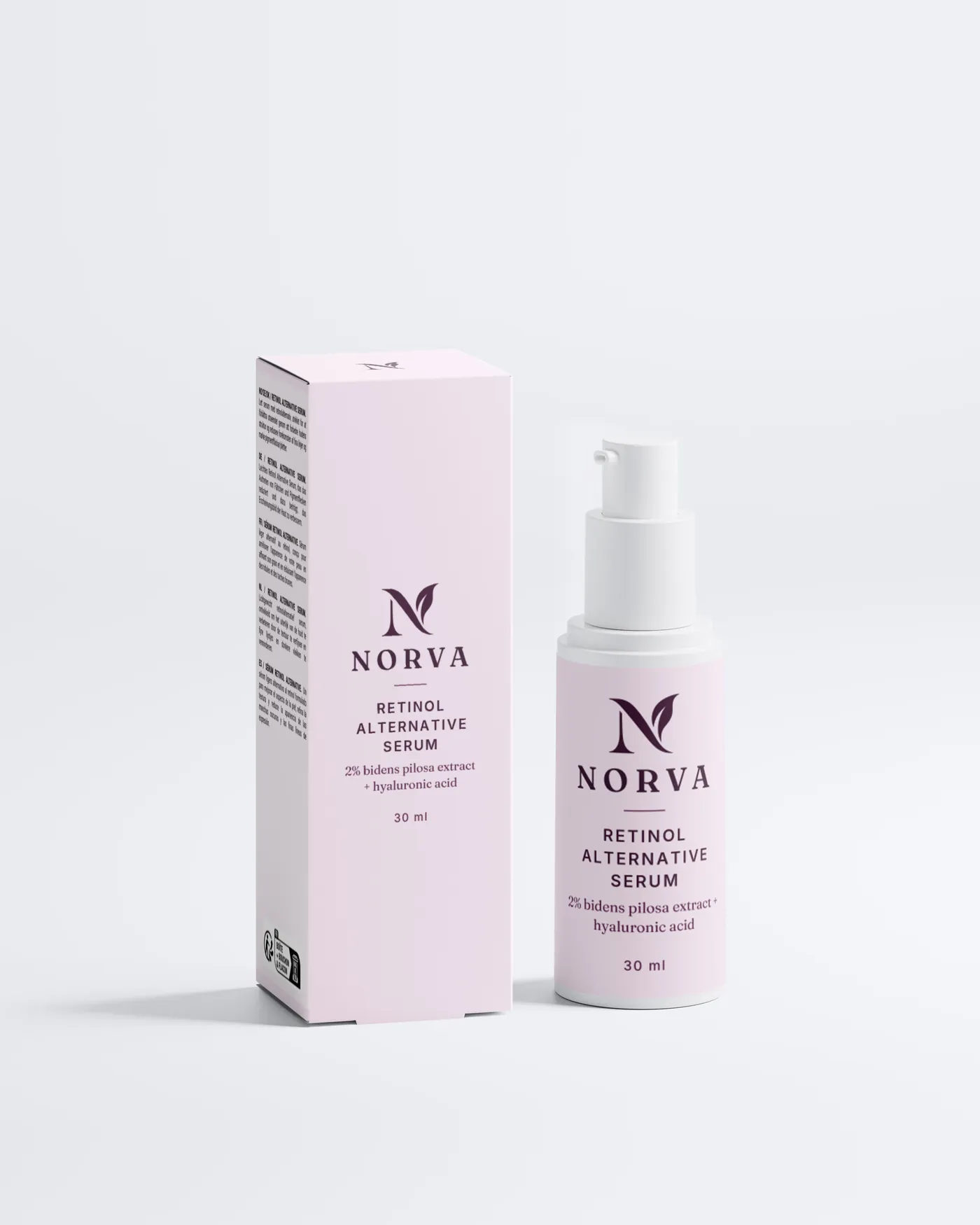
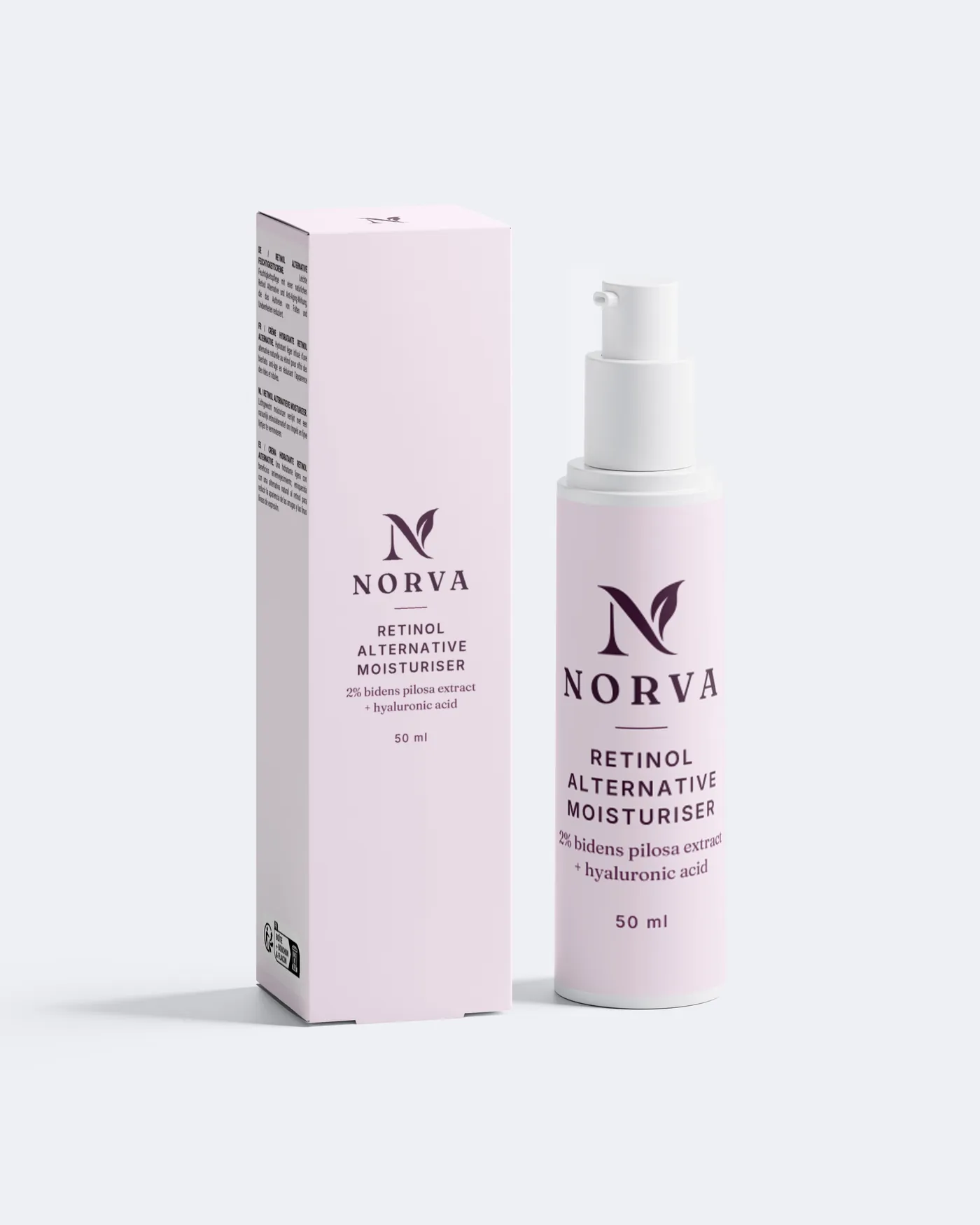
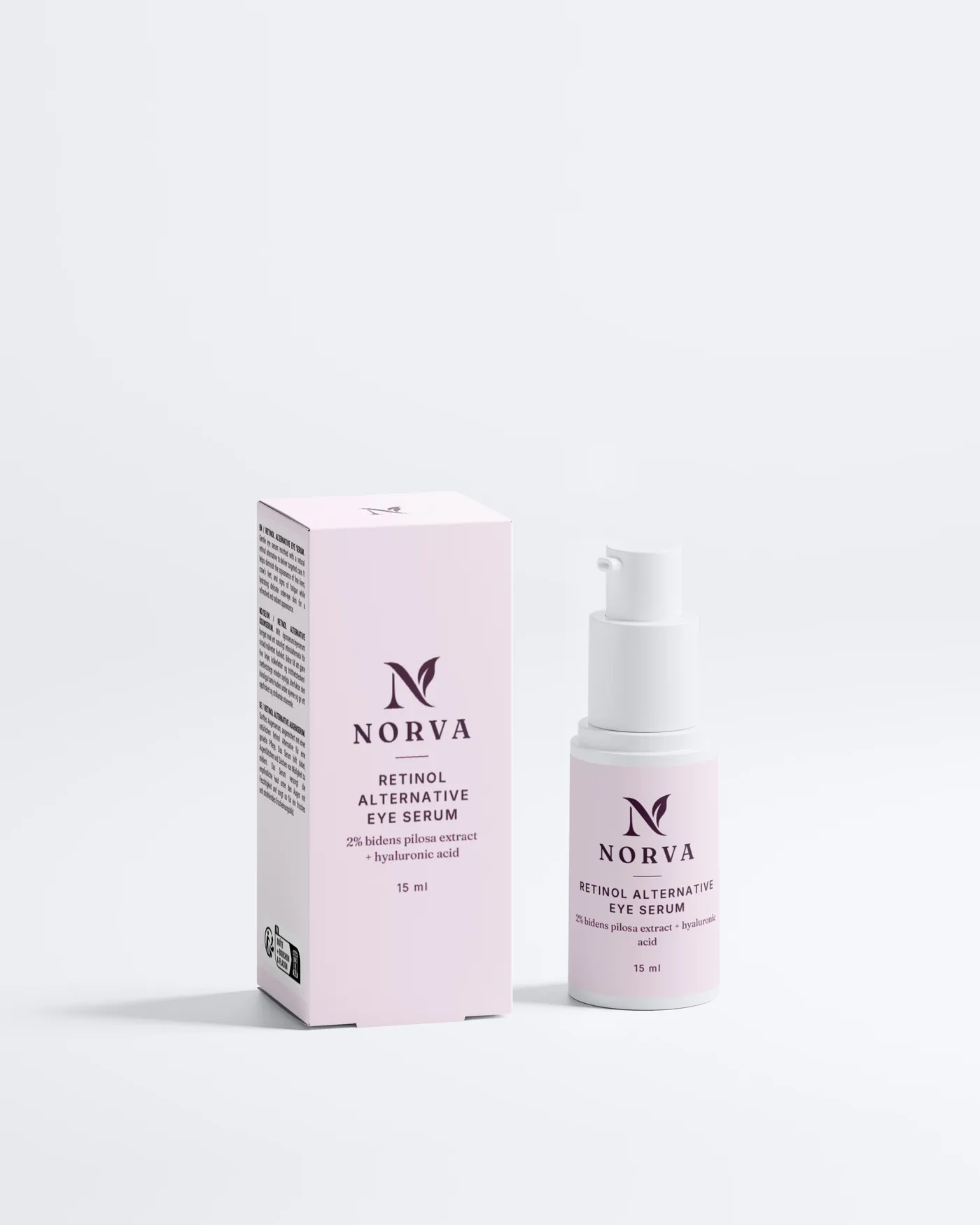
Our bidens pilosa range uses the extract at 2%, a figure printed on each label, in three formats:
- Retinol Alternative Serum: a lightweight serum with hyaluronic acid, vitamins C and E and jojoba oil. £30.
- Retinol Alternative Moisturiser: a silky face and neck moisturiser with hyaluronic acid and aloe juice. £30.
- Retinol Alternative Eye Serum: for the delicate under-eye area, with aloe, jojoba and castor oil. £24.
All three are cosmetic products designed to improve how skin looks and feels, made in the EU. Use them on clean skin, serum before moisturiser, and always follow with sunscreen in the morning.
References
- 1.Dieamant et al. (2015). Antiageing Mechanisms of a Standardized Supercritical CO2 Preparation of Black Jack (Bidens pilosa L.) in Human Fibroblasts and Skin Fragments. Evidence-Based Complementary and Alternative Medicine.
- 2.Ye et al. (2025). Improvement of Skin Condition Through RXR Alpha-Activating Materials. Biomolecules.
Frequently asked questions
Is bidens pilosa as effective as retinol?
There is no good head-to-head evidence that it matches retinol. Laboratory work suggests it acts on some of the same skin-cell pathways, and small studies report improvements in how skin looks, but retinol has decades of clinical research behind it. Think of bidens pilosa as a gentler option, not an equal one.
Can I use a retinol alternative every day?
Our bidens pilosa products are designed for morning and/or evening use. As with any new product, patch test first and introduce it gradually.
Can I use it with vitamin C or niacinamide?
Yes. Bidens pilosa doesn't carry the layering cautions that come with retinol. Apply thinnest to thickest: serum first, then moisturiser, and sunscreen in the morning.
Gear for this
Related reading
How to Apply Your Skincare, and in What Order
Where each Norva product sits in a morning and evening routine, how to layer a serum under a cream without pilling, and the order for the Peptide Routine, the Barrier Reset Routine and Sensitive Skin Essentials.
A Simple Peptide Skincare Routine, Morning and Night
How to build a peptide skincare routine that actually gets used: which steps matter, what order to apply them in, and how long to give it before you judge the results.