Loading…
Resource
Why is my face red and flaky?
11 min read
A red, flaky face is one of the most common things people ask us about, and one of the few where our first answer is often "this might not be a skincare problem". Most of the time it is: a stripped barrier from an eager new product, or a cold snap and the central heating going on. Sometimes it is a skin condition that a pharmacist or GP can treat properly, and no moisturiser will fix. This page goes through the likely causes, graded by how strong the evidence is, tells you early which signs mean getting help, and then covers the gentle routine we would use while skin settles.
Why is my face red and flaky?
The most likely cause is irritation: a product (often an exfoliating acid, a retinoid, a scrub or a harsh cleanser) or cold, dry weather has disturbed the outer layer of your skin, so it loses water, flakes and reacts. Other common causes are an allergy to an ingredient such as fragrance, seborrhoeic dermatitis (red, scaly patches by the nose and eyebrows), rosacea (redness that flushes and stings) and eczema. Less often it is psoriasis, and rarely lupus. If your face is blistered, weeping, swollen or painful, or you feel unwell, see a GP or call NHS 111 rather than trying new products.
See a pharmacist or GP first if any of these apply
We would rather put this near the top than at the bottom.
Get urgent help (urgent GP appointment or NHS 111) if the skin is blistered, crusty, leaking fluid or has pus-filled spots, is painful, swollen or warm, suddenly gets worse, or you have a high temperature or feel unwell. With eczema, the NHS lists these as possible signs of infection (NHS, atopic eczema). Also get urgent help if facial redness comes with a painful or red eye, blurred vision, sensitivity to light or a gritty feeling, which the NHS describes as possible signs of a serious eye complication of rosacea (NHS, rosacea).
Call 999 or go to A&E if skin quickly turns red with white, pus-filled bumps that join together, especially if you also feel hot, shivery or have a racing heart. The NHS lists this as a sign of a more serious form of psoriasis or an infection (NHS, psoriasis).
See a GP (not urgent) if:
- the redness comes and goes in flushes, stings with water or skincare, or you see small bumps or broken blood vessels, which can be rosacea (NHS, rosacea)
- you have a rash over your nose and cheeks that appears after sun, together with joint pain and tiredness that will not go away, which can be lupus (NHS, lupus)
- the patches are thick, scaly and well defined, or you have similar patches elsewhere
- a month of gentle care has made no difference, or it keeps coming back in the same places.
Talk to a pharmacist if the flaky patches sit around the sides of your nose, eyebrows or hairline, especially with dandruff, or if you think a product has caused a reaction. The NHS suggests speaking to a pharmacist about contact dermatitis that is troubling you (NHS, contact dermatitis). Pharmacists can recommend emollients and treatments that are not sold as cosmetics.
How we graded the causes
For each cause, we say how strong the link is between that cause and a red, flaky face, based on the sources we read. Strong means the NHS or a clinical review describes it clearly. Moderate means it is a recognised cause but a less typical picture. Rare but important means uncommon, and the reason to get a diagnosis.
Cause 1: irritation from products or overwashing (Strong)
This is the one we see most. The NHS says contact dermatitis is most commonly caused by irritants such as soaps and detergents, solvents or regular contact with water, and that it usually improves or clears if the substance is identified and avoided (NHS, contact dermatitis). On the face, the usual irritants are exfoliating acids, retinoids, scrubs, cleansing brushes, foaming cleansers that leave skin squeaky, and hot water.
What it looks like: tightness after washing, stinging when you apply products that never used to sting, redness, and fine flakes around the nose, mouth and chin.
How long it takes to settle is often longer than people expect. In a study where skin was irritated with a detergent, measurements did not return to normal for two weeks, and full recovery, including how easily the skin re-irritated, took about four weeks (Lee, Effendy and Maibach, 1997). If your face went red a week after starting a new acid, it may take a month of gentle care to recover. Our page on how long it takes to repair a skin barrier has the full evidence.
Cause 2: cold, dry weather and indoor heating (Strong)
Skin's outer layer needs water to keep itself in working order. Every step in maintaining the barrier, from strengthening its cells to processing its lipids, depends on that layer being hydrated, and environmental challenges often disturb those processes, resulting in dry, flaky skin (Rawlings and Harding, 2004). A British Journal of Dermatology review notes that dry and cold conditions, as in winter, make that dryness worse, and that glycerin-containing products help (Fluhr, Darlenski and Surber, 2008).
What it looks like: flaking on cheeks and around the mouth, tightness, a dull look, and redness where skin is chapped. Worse in winter, better in summer.
Cause 3: allergic contact dermatitis (Moderate)
Less common than irritation, but real. The NHS notes allergic contact dermatitis can be triggered by substances in cosmetics (NHS, contact dermatitis). Fragrance is a frequent culprit: in a study that patch-tested 3,119 adults from the general population in five European countries, 1.9% reacted to fragrance mix II and 1.8% to fragrance mix I (Diepgen and colleagues, 2016). Preservatives, hair dye and plant extracts are others.
What it looks like: itchy, red, sometimes bumpy or blistered skin, usually within hours or days of using a product (NHS, contact dermatitis). It may spread beyond where you applied it. If you suspect this, stop the product, keep the packaging, and see a pharmacist or GP; patch testing can identify the cause.
Cause 4: seborrhoeic dermatitis (Strong, for the right pattern)
The NHS describes seborrhoeic dermatitis as scaly, itchy, red patches on the scalp, face and other areas (NHS, dandruff). A clinical review in Clinical, Cosmetic and Investigational Dermatology describes it as a common, long-term inflammatory condition that mostly affects areas rich in oil glands, such as the scalp, face and trunk, linked to a yeast called Malassezia that lives on skin. Recommended treatments for the face include antifungal creams such as ketoconazole and short courses of mild anti-inflammatory creams (Dall'Oglio and colleagues, 2022).
What it looks like: greasy or yellowish flakes on red skin at the sides of the nose, in the eyebrows, between the brows, around the hairline and behind the ears, often with dandruff. It tends to come and go.
Why it matters here: moisturiser alone will not clear it. A pharmacist can advise on antifungal products, and a GP can confirm it.
Cause 5: rosacea (Strong, for the right pattern)
The NHS lists redness across the nose, cheeks, forehead and chin that comes and goes, a burning or stinging feeling when using water or skincare products, dry skin, small bumps and broken blood vessels as symptoms of rosacea. Triggers include alcohol, spicy food, hot drinks, sunlight and hot or cold temperatures. It cannot be cured, but a GP can help control it, and it can get worse if not treated (NHS, rosacea).
What it looks like: flushing that comes in waves, sensitivity to almost everything, sometimes with flaking, and on lighter skin, visible little vessels. The NHS advises using gentle skincare for sensitive skin and a high SPF every day, alongside seeing a GP (NHS, rosacea).
Cause 6: atopic eczema (Moderate on adult faces)
The NHS describes atopic eczema as making skin itchy, dry, cracked, scaly or thickened, and red or discoloured depending on skin tone. It is common on elbows, knees and hands, and on the face in babies and toddlers (NHS, atopic eczema). Adults can get it on the face too.
What it looks like: itch is the giveaway. If your red, flaky patches are intensely itchy, especially if you had eczema as a child or have asthma or hay fever, see a GP.
Cause 7: psoriasis (Moderate, less typical on the face)
Psoriasis causes dry, itchy, sore, flaky patches with silvery-white scales, often on the scalp and behind the ears, elbows, knees and back (NHS, psoriasis). It can reach the hairline and face. Well-defined, thick, scaly patches, especially with patches elsewhere on the body or pitted nails, are a reason to see a GP.
Cause 8: lupus (Rare but important)
Lupus is a long-term autoimmune condition. The NHS lists rashes that usually come on after sun, often over the nose and cheeks, alongside joint and muscle pain and extreme tiredness that rest does not fix (NHS, lupus). A red face on its own is almost never lupus. A rash across the cheeks together with those other symptoms is a reason to see a GP, because lupus is better managed when found early.
What to do while your face settles
If none of the warning signs above apply, and the most likely cause is irritation or weather, this is what we would do.
Stop: exfoliating acids, retinoids, scrubs, cleansing brushes, clay masks, strong vitamin C, and anything that stings. For about four weeks.
Cleanse gently: once a day, or twice if you wear make-up or sunscreen. Lukewarm water, fingertips, pat dry. On some days, water alone is fine.
Moisturise twice a day: a plain, fragrance-free moisturiser on slightly damp skin. Look for glycerin and a humectant like hyaluronic acid, and emollients like plant oils or butters.
Sunscreen every morning: irritated skin is more sensitive, and the NHS recommends daily high SPF for rosacea too.
Change one thing at a time: if you add a new product and skin flares, you will know which one.
Supporting ingredients with some evidence: panthenol (a dexpanthenol cream sped up barrier repair and reduced redness after irritation, in a study by Proksch and Nissen, 2002) and glycerin. For the full step-by-step, see how to repair your skin barrier on your face.
Where our products fit
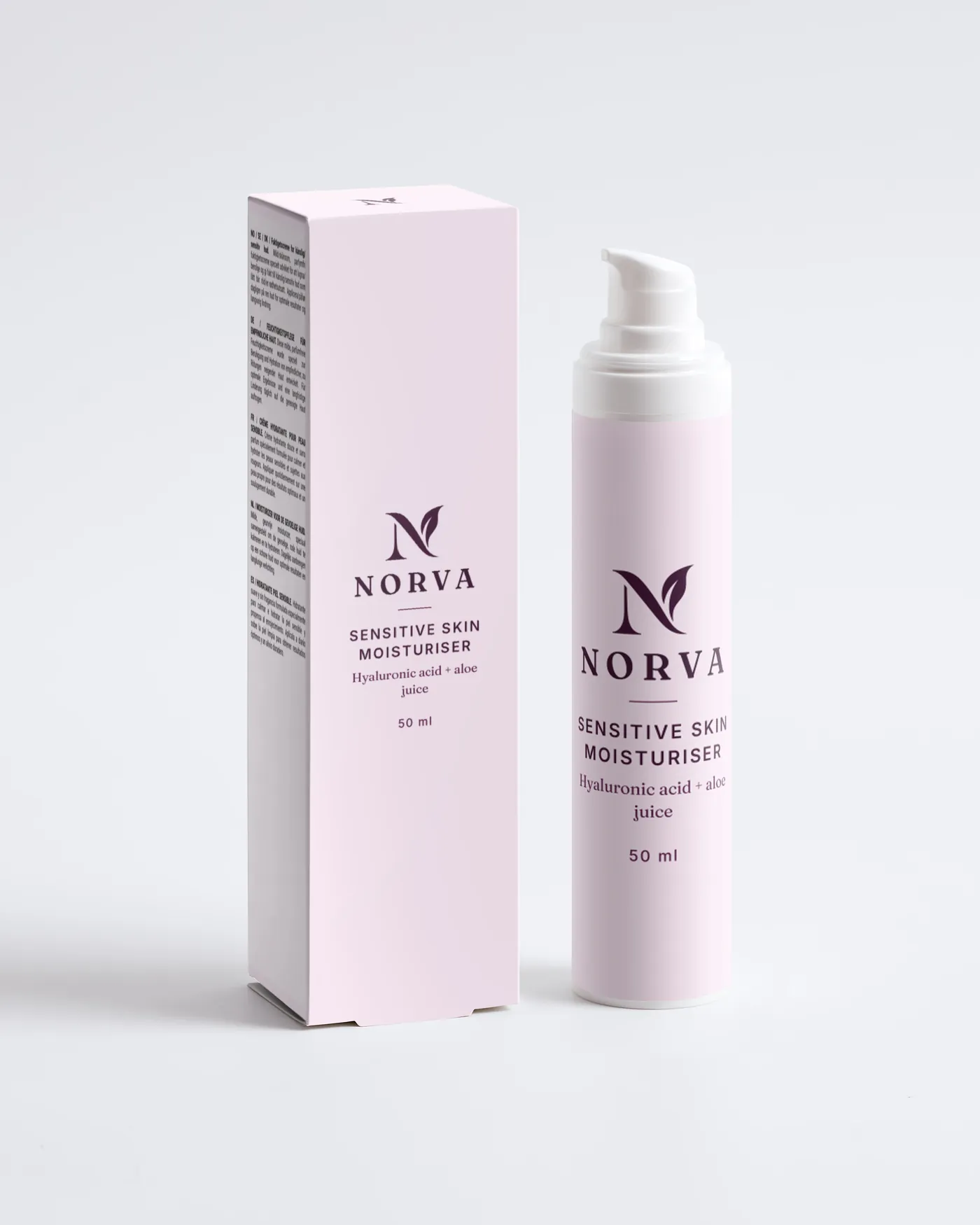
For a red, flaky face, the product we would point you to first is the Sensitive Skin Moisturiser, £32 for 50 ml. It is fragrance-free, made for sensitive and dehydrated skin, lightweight with a non-greasy finish, and made to help reduce the look of redness and irritation while supporting the skin's natural barrier. Its ingredients include aloe leaf juice, glycerin, jojoba oil, sodium PCA and two forms of hyaluronic acid, with no parfum and no essential oils. Apply daily to clean skin.
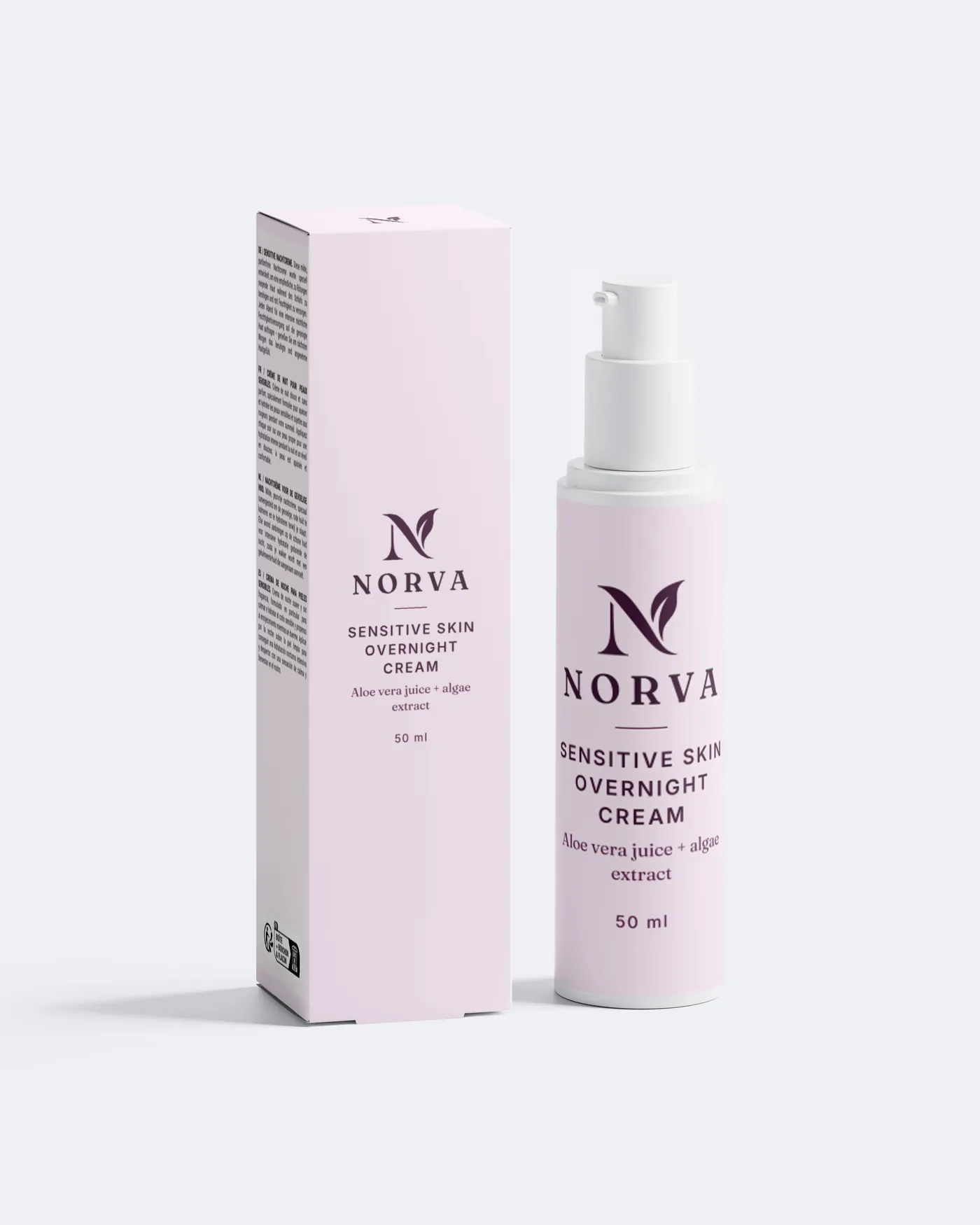
For night, the Sensitive Skin Overnight Cream (£32, 50 ml) has aloe vera juice, algae extract and hyaluronic acid. It is made without added fragrance but has a mild natural base scent.
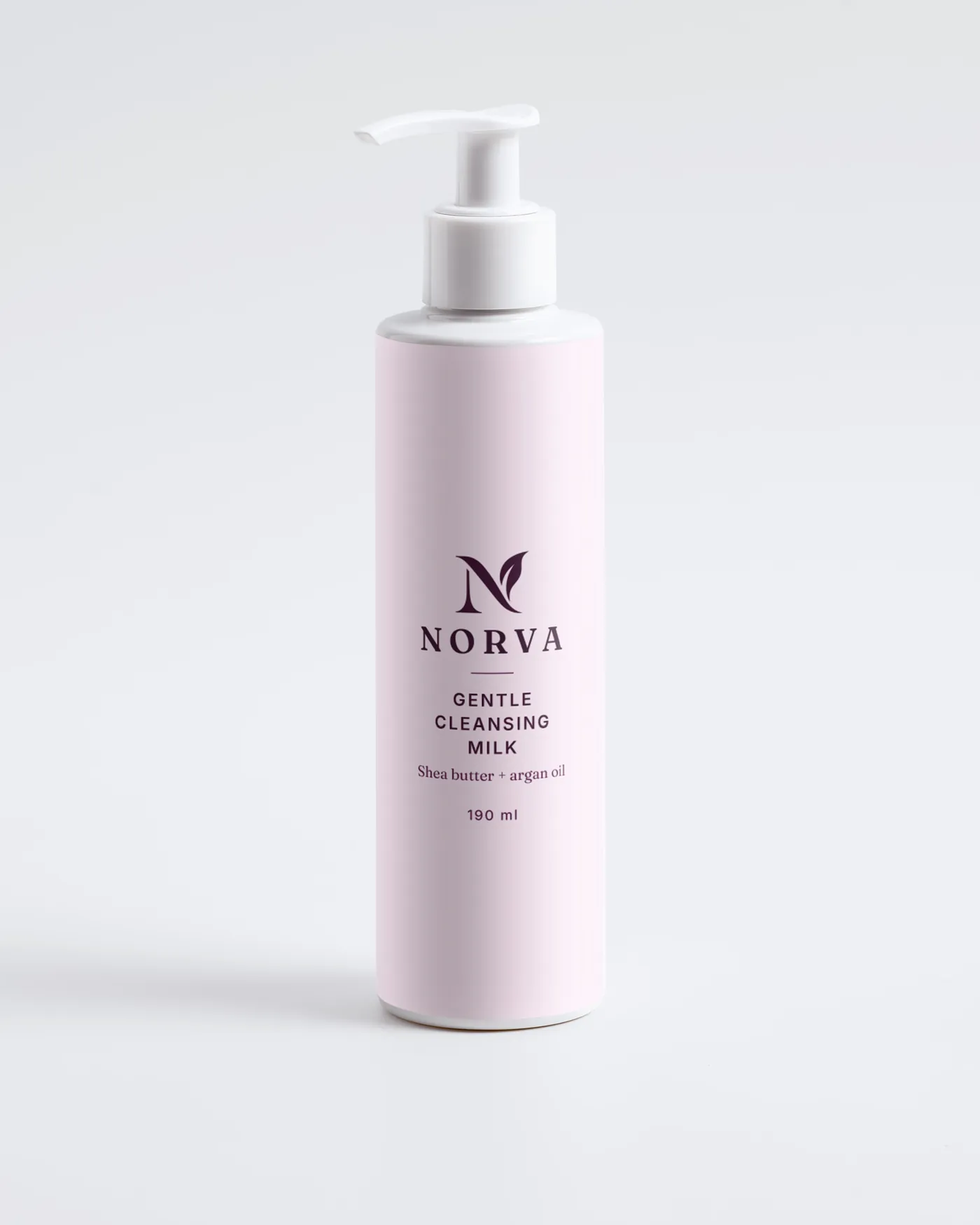
Both come in the Sensitive Skin Essentials set with the Gentle Cleansing Milk for £73, £13 less than separately. One honest note: the Gentle Cleansing Milk is fragranced (green and zesty), and so is every cleanser we sell. If you suspect fragrance is part of your problem, buy the moisturiser on its own and use a fragrance-free cleanser, or just lukewarm water, until your skin is calm. We would rather tell you that than sell you the set.
We would not start with a serum while skin is red and flaky. If you want one later, our skin barrier repair serum page explains which of ours suits which stage, and why our prebiotic jelly serum, which contains alcohol and fragrance, is not the one for stinging skin. For more on reading labels, see fragrance-free moisturiser UK.
Everything is made in the EU and shipped to order in typically 6 to 10 working days, with free UK and EU delivery over £55 and 30-day returns on unused items. Patch test on the inner arm for 24 hours before first use, even with fragrance-free products.
Who this is not for
If your face is blistered, weeping, swollen or painful, or you feel unwell, this page and our products are not the answer; get medical help. If your redness is rosacea, seborrhoeic dermatitis, eczema or psoriasis, a moisturiser can sit alongside treatment but does not replace it. And if you are hoping for a fast fix, irritated skin usually takes a few weeks to settle, whatever you put on it.
The short version
A red, flaky face is most often irritation from products or dry weather, which settles over about four weeks of gentle care. Allergy, seborrhoeic dermatitis, rosacea and eczema are the other common causes, and they need a pharmacist or GP. Blistering, weeping, swelling, feeling unwell or eye symptoms mean urgent help. While skin settles, keep it simple: gentle cleanse, a fragrance-free moisturiser such as our Sensitive Skin Moisturiser at £32, and sunscreen.
References
- 1.NHS. Contact dermatitis: symptoms, causes, when to see a pharmacist or GP.
- 2.NHS. Rosacea: symptoms, triggers, when to see a GP and urgent eye symptoms.
- 3.NHS. Atopic eczema: symptoms, when to see a GP and urgent signs of infection.
- 4.NHS. Dandruff: symptoms and possible causes, including seborrhoeic dermatitis on the face.
- 5.NHS. Psoriasis: symptoms, when to see a GP and when to call 999.
- 6.NHS. Lupus: symptoms, including a rash over the nose and cheeks.
- 7.Dall'Oglio et al. (2022). An Overview of the Diagnosis and Management of Seborrheic Dermatitis. Clinical, Cosmetic and Investigational Dermatology.
- 8.Lee, Effendy and Maibach (1997). Acute irritant contact dermatitis: recovery time in man. Contact Dermatitis.
- 9.Diepgen et al. (2016). Prevalence of contact allergy in the general population in different European regions. British Journal of Dermatology.
- 10.Rawlings and Harding (2004). Moisturization and skin barrier function. Dermatologic Therapy.
- 11.Fluhr, Darlenski and Surber (2008). Glycerol and the skin: holistic approach to its origin and functions. British Journal of Dermatology.
- 12.Proksch and Nissen (2002). Dexpanthenol enhances skin barrier repair and reduces inflammation after sodium lauryl sulphate-induced irritation. Journal of Dermatological Treatment.
Related questions
Why is my face suddenly red and flaky?
The most common reason is irritation from a skincare product, especially a new acid, retinoid, scrub or foaming cleanser, or from cold, dry weather. An allergy to an ingredient such as fragrance is less common. If it came on with swelling, blisters, oozing or feeling unwell, see a GP or call NHS 111.
Can rosacea make your face red and flaky?
Yes. The NHS lists redness that comes and goes, burning or stinging with water or skincare products, and dry skin among rosacea's symptoms. Rosacea needs a GP, because treatment can help and it can get worse without it.
Is red, flaky skin around the nose seborrhoeic dermatitis?
It can be. Seborrhoeic dermatitis causes scaly, itchy, red patches in oily areas such as the sides of the nose, eyebrows and scalp, often alongside dandruff. It is linked to a yeast that lives on skin and is usually treated with antifungal products, so a pharmacist or GP is the right first stop.
When should I see a GP about a red, flaky face?
If it is blistered, crusty, weeping or painful, if you feel unwell or have a temperature, if a painful red eye or blurred vision comes with facial redness, if a rash over your nose and cheeks comes with joint pain and tiredness, or if a month of gentle care has not helped.
What should I put on a red, flaky face?
Very little. A gentle cleanser or lukewarm water, a plain fragrance-free moisturiser morning and night, and sunscreen in the morning. Stop acids, retinoids, scrubs and anything that stings until skin has been calm for a couple of weeks.
Gear for this
Related reading
Skin Barrier Repair: What It Means and How to Do It
How to repair your skin barrier, plainly: what the barrier is, what damages it, the signs, the ingredients with evidence, and a routine that works in weeks.
Fragrance-Free Moisturiser UK: How to Choose and What to Check
A UK guide to buying a fragrance-free moisturiser: fragrance-free vs unscented, how to read the label, who needs one, and which of our products truly qualify.
Skin Barrier Repair Moisturiser: Picking a Day Texture
How to choose a skin barrier repair moisturiser for daytime: gel, lotion or cream by skin type, what it needs to contain, and what to avoid while skin stings.
Skin Barrier Repair Serum: What to Look For and What to Skip
What a skin barrier repair serum can and cannot do, which ingredients have evidence, what to avoid while skin stings, and an honest look at our jelly serum.