Loading…
Resource
How long does it take to repair a damaged skin barrier?
12 min read
Search this question and you will be told "two to four weeks" or "28 days" with great confidence and no source. We went looking for where those numbers come from. Some of it is solid, some of it is stretched, and one important part has not been measured at all.
How long does it take to repair a damaged skin barrier?
How long it takes to repair a skin barrier depends on how it was damaged. In controlled studies, a mild one-off disruption in young adults was about half recovered in a day and mostly recovered in three. After a 24-hour irritant patch, skin measurements took two to three weeks to return to normal, and skin stayed more reactive than usual until about four weeks. Repeated, built-up damage takes longer than that, and older skin recovers more slowly at every stage. So "two to four weeks" is a fair middle estimate for a moderate upset, not a guarantee, and nobody can promise you a date.
Below is each piece of evidence, with how much weight we think it can bear. After that, what actually shortens or lengthens the wait, and where our Barrier Reset Routine (£75) fits.
What "repair" is being measured
The skin barrier sits in the outermost layer of skin. Researchers mostly track it with transepidermal water loss, the rate at which water escapes through the skin: more water escaping means a leakier barrier. They also measure surface hydration and redness. "Recovered" in a study means those numbers are back to where they started.
There is a second, stricter definition, and it turns out to matter: skin that not only measures normal but also reacts normally when challenged again. As you will see, those two finish lines are about a week apart.
The evidence, graded
1. A mild, one-off disruption: hours to days
What was done. Researchers stripped the outer layer on the arms of young adults aged 20 to 30 using tape or acetone, then measured how fast the barrier came back. It was 50% recovered at 24 hours and 80% recovered at 72 hours (Ghadially and colleagues, 1995).
How much weight it bears. Good. It is a controlled human study in a leading journal, and the finding that a healthy barrier starts rebuilding within hours is well established. The limits: small groups, arms not faces, and a clean one-off insult. It tells you what happens after one over-enthusiastic scrub. It does not describe three months of nightly acids.
What it means for you. If you overdid it once, a peel that was too strong or a new cleanser that stripped you, and you stop straight away, expect the worst to pass within days.
2. Irritant damage: two to four weeks
What was done. Two small studies put a detergent irritant on volunteers' arms under a patch for 24 hours and then followed the skin until it was back to normal.
In the first, with 11 volunteers, complete repair took 17 days. Dryness was slow to show up, with the lowest hydration readings as late as day 7, and hydration was the last thing to return to baseline (Wilhelm, Freitag and Wolff, 1994).
The second had 18 volunteers aged 30 to 51. Skin measurements did not normalise until two weeks and were all back to normal after three. When the researchers re-challenged the same patch of skin, though, it still over-reacted at three weeks. Complete recovery, including normal reactivity, took approximately four weeks (Lee, Effendy and Maibach, 1997).
How much weight it bears. Moderate. Two independent groups, similar answers, proper instruments. They are small, they used one model irritant on arms, and the second paper says plainly that other chemicals may behave differently.
What it means for you. This is where "two to four weeks" comes from, and it is a reasonable expectation for a moderate, short-lived upset. Two details are worth holding on to. Skin can get drier in the first week even after you have stopped the cause, which is the delayed dryness the first study found, so feeling worse on day five does not mean your routine is failing. And skin that looks and measures fine at three weeks may still be touchy, which is why bringing your actives back at the first sign of calm so often goes badly.
3. Repeated, built-up damage: longer, with no firm number
What was done. The first research group also ran a cumulative version: 20 minutes of irritant a day for eight days. It produced more pronounced dryness, scaling and fissuring than the single exposure, and the authors concluded that an extended time is needed for complete healing (Wilhelm, Freitag and Wolff, 1994).
How much weight it bears. Moderate for the direction, weak for the duration. The abstract does not give a number of days, and we are not going to make one up.
What it means for you. Most real-world barrier trouble is this kind: weeks or months of a bit too much. Expect recovery to take longer than the single-exposure studies suggest. Anyone quoting an exact figure for it is guessing.
4. Age: slower at every stage
What was done. The tape-stripping study compared its young adults with people over 80. The older group's barrier was easier to disrupt in the first place, needing 18 tape strips on average against 31 in the young. It was 15% recovered at 24 hours, against 50% in the young, and stayed behind over the following six days (Ghadially and colleagues, 1995).
How much weight it bears. Good for the comparison of those two age groups. Nobody in the study was between 30 and 80, so where you sit on that slope at 45 or 60 is an inference.
What it means for you. Whatever timeline you read, including the ones above, lengthen it as you get older.
5. The "28 days" figure: a calculation, and not quite the right one
What was done. Two papers estimated how long the epidermis takes to fully replace itself. One derived 45 days for the forearm from a model based on shedding rates (Bergstresser and Taylor, 1977). Another recalculated earlier data and arrived at 47 to 48 days, not the 39 previously quoted (Iizuka, 1994).
How much weight it bears. Weak as a guide to barrier repair. These are model-based estimates of total turnover, from the dividing cells at the bottom to the shedding cells at the top. The barrier does not have to wait for a complete new epidermis; the tape-stripping work shows it starts restoring function within hours. And the published estimates are nearer six or seven weeks than four.
What it means for you. "Your skin renews every 28 days, so that is how long repair takes" is tidy and not well supported. We would not plan around it.
6. Your face: the honest gap
Every study above was done on arms. A review of how the outer skin layer differs around the body describes facial skin as thinner, made of fewer cell layers than the trunk and limbs, with a relatively poor barrier function to begin with (Tagami, 2008). Whether that makes a face recover faster or slower than a forearm after the same insult, we could not find a study that says. It is an extrapolation in every article you will read on this, including this one.
What the evidence adds up to
| Situation | What studies found | Strength of evidence | |---|---|---| | One-off mild disruption, young adult | About half recovered in a day, most in three | Good, small study, arms | | Single irritant exposure | Measurements normal in two to three weeks | Moderate, two small studies | | Same, including normal reactivity | About four weeks | Moderate, one small study | | Repeated daily irritation | "Extended time", no figure | Direction only | | Over-80s versus 20s | Much slower from the first day | Good for those groups | | Full epidermal turnover | About 45 to 48 days, modelled | Weak as a repair guide | | Faces specifically | Not measured | None |
If you want to get better at weighing studies like these, small groups and all, our guide to reading small skincare trials is a short read.
What makes it take longer
Not actually stopping. This is the big one. Recovery in every study began when the irritant was taken away. If you have cut your acid from nightly to twice a week, the clock has not really started.
Re-challenging too early. The four-week study is the evidence here: skin that measured normal at three weeks still over-reacted. Bring back one product at a time, at a lower frequency than before.
Hot water, scrubbing and harsh cleansers. Each wash is a small new insult.
Age, as above.
Something that is not a cosmetic barrier problem. Eczema, rosacea, contact allergy and seborrhoeic dermatitis can all look like a "damaged barrier" and will not resolve on this timeline with moisturiser alone.
What can help it along
There is some controlled evidence that the right cream shortens the wait. After irritant damage under patch-test chambers, a cream containing dexpanthenol, applied twice daily, gave significantly accelerated barrier repair compared with both its plain base and untreated skin, with better hydration and less redness (Proksch and Nissen, 2002). The plain base also improved hydration. So moisturising at all helped, and the active added to it.
We mention that study because it is the clearest example, not because we sell a dexpanthenol face cream. We do not. The general lesson is what carries over: gentle cleansing, hydration, a lipid-rich cream and time. The how-to is covered step by step in what skin barrier repair means, and the face-specific version, including which actives to pause, is in how to repair your skin barrier on your face.
A realistic timeline to plan around
This is our reading of the evidence turned into something you can use. It is a planning guide, not a promise, and your skin may run faster or slower.
Days 1 to 7. Stop the cause completely. Expect stinging to ease. Do not be alarmed if dryness and flaking peak around the end of the first week; one study found hydration at its lowest on day 7.
Weeks 2 to 3. Tightness after washing fades. Flaking settles. Skin may look normal by the end of week three.
Week 4. The point at which, in one small study, skin stopped over-reacting. The earliest we would reintroduce a single active, at half the old frequency.
Weeks 5 to 8. If the damage built up over months, or your skin is older, this is a more realistic window for feeling properly back to normal.
No change by week 6. See a pharmacist or GP. Six weeks of gentle care with nothing to show for it suggests something other than an over-exfoliated face.
Where the Barrier Reset Routine fits
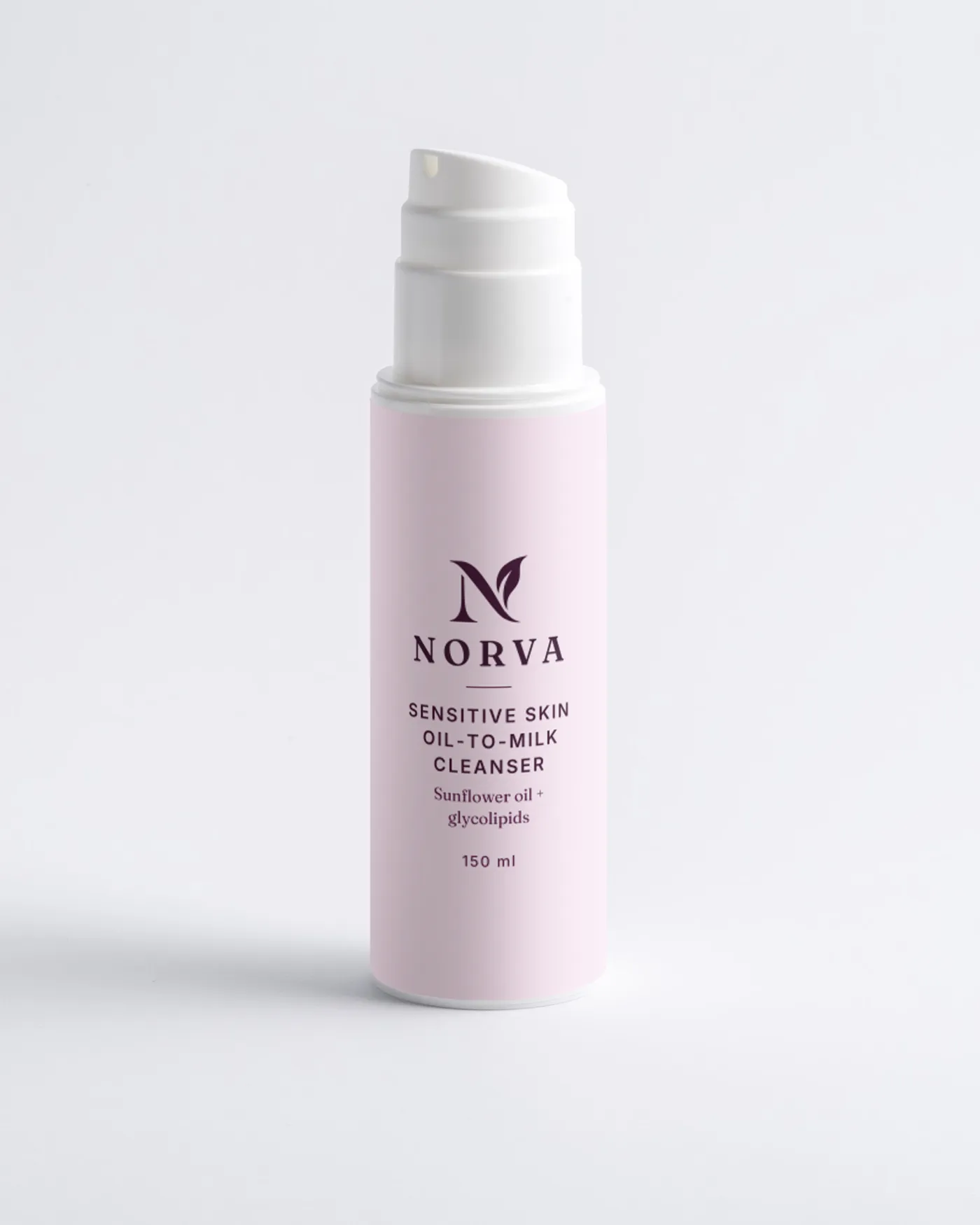
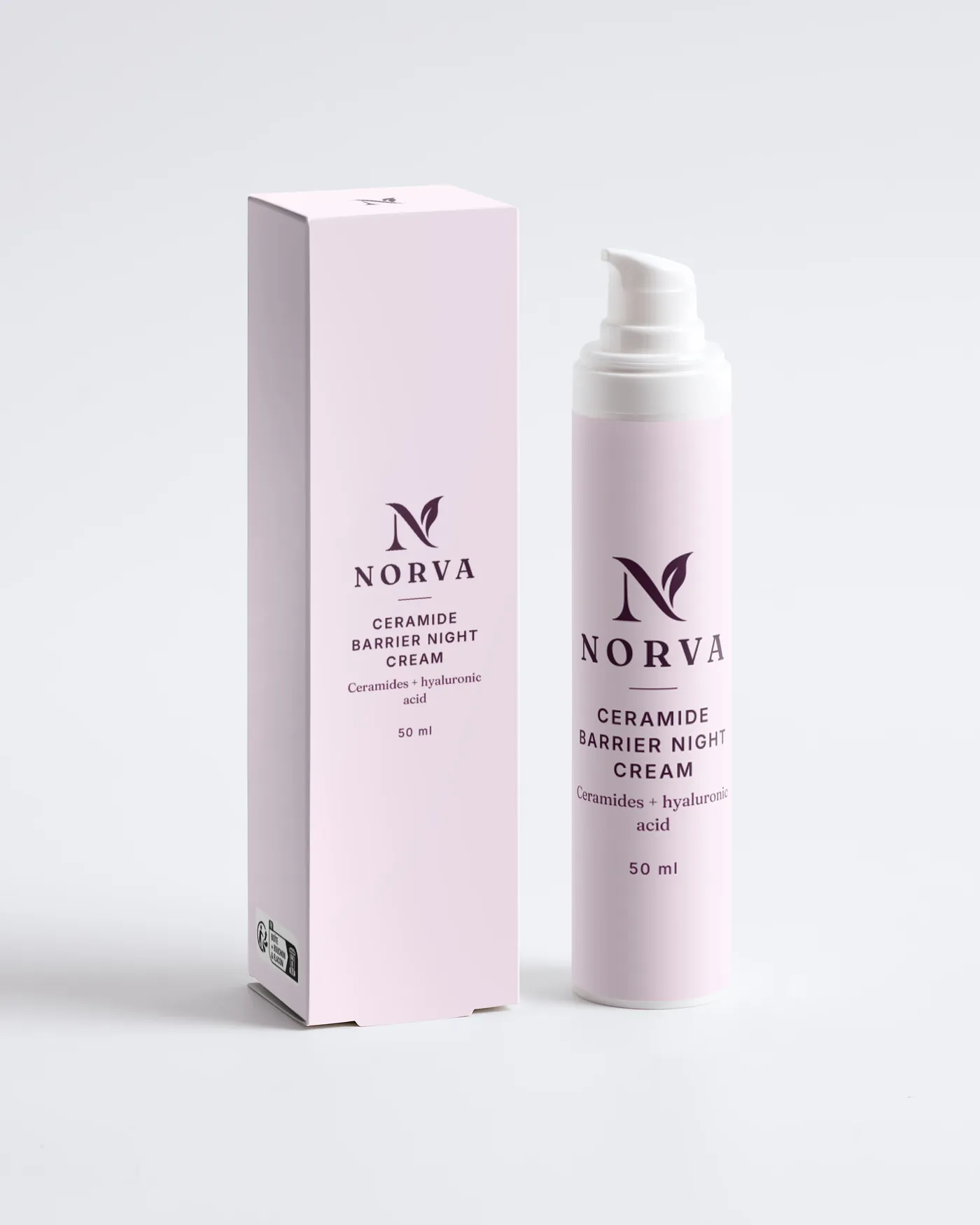
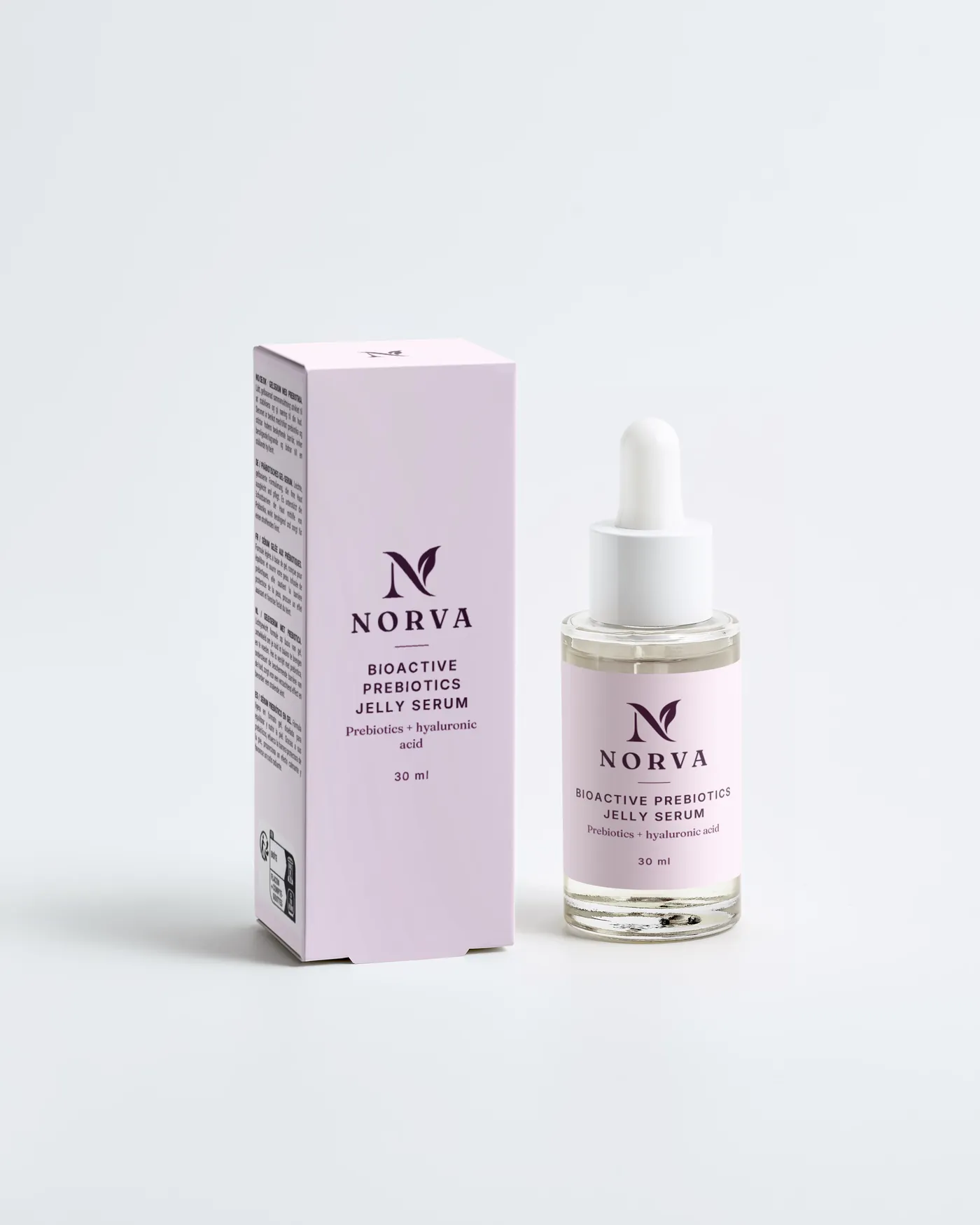
The Barrier Reset Routine is our three-step set for stressed, tight-feeling skin: the Sensitive Skin Oil-To-Milk Cleanser (150 ml), the Bioactive Prebiotics Jelly Serum (30 ml) and the Ceramide Barrier Night Cream (50 ml). Together they are £75, which is £13 less than buying the three separately, and the set qualifies for free UK and EU delivery. On a subscription it is 10% off every 30 days, 15% off for two sets every 60 days or 20% off for three every 90 days.
What it does is cover the basics the evidence points to. A cleanser that removes make-up without stripping. A light serum with hyaluronic acid and sodium PCA for hydration. A night cream with ceramides, shea butter, cocoa butter and jojoba oil for lipids. That is a gentle-cleanse, hydrate, seal routine in one box.
It does not change the timeline above. We have not run a trial on the routine, and we are not going to tell you it repairs a barrier in a set number of days. It gives your skin decent conditions to get on with its own repair.
Three things to know before buying. All three products are fragranced. The jelly serum lists alcohol high in its ingredients. And everything is made to order in the EU, typically arriving in 6 to 10 working days, so if your face is sore today, use whatever plain moisturiser you already own in the meantime and do not wait for the post. If you know fragrance sets you off, our fragrance-free Sensitive Skin Moisturiser is the safer choice, and our guide to barrier repair products explains what else to look for. Unused items can be returned within 30 days.
Who this is not for
If your skin is cracked, weeping, bleeding, swollen or very itchy, or the problem keeps coming back in the same places, that is for a GP, not a timeline on a shop's website. If you have a diagnosed condition such as eczema or rosacea, the studies here were on healthy volunteers and do not describe your skin. And if you were hoping for a product that fixes a barrier by the weekend, we do not sell one. Nobody does.
The short version
A healthy young barrier bounces back from a single mild insult within days. After real irritant damage, the small human studies that exist say two to three weeks to measure normal and about four to behave normally. Built-up damage and older skin take longer, the popular 28-day figure is not well founded, and faces have not been studied directly. Plan for a month, stop the cause on day one, and do not test your skin with actives until week four. If you want a gentle three-step set for the wait, the Barrier Reset Routine is £75. Patch test each product on the inner arm for 24 hours first.
References
- 1.Ghadially et al. (1995). The aged epidermal permeability barrier: structural, functional, and lipid biochemical abnormalities in humans and a senescent murine model. Journal of Clinical Investigation.
- 2.Wilhelm, Freitag and Wolff (1994). Surfactant-induced skin irritation and skin repair: evaluation of the acute human irritation model by noninvasive techniques. Journal of the American Academy of Dermatology.
- 3.Wilhelm, Freitag and Wolff (1994). Surfactant-induced skin irritation and skin repair: evaluation of a cumulative human irritation model by noninvasive techniques. Journal of the American Academy of Dermatology.
- 4.Lee, Effendy and Maibach (1997). Acute irritant contact dermatitis: recovery time in man. Contact Dermatitis.
- 5.Iizuka (1994). Epidermal turnover time. Journal of Dermatological Science.
- 6.Bergstresser and Taylor (1977). Epidermal 'turnover time': a new examination. British Journal of Dermatology.
- 7.Proksch and Nissen (2002). Dexpanthenol enhances skin barrier repair and reduces inflammation after sodium lauryl sulphate-induced irritation. Journal of Dermatological Treatment.
- 8.Tagami (2008). Location-related differences in structure and function of the stratum corneum with special emphasis on those of the facial skin. International Journal of Cosmetic Science.
Related questions
How long does it take to repair a skin barrier?
It depends on the damage. In lab studies a mild, one-off disruption in young adults was about half recovered within a day. After a deliberate irritant patch, skin measurements took two to three weeks to return to normal and about four weeks to stop over-reacting. Repeated damage and older skin take longer.
Can you repair a skin barrier overnight?
No. A rich cream can make skin feel comfortable overnight, and that is worth having, but feeling better is not the same as being rebuilt. The studies that measured recovery after real irritation counted in weeks.
Why is my skin barrier taking so long to heal?
The usual reasons are that the cause has not fully stopped, the damage built up over months, or your skin is older and recovers more slowly. If gentle care for four to six weeks changes nothing, see a pharmacist or GP, because it may not be a cosmetic problem.
How do I know my skin barrier is repaired?
Products stop stinging, skin no longer feels tight after washing, flaking has gone, and a product that used to set you off no longer does. That last one is the real test, and it tends to arrive after the skin already looks normal.
Does a barrier repair routine speed things up?
It can help. In one controlled study a dexpanthenol cream significantly accelerated barrier repair after irritant damage compared with its plain base or no treatment. No cream makes recovery instant, and nothing works if the cause of the damage continues.
Gear for this
Related reading
Skin Barrier Repair: What It Means and How to Do It
How to repair your skin barrier, plainly: what the barrier is, what damages it, the signs, the ingredients with evidence, and a routine that works in weeks.
Why a Small 28-Day Skincare Trial Is Weak Evidence: A Worked Example
A 49-person, 28-day study of a peptide cream reported dermatologist-assessed improvements. Using it as a case study in how to read the clinical claims on any product page.