Loading…
Resource
Which skin barrier repair products do I actually need?
10 min read
Quick answer: You need three skin barrier repair products, used in this order: a gentle cleanser, one hydrating serum applied to damp skin, and a lipid-rich cream on top. Sunscreen in the morning. Everything else, including acids, retinoids and scrubs, gets paused for four to six weeks. Our three are the Sensitive Skin Oil-To-Milk Cleanser, the Bioactive Prebiotics Jelly Serum and the Ceramide Barrier Night Cream, sold together as the Barrier Reset Routine for £75.
Which skin barrier repair products do I actually need?
Three. A cleanser that does not strip, a serum that holds water, and a cream that puts lipids back. That is the whole shopping list. The reason most barrier routines fail is not a missing product; it is too many products, or the right products used in the wrong order, or a barrier cream layered on top of the acid toner that is causing the damage in the first place.
This page walks through the three, why each one earns its place, what order they go in, and what to stop buying. We sell a version of each, and we will say where ours are not the right fit.
First, what you are repairing
Your skin barrier is the outermost layer, the stratum corneum: flattened dead cells held together by a lipid mortar of ceramides, cholesterol and fatty acids (Proksch, Brandner and Jensen, 2008). When the mortar is depleted, water leaves faster and irritants get in. Skin stings, tightens, flakes and reddens. Repair means letting the skin rebuild that mortar, which it does on its own if you stop interrupting it and keep it hydrated while it works. Hydration is not cosmetic here: each stage of barrier maturation depends on the stratum corneum having enough water in it (Rawlings and Harding, 2004).
So the three products map to three jobs: cleanse without stripping, hold water, add lipids.
Product 1: a cleanser that does not strip
What it does. Removes make-up, SPF and the day without removing the lipids you are trying to rebuild.
What to look for. No hard foam, no hot water, no scrubbing. Cream, milk, oil-to-milk or gel-cream textures. Skin should not feel tight after rinsing. If it does, the cleanser is doing barrier damage before your routine has even started. The lab model for barrier damage is sodium lauryl sulphate, a foaming detergent (Proksch and Nissen, 2002), which tells you something about what to avoid on the label.
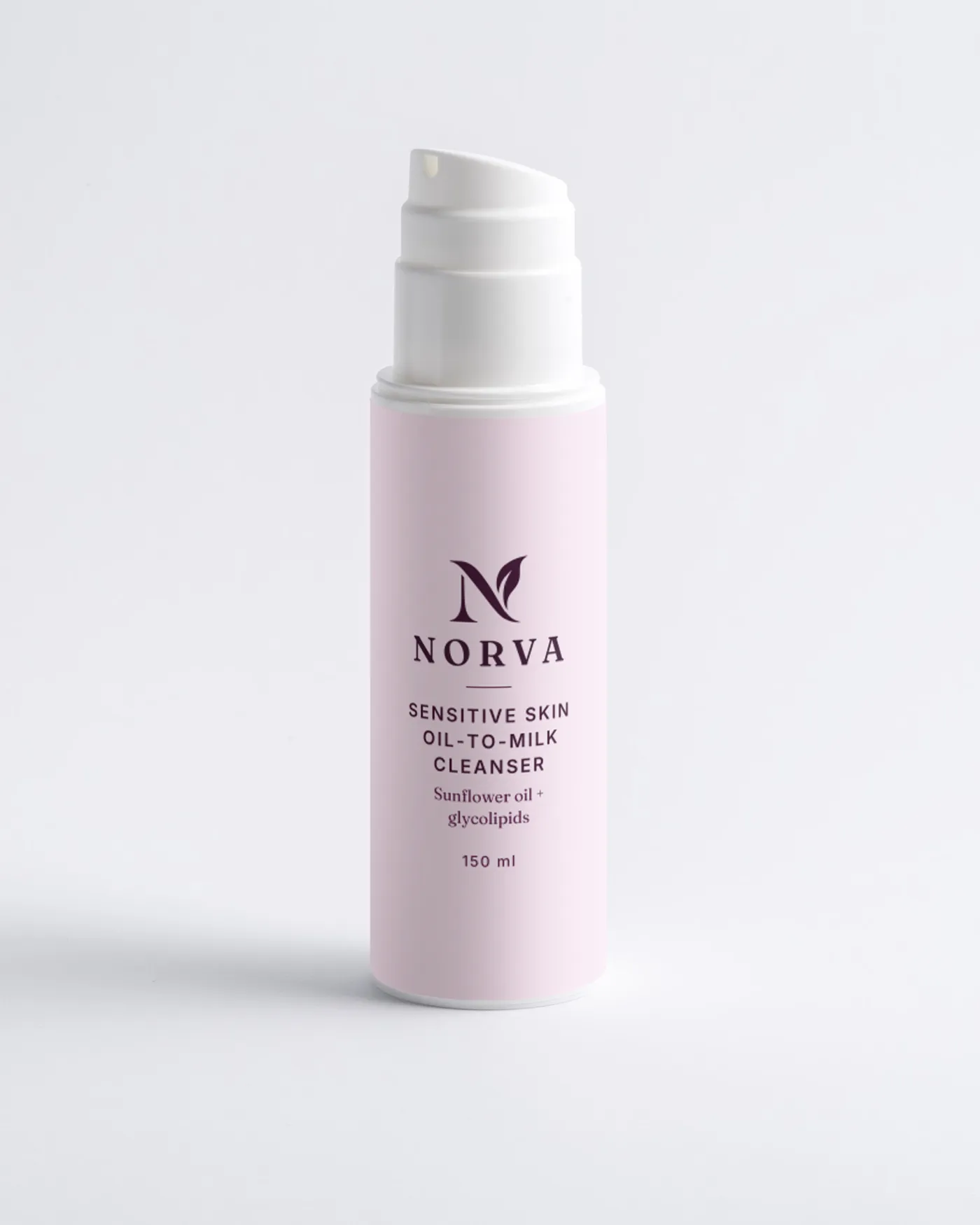
Ours. The Sensitive Skin Oil-To-Milk Cleanser (£26, 150 ml) goes on as an oil-gel and turns to a milk with water. It takes off heavy make-up in one go, so you do not need a second cleanse, and it is made for sensitive, dry and dehydrated skin. It is fragranced (light white flowers, jasmine and sandalwood). If you react to fragrance, our Sensitive Skin Face & Body Cleanser (£22, 390 ml) is a minimalist alternative, though it too carries a scent (powdery violet with soft vanilla), so patch test either.
How to use it. Once at night, and in the morning only if you feel you need it. Lukewarm water. Pat dry and leave skin slightly damp for the next step.
Product 2: one hydrating serum
What it does. Holds water at the surface so the barrier can do its rebuilding. This is the step people over-buy: three serums with twelve actives between them, when the job is one serum with humectants.
What to look for. Glycerin, hyaluronic acid, sodium PCA, panthenol or beta-glucan. Nothing exfoliating. If you want one active alongside, niacinamide at moderate strength is the best-evidenced barrier choice: in cultured skin cells it raised ceramide synthesis 4.1 to 5.5-fold, and applied to dry skin it increased stratum corneum ceramides and lowered water loss (Tanno and colleagues, 2000).
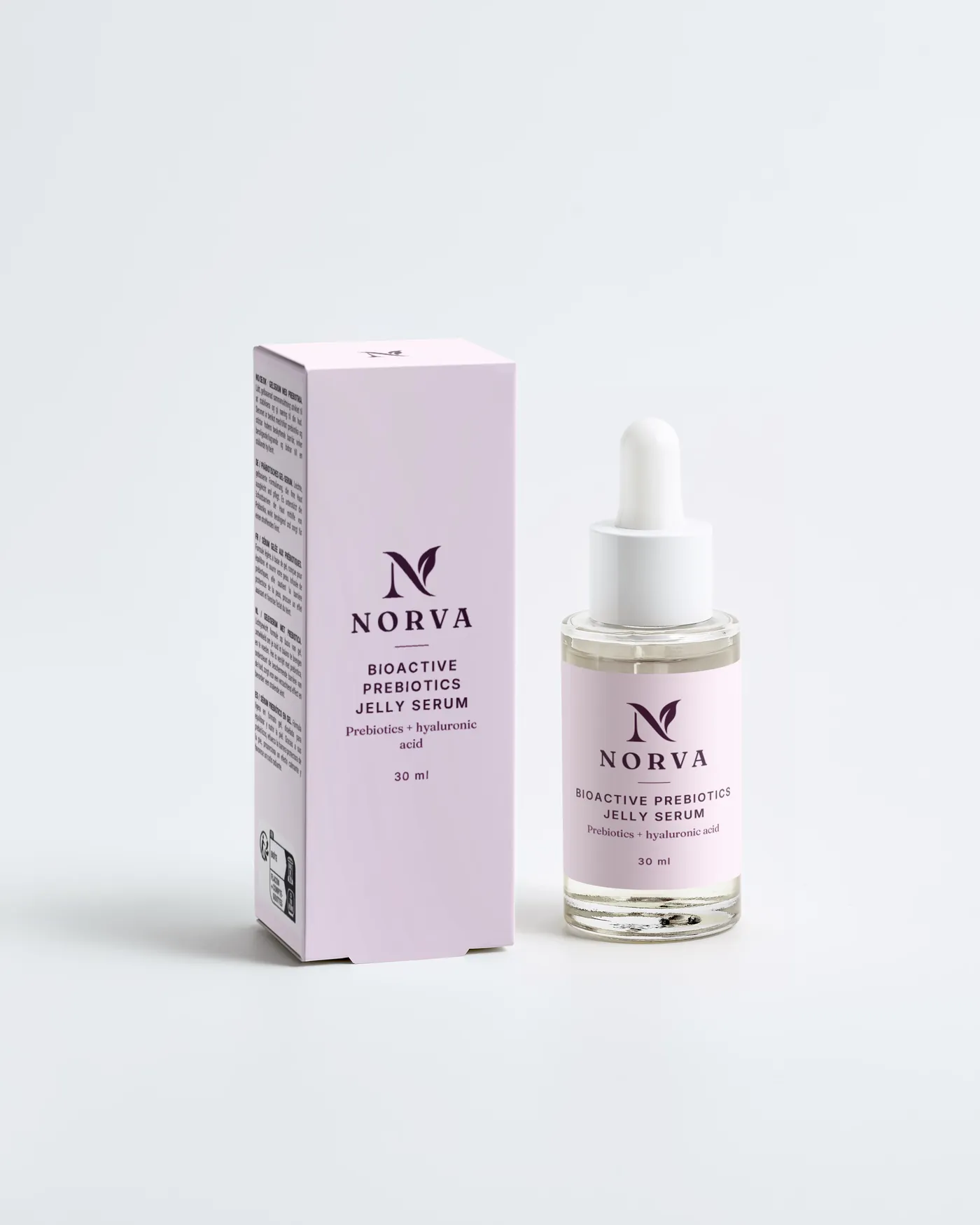
Ours. The Bioactive Prebiotics Jelly Serum (£30, 30 ml) is a light gel with hyaluronic acid, sodium PCA and a lactobacillus ferment lysate, made for all skin types including barrier-stressed skin. It is fragranced (fresh green, citrus and mint). If you want fragrance-free, or you want niacinamide in the mix, our Exosome & Niacinamide Serum (£30, 30 ml) is fragrance-free and suitable for sensitive skin.
How to use it. Two or three pumps on slightly damp skin, morning and night, pressed in. One serum. Not two.
Product 3: a lipid-rich cream
What it does. Puts back the lipids the barrier is made of and slows water loss while skin makes more. If you can only afford one of the three, this is the one.
What to look for. Ceramides in the ingredient list (ceramide NP, AP, EOP or glycosphingolipids), plus plant butters or oils, plus a humectant. Nothing that stings. In a 2018 study, a cream built to mimic the skin's own moisturising systems, with ceramides and natural moisturising factor components, significantly reduced water loss over 24 hours and out-hydrated three reference moisturisers at 24 hours (Spada, Barnes and Greive, 2018).
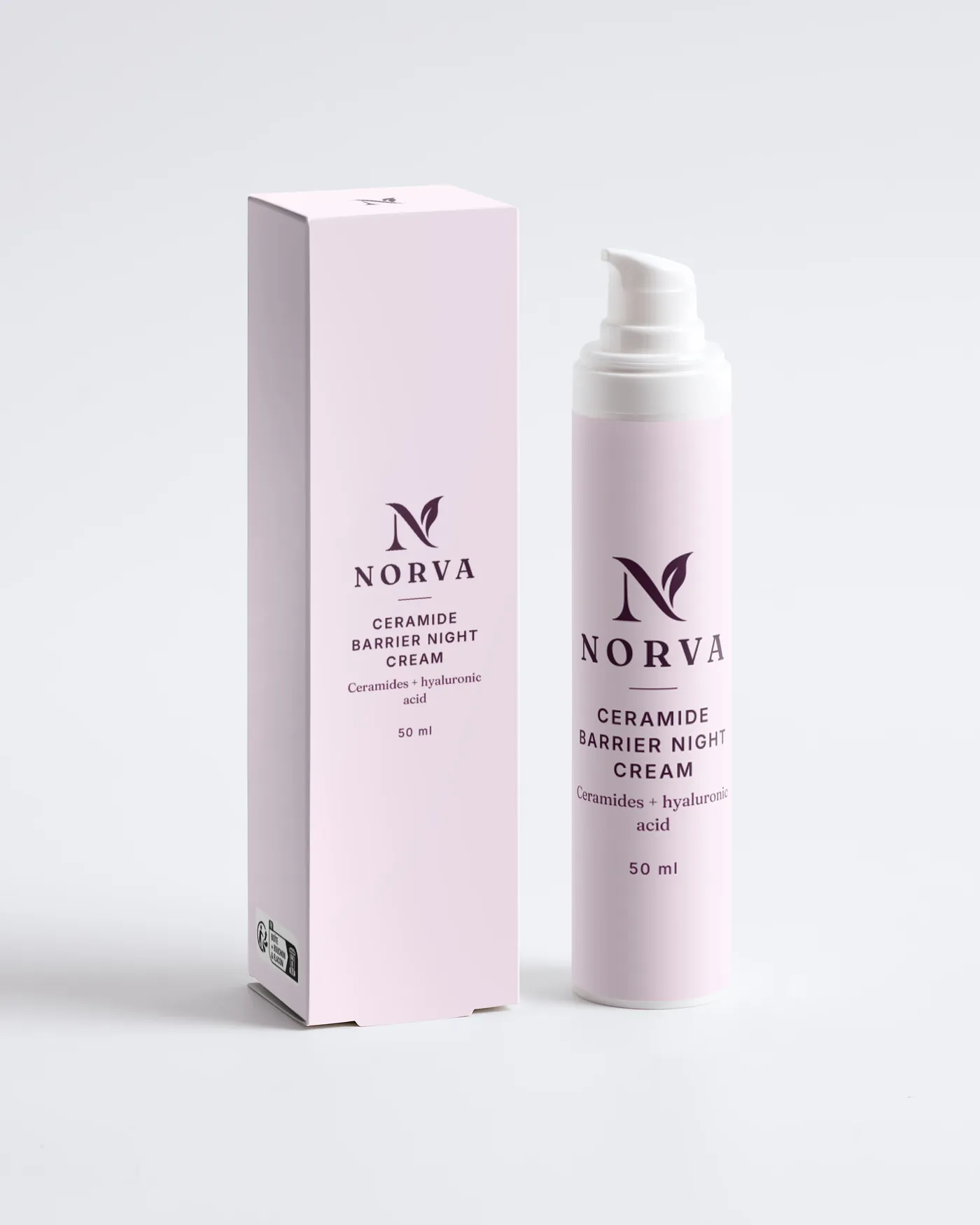
Ours. The Ceramide Barrier Night Cream (£32, 50 ml) has ceramides, hyaluronic acid, sodium PCA, shea butter, cocoa butter and jojoba oil in an aloe base, for normal, dry and barrier-stressed skin. It is a night cream by design. It is fragranced (white flowers and fresh lavender). The fragrance-free option is the Sensitive Skin Moisturiser (£32, 50 ml), which is lighter and works as the daytime step too.
How to use it. Every night over the serum, a pea-to-hazelnut amount, face and neck. If skin is badly stripped, a thin layer of plain petroleum jelly over the top for the first week.
The order, morning and night
Night
- Cleanser, lukewarm, pat dry.
- Serum on damp skin.
- Cream.
Morning
- Rinse with water, or cleanse if you prefer.
- Serum.
- A lighter moisturiser, or the same cream if your skin is very dry.
- Sunscreen. Daily SPF is the one product with really strong evidence for how skin ages: in a 4.5-year randomised trial of 903 adults, the daily-use group showed 24% less skin ageing than people who used sunscreen when they felt like it (Hughes and colleagues, 2013). A mineral formula is often better tolerated on reactive skin.
Thinnest texture first, richest last. That rule covers every question about order. How to apply serums and in what order has the longer version if you use more than one active once your barrier has recovered.
The three together
The cleanser, serum and cream above are what we bundle as the Barrier Reset Routine: £75 for all three, which is £13 less than buying them separately. Everything in it is made in the EU and shipped to order, typically 6 to 10 working days, with free UK and EU delivery over £55 and 30-day returns on unused items. If you already have a cleanser you trust, the serum and cream on their own are the two that do the repair work.
What to stop using
This list matters more than the shopping list. For four to six weeks, pause:
- Exfoliating acids (glycolic, lactic, salicylic, mandelic), in toners, serums and pads
- Retinol, retinal and prescription retinoids
- Physical scrubs and cleansing brushes
- Clay and charcoal masks
- Vitamin C above a few percent, especially L-ascorbic acid
- Anything that stings on application
- Hot water and washing more than twice a day
You are not giving these up. You are giving skin a clear run. Then reintroduce one at a time, at half the old frequency, a week apart, and find where the stinging starts. That is your real ceiling.
Products you do not need
A barrier toner or essence. An extra hydrating step is fine on a healthy barrier. On a stripped one it is another variable. A serum on damp skin does the same job.
A separate barrier "treatment" or ampoule. Marketing. The cream is the treatment.
Multiple barrier serums. If your serum has fourteen actives and your skin reacts, you have learned nothing. One serum tells you something.
Anything scented as a "calming" selling point. Lavender and chamomile oils smell soothing. For most people they are fine. For the minority who react to fragrance, they are the opposite of soothing, and a stripped barrier is exactly when reactions are more likely. Several of our own products are fragranced, which is why we keep pointing to the fragrance-free options.
When products are the wrong answer
If your skin is broken, weeping, painful or spreading, or you have persistent itchy, cracked, thickened patches, that is a GP question. Eczema, dermatitis and rosacea involve the barrier but need a diagnosis and often a prescription, and no cosmetic routine replaces that. Six weeks of the three-product routine with no improvement is our line for booking an appointment. Our full guide to what skin barrier repair means goes deeper on the signs and causes, and how do I repair my skin barrier on my face is the shorter face-specific answer.
The budget version
You do not have to buy the three from us, or from anyone at our price. The jobs are what matter. A gentle, low-foam cleanser from a chemist, a plain glycerin or hyaluronic acid serum, and a simple ceramide cream will do the same three jobs, and a thin layer of petroleum jelly over the cream at night is the cheapest occlusive there is. If money is tight, spend it on the cream and the sunscreen and go cheap on the cleanser.
Where we think our versions earn their price is in the details: an oil-to-milk cleanser that takes off SPF and make-up in one pass so you are not washing twice, a serum that is light enough to layer without pilling, and a night cream that is rich without being greasy. But a stripped barrier does not care about brand. It cares about lipids, water and being left alone.
How to tell the routine is working
Comfort comes back before looks do, so judge by feel first. The order we see in customer emails is: the cleanser stops stinging, then the morning tightness goes, then the flaky patches soften, then the redness settles, then make-up starts sitting properly again. If you are three weeks in and the first two have happened but not the rest, that is on track, not a failure. If none of them has happened after three weeks, check that you really have paused every active, including the "gentle" acid toner and the SPF with alcohol high on the list, because one of them is usually still in the routine.
A sample week
Days one to seven. Cleanser at night, water in the morning. Serum on damp skin twice a day. Cream at night, lighter moisturiser or the same cream in the morning, SPF on top. No actives. Notice whether the stinging fades; it usually does by the weekend.
Days eight to twenty-eight. Same routine. Resist the urge to add anything. Take a photo on day one and day twenty-eight in the same light.
Week five onwards. If skin is comfortable, reintroduce one active at half its old frequency. A week later, if there is no stinging, either raise the frequency or add the next one. Stop at the first sting. That is your ceiling for now, and it will rise as the barrier recovers.
Who this is not for
If your skin is oily, acne-prone and not actually stripped, a rich ceramide night cream is more than you need; a light gel moisturiser and a niacinamide serum will suit you better. If you react to fragrance, two of our three bundle products are scented, so build your three from our fragrance-free options or from another brand rather than buying the bundle. And if you want a routine that lets you keep exfoliating daily while "repairing", no set of products does that.
The bottom line
Three skin barrier repair products, in this order: gentle cleanser, one hydrating serum on damp skin, lipid-rich cream. SPF in the morning. Pause everything sharp for a month. Our three come together as the Barrier Reset Routine for £75, and the Ceramide Barrier Night Cream at £32 is the one to buy if you can only buy one. Patch test anything new on the inner arm for 24 hours first.
References
- 1.Proksch, Brandner and Jensen (2008). The skin: an indispensable barrier. Experimental Dermatology.
- 2.Rawlings and Harding (2004). Moisturization and skin barrier function. Dermatologic Therapy.
- 3.Proksch and Nissen (2002). Dexpanthenol enhances skin barrier repair and reduces inflammation after sodium lauryl sulphate-induced irritation. Journal of Dermatological Treatment.
- 4.Spada, Barnes and Greive (2018). Skin hydration is significantly increased by a cream formulated to mimic the skin's own natural moisturizing systems. Clinical, Cosmetic and Investigational Dermatology.
- 5.Tanno et al. (2000). Nicotinamide increases biosynthesis of ceramides as well as other stratum corneum lipids to improve the epidermal permeability barrier. British Journal of Dermatology.
- 6.Hughes et al. (2013). Sunscreen and prevention of skin aging: a randomized trial. Annals of Internal Medicine.
Related questions
How many skin barrier repair products do I need?
Three: a gentle cleanser, one hydrating serum and a lipid-rich cream. Add sunscreen in the morning. Anything beyond that is optional and, while your barrier is stripped, usually counterproductive.
What order should I apply skin barrier repair products?
Cleanser, then serum on slightly damp skin, then cream. In the morning, sunscreen goes last. Thinnest texture first, richest last.
Do I need a barrier repair toner or essence?
No. A toner is an optional extra hydrating step. If your barrier is stripped, fewer steps is better, and a serum on damp skin does the same job.
Can I use niacinamide while repairing my skin barrier?
Yes, at moderate strength. Niacinamide has evidence for supporting ceramide production. Very high percentages can tingle on stripped skin, so keep it to one product and stop if it stings.
What should I stop using while my barrier repairs?
Exfoliating acids, retinoids, scrubs, cleansing brushes, clay masks, high-strength vitamin C and anything that stings. Pause them for four to six weeks, then reintroduce one at a time.
Gear for this
Related reading
Skin Barrier Repair: What It Means and How to Do It
How to repair your skin barrier, plainly: what the barrier is, what damages it, the signs, the ingredients with evidence, and a routine that works in weeks.
How to Apply Your Skincare, and in What Order
Where each Norva product sits in a morning and evening routine, how to layer a serum under a cream without pilling, and the order for the Peptide Routine, the Barrier Reset Routine and Sensitive Skin Essentials.