Loading…
Guide
Fragrance-Free Moisturiser UK: How to Choose and What to Check
10 min read
We sell more fragranced products than fragrance-free ones. That makes us an odd choice to write a fragrance-free moisturiser guide, except that we get the question constantly and we would rather answer it properly than sell someone a scented cream that makes their face sting. So here is how to buy a fragrance-free moisturiser in the UK, what the label words actually mean, and exactly which of our products qualify and which do not.
What is a fragrance-free moisturiser and who needs one?
A fragrance-free moisturiser is one with no fragrance ingredients added: no parfum, no aroma, no essential oils used for scent, and none of the named fragrance allergens on the ingredient list. It is for people who react to fragrance, people whose skin is currently stinging or inflamed, and anyone trying to work out what their skin is reacting to by removing one variable. Most people do not need one. Some people very much do, and for them, the difference between "fragrance-free" and "unscented" on the front of a tub is the whole game.
Fragrance-free vs unscented: not the same thing
This trips up almost everyone, so it goes first.
Fragrance-free should mean no fragrance ingredients were put in. The product may still have a smell, because ingredients like plant oils and butters have their own natural odour. That is not fragrance; that is what the ingredients smell like.
Unscented means the product has no noticeable smell. That sounds better and is often worse, because the easiest way to make a product smell of nothing is to add a masking fragrance that cancels the base odour. The US Food and Drug Administration puts it plainly: some products labelled unscented may contain fragrance ingredients, added in just enough quantity to mask the smell of other ingredients without giving the product a noticeable scent (FDA, Fragrances in Cosmetics). The UK has no separate legal definition of either word for cosmetics, so the ingredient list, not the front label, is your evidence.
We wrote a longer piece on this for serums, fragrance-free vs unscented serums, and the logic is identical for moisturisers.
How to read the ingredient list
This takes thirty seconds once you know what to look for. Scan for:
- Parfum, fragrance, aroma. Any of these means fragrance was added. "Aroma" is sometimes used for flavour-type scents but it declares the same thing.
- Named allergens. In the UK and EU, certain fragrance allergens must be listed by name when they exceed a threshold. The common ones on skincare labels are linalool, limonene, geraniol, citronellol, citral, coumarin, eugenol, benzyl alcohol (also a preservative), farnesol and benzyl benzoate. If you see these, there is fragrance in the product, whether from a synthetic blend or from essential oils.
- Essential oils. Lavandula angustifolia oil, citrus peel oils, pelargonium graveolens (geranium) oil, pogostemon cablin (patchouli) oil and so on. They are fragrance in every way your skin cares about.
- A footnote like "from natural essential oils". This is a brand telling you the allergens came from plants. Your skin does not distinguish.
If none of that appears, the product is fragrance-free in the way that matters.
Why some people need this and most do not
Fragrance is the most common cause of cosmetic contact allergy, but it is still a minority problem. In a study that patch-tested 3,119 adults from the general population of five European countries, around 1.9% had fragrance contact allergy, with rates in women roughly double those in men (Diepgen and colleagues, 2015). Call it one adult in fifty. That is not everyone, but in a country the size of the UK it is a lot of people, and most of them found out the hard way.
There is a second, bigger group: people whose skin is temporarily reactive. A stripped barrier from over-exfoliation, a flare of redness, a bad winter. When the barrier is compromised, things that normally sit harmlessly on the surface can start to sting, and fragrance is high on that list. Going fragrance-free for a few weeks is a way of removing one variable while the skin settles. Our skin barrier repair guide covers the rest of that process.
And a third group: people with eczema-prone skin. The NHS advice for atopic eczema is to moisturise at least twice a day and to keep going even when skin improves (NHS, atopic eczema). Twice a day, every day, for years, is a lot of exposure to whatever is in the tub, and fragrance-free is the standard advice for that reason. If you have diagnosed eczema, your GP or pharmacist may recommend a prescription emollient, and a cosmetic moisturiser sits alongside that rather than replacing it.
What a good fragrance-free moisturiser should contain
Removing fragrance is subtraction. You still need the moisturiser to do its job. Dermatologists sort moisturiser ingredients into occlusives, which slow water leaving the skin; humectants, which draw and hold water; emollients, which smooth and soften; and protein rejuvenators, and most good products use several classes at once (Lynde, 2001). Hydration matters beyond comfort: every stage of the skin barrier's own maintenance depends on the outer layer having enough water in it (Rawlings and Harding, 2004).
So look for a humectant (glycerin, hyaluronic acid, sodium PCA), an emollient or two (jojoba oil, squalane, plant butters, fatty alcohols like cetearyl alcohol) and, for night or very dry skin, something more occlusive. Then check that the base is not carrying anything else likely to sting: high alcohol denat, strong essential-oil actives, menthol, or high-percentage acids.
Our fragrance-free moisturiser
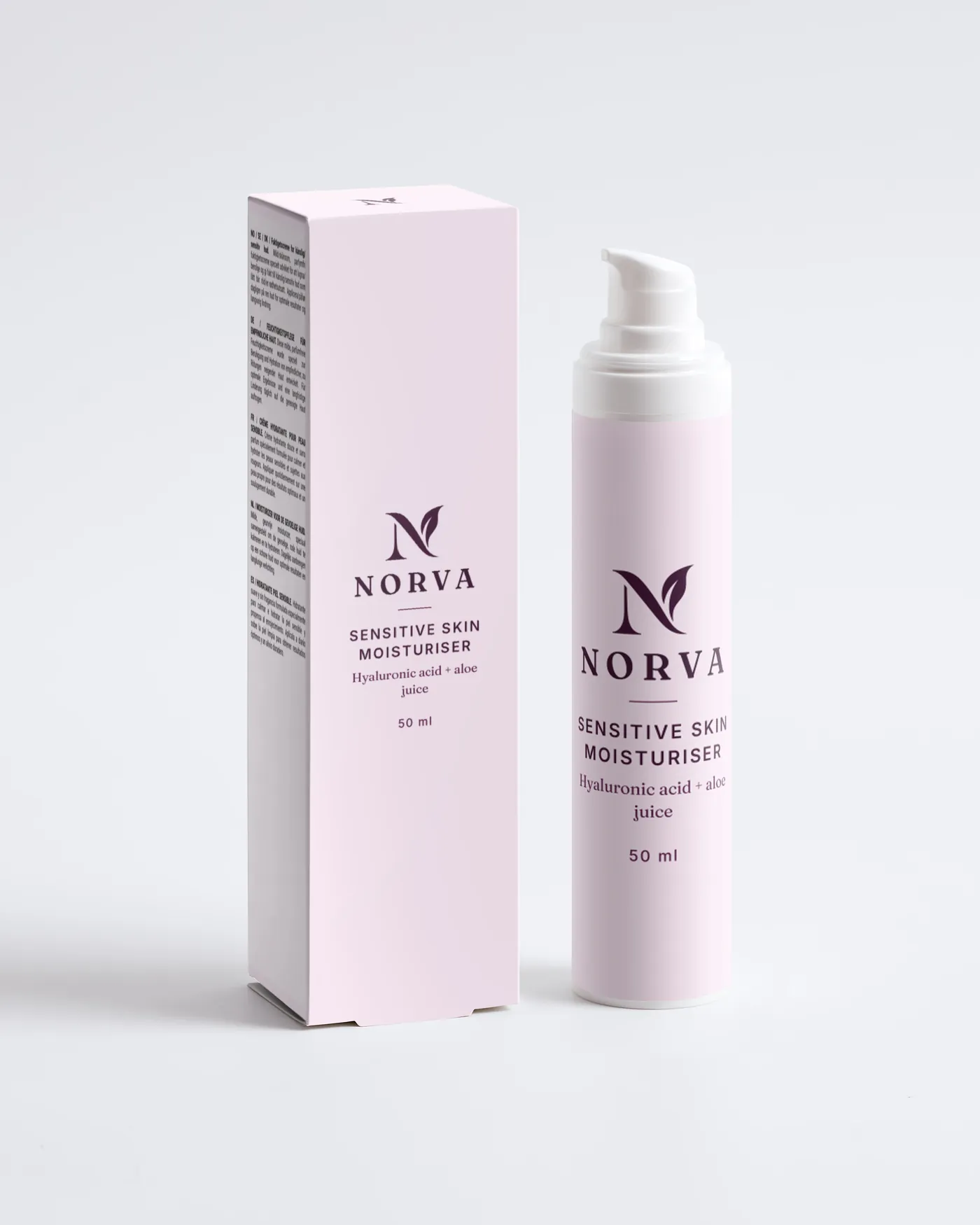
The Sensitive Skin Moisturiser is £32 for 50 ml and it is fragrance-free in the ingredient-list sense: no parfum, no aroma, no essential oils, no named allergens. The list runs aloe leaf juice, glycerin, jojoba oil, pentylene glycol, polyglyceryl-3 stearate, cetearyl alcohol, sodium PCA, coco-caprylate, isoamyl laurate, caprylic/capric triglyceride, water, a red algae extract, octyldodecanol, xanthan gum, cellulose, wild mango kernel butter, potassium hydroxide, sodium hyaluronate, hydrogenated coco-glycerides, tocopherol, ascorbyl palmitate, sodium phytate and hydrolysed hyaluronic acid. Humectants, emollients, a light butter, no scent.
It is made for sensitive and dehydrated skin, has a lightweight, non-greasy finish, and is designed to help reduce the look of redness and irritation while supporting the skin's natural barrier. It is made in the EU. Apply daily to clean skin, morning and evening if you like, on its own or over a serum. Patch test on the inner arm for 24 hours before first use, as with anything new, even fragrance-free.
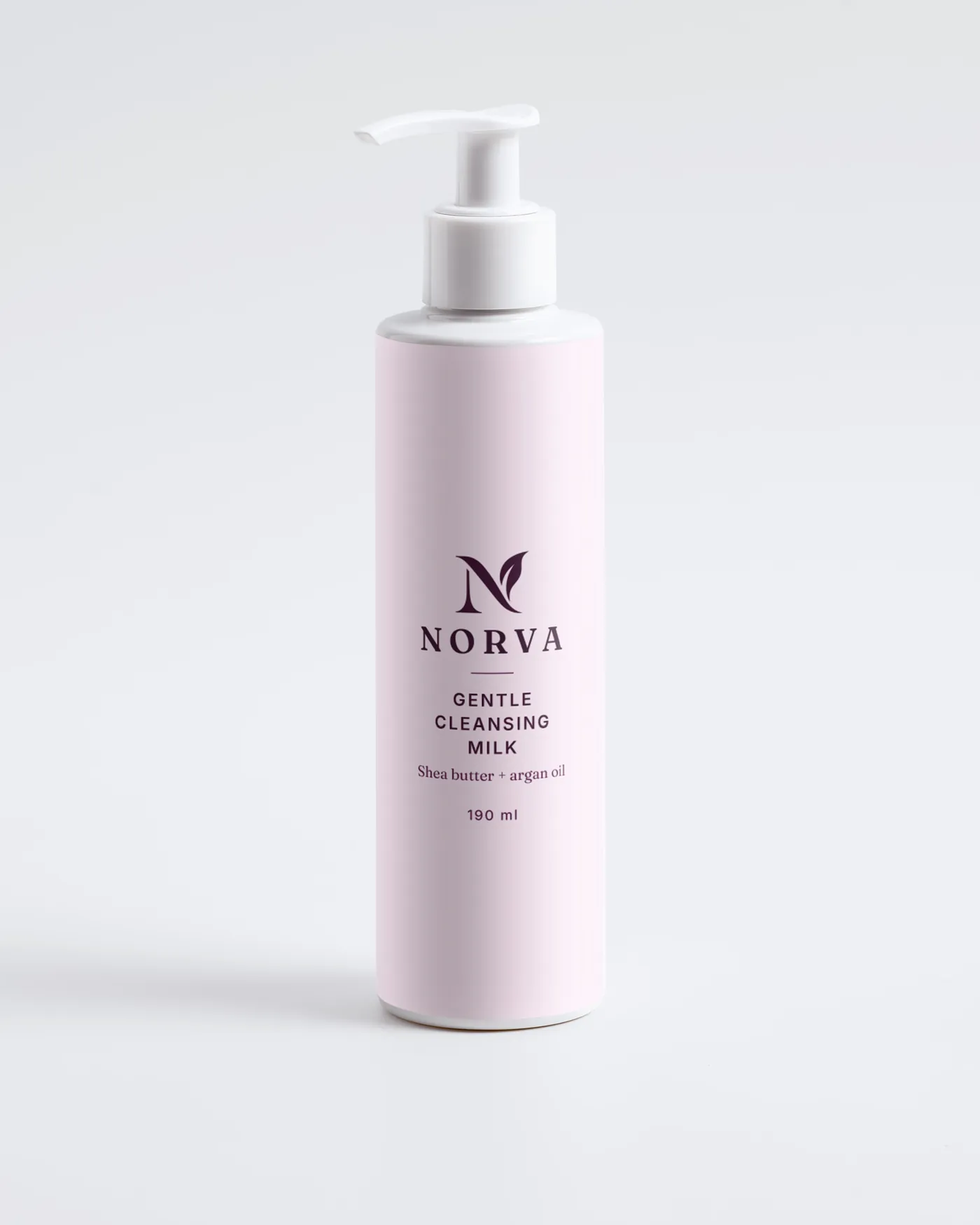
On a subscription it is 10% off every 30 days, 15% off for two every 60 days or 20% off for three every 90 days. It also comes in the Sensitive Skin Essentials set with the Gentle Cleansing Milk and the Sensitive Skin Overnight Cream for £73, £13 less than the three separately. One honesty note on that set: the cleanser is fragranced (green and zesty), and the overnight cream has no added fragrance but carries a mild natural base scent, so the set is not entirely fragrance-free; the moisturiser is. Everything ships to order from the EU in typically 6 to 10 working days, with free UK and EU delivery over £55 and 30-day returns on unused items.
Which of our products contain fragrance
We would rather you knew before you bought. As of today, checked against our own ingredient lists:
Fragrance-free:
- Sensitive Skin Moisturiser (£32, 50 ml)
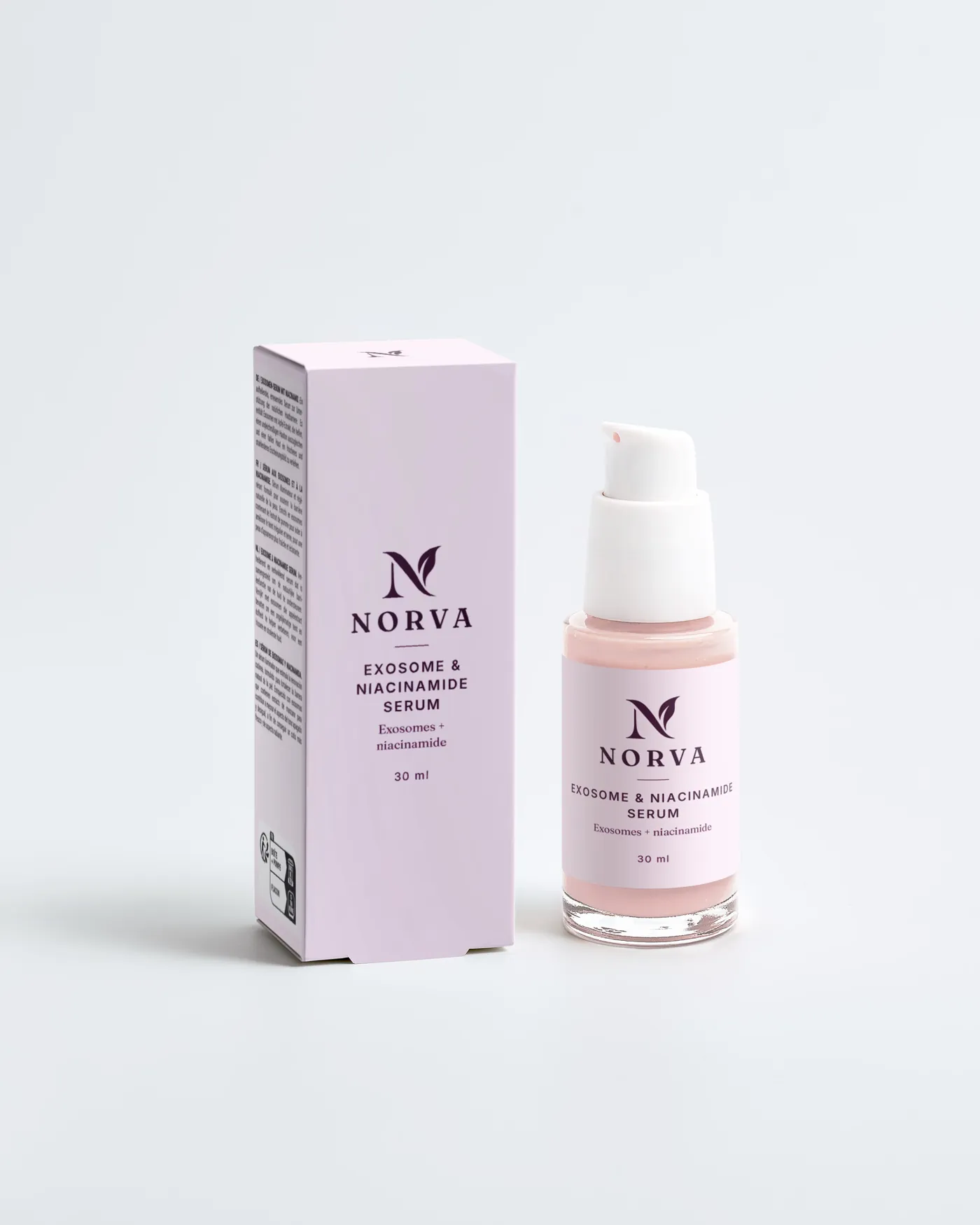
- Exosome & Niacinamide Serum (£30, 30 ml), fragrance-free and suitable for sensitive skin
- Anti-Age Hydrogel Eye Patches (£26, 7 pairs)
- Caffeine + Vitamin C Eye Patches (£26, 7 pairs)
No added fragrance, but a mild natural base scent:
- Sensitive Skin Overnight Cream (£32, 50 ml)
Fragranced (parfum or essential oils on the list):
- Our Peptide Range serums and creams: the Peptide Anti-Ageing Serum, Peptide Ageless AM/PM Cream, Peptide Age-Defying Eye Cream, Hyaluronic Boost Serum and Marine Anti-Ageing Night Cream
- Ceramide Barrier Night Cream, Niacinamide Gel Moisturiser, Retinol Alternative Moisturiser and the Tinted Mineral Sunscreen SPF30
- Hydrating Serum, Vitamin C Serum, Retinol Alternative Serum, Pigment Perfecting Serum, Bioactive Prebiotics Jelly Serum and the Ginkgo Gel Booster
- All of our cleansers, the face mist, the Retinol Alternative Eye Serum, and all of our body care
That is a long fragranced list, and we are not going to pretend otherwise. Most of our customers like a light scent and tolerate it fine. If you do not, the four fragrance-free products above are your shortlist, and the Sensitive Skin Moisturiser is the one this page is about.
How to switch to fragrance-free without wasting money
Change one thing at a time. If you swap moisturiser, cleanser and serum on the same day and your skin improves, you have learned nothing about which one mattered. Moisturiser first, because it sits on skin longest.
Give it two to four weeks. Reactions to fragrance can be delayed, and calming takes time. A three-day trial tells you about texture, not tolerance.
Patch test anyway. Fragrance-free removes one common trigger, not all of them. People react to preservatives, plant extracts and even some emollients. Inner arm, 24 hours.
Keep the scented products you love for later. Once your skin has settled and you have a fragrance-free baseline, you can reintroduce a favourite and see what happens. Plenty of people find they tolerate fragrance fine once the barrier is no longer stripped.
How to test a new moisturiser on reactive skin
Fragrance-free lowers the odds of a reaction. It does not remove them, so this is how we would trial any new moisturiser, ours included, when skin is already touchy.
Day one: inner arm. A coin-sized amount on the inner forearm, left for 24 hours, no washing off. Look for redness, itching or bumps. If anything appears, stop there.
Days two to four: behind the ear or along the jaw. A small area of the face, once a day. This catches reactions that the tougher skin of the arm would not show.
Day five onwards: whole face, at night first. Night use means you are not layering it under SPF or make-up, so any reaction is easier to read. Add the morning application after a week.
Change nothing else. Same cleanser, same serum, same everything for two weeks. If skin improves, the moisturiser gets some credit. If it does not, you know it is not the moisturiser making things worse, which is also useful.
Keep the packaging. If you do react, the ingredient list is what a pharmacist or GP will want to see, and it is what you will compare against the next product to work out the common ingredient.
Most people who follow this find the answer is dull: the moisturiser is fine, and the thing that was stinging was the acid toner. That is a good outcome. Dull is what reactive skin wants.
Who a fragrance-free moisturiser is not for
If you have never reacted to a skincare product, enjoy a scent, and your skin is comfortable, you do not need a fragrance-free moisturiser and you should buy whatever you will use every day. If your skin is red, itchy, cracked or weeping, going fragrance-free is sensible but not sufficient: that pattern can be eczema, dermatitis or an infection and needs a GP, not a new tub. If your redness is mainly flushing, visible vessels and bumps, that may be rosacea and again is a clinical question. And if you are looking for a rich, occlusive night balm, our Sensitive Skin Moisturiser is lighter than that; the Sensitive Skin Overnight Cream is richer but carries a mild base scent.
The bottom line
Fragrance-free means no fragrance ingredients added; unscented means no noticeable smell and may still contain a masking fragrance. Check the ingredient list for parfum, aroma, essential oils and named allergens like linalool and limonene. Around one adult in fifty has a fragrance allergy, and many more benefit from going fragrance-free while reactive skin settles. Our Sensitive Skin Moisturiser at £32 is our fragrance-free moisturiser, made in the EU for sensitive and dehydrated skin. The rest of our range is mostly fragranced, and we have listed which is which above so you do not have to guess.
References
- 1.Diepgen et al. (2015). Prevalence of fragrance contact allergy in the general population of five European countries. British Journal of Dermatology.
- 2.US Food and Drug Administration. Fragrances in Cosmetics (on unscented products and masking fragrance).
- 3.Lynde (2001). Moisturizers: what they are and how they work. Skin Therapy Letter.
- 4.Rawlings and Harding (2004). Moisturization and skin barrier function. Dermatologic Therapy.
- 5.NHS. Atopic eczema: symptoms, when to see a GP and emollients.
Frequently asked questions
What is the difference between fragrance-free and unscented?
Fragrance-free should mean no fragrance ingredients were added. Unscented means the product has no noticeable smell, which can still be achieved by adding a masking fragrance. Read the ingredient list for parfum, aroma or named fragrance allergens.
How do I tell if a moisturiser is really fragrance-free?
Check the ingredient list for parfum, fragrance, aroma, and for named allergens such as linalool, limonene, geraniol, citronellol or coumarin. If none appear, it is fragrance-free in the way that matters.
Who should use a fragrance-free moisturiser?
Anyone with a known fragrance allergy, anyone whose skin is currently stinging or reactive, people with eczema-prone skin, and anyone who wants to remove one variable while working out what their skin reacts to.
Are essential oils fragrance?
Yes, for skin purposes. Essential oils contain the same allergen molecules as synthetic fragrance, such as linalool and limonene, and they must be declared in the same way. A product scented with essential oils is not fragrance-free.
Which Norva products are fragrance-free?
The Sensitive Skin Moisturiser, the Exosome & Niacinamide Serum, the Anti-Age Hydrogel Eye Patches and the Caffeine + Vitamin C Eye Patches. Most of our other products contain fragrance, and we say so on each product page.
Gear for this
Related reading
Fragrance-Free, Unscented and Clean: Reading a Vegan Serum's Ingredient List
The difference between fragrance-free and unscented, what vegan and clean do and do not guarantee, and how to read an INCI list without a chemistry degree.
Skin Barrier Repair: What It Means and How to Do It
How to repair your skin barrier, plainly: what the barrier is, what damages it, the signs, the ingredients with evidence, and a routine that works in weeks.