Loading…
Science
Copper Peptides vs Hexapeptide-11: What the Label Means
10 min read
"Copper peptide serum" is one of the most searched peptide terms in the UK, ahead of any other single peptide. We get asked about it a lot, usually by people who have seen a blue serum on social media and want to know whether ours is the same thing. It is not. We do not sell a copper peptide. Our serum uses hexapeptide-11. This page explains what both are, what has actually been studied, and which one makes more sense for you, including when the answer is "not ours".
Copper peptides vs hexapeptide-11: the short answer
Copper peptides, almost always GHK-Cu, are a naturally occurring tripeptide bound to copper with decades of research behind them, much of it on wound healing and much of it from one research group. Hexapeptide-11 is a yeast-derived six-amino-acid signal peptide with a smaller but independent research base, including a human skin elasticity measurement. Neither has been tested against the other. If you want the peptide with the longest paper trail, that is GHK-Cu, and you should buy it from someone who makes one. If you want a single named peptide at a printed percentage in a serum built for normal to dry skin, ours uses hexapeptide-11 at 2%.
What a copper peptide actually is
The copper peptide in skincare is GHK-Cu. GHK is glycyl-L-histidyl-L-lysine, three amino acids, and the Cu is a copper ion it binds to. It is not a lab invention: GHK is present in human plasma, saliva and urine, and its levels decline with age (Pickart, Vasquez-Soltero and Margolina, 2015). On an ingredient list it shows up as copper tripeptide-1.
Most of what is known about it comes from Loren Pickart, who first isolated it in the 1970s and has published on it for decades. His group's 2015 review in BioMed Research International summarises the claims: that GHK-Cu accelerates wound healing, stimulates collagen and glycosaminoglycan production, restores function to fibroblasts after radiation damage, and in cosmetic studies helped tighten loose skin and improve elasticity, density and firmness while reducing the look of fine lines, photodamage and hyperpigmentation (Pickart, Vasquez-Soltero and Margolina, 2015). A 2018 follow-up in the International Journal of Molecular Sciences adds gene expression data suggesting GHK influences a very large number of human genes, and lists effects far beyond skin, including lung tissue and anti-inflammatory pathways (Pickart and Margolina, 2018).
That is an impressive list. Two honest caveats. First, most of the skin studies were small and many were presented at conferences rather than published in full, so the effect sizes are hard to check. Second, when one group has produced most of the literature on an ingredient, you would like to see independent replication, and there is less of that than the popularity suggests. Our guide to reading small skincare trials is worth ten minutes if you want to weigh claims like these yourself.
None of that means copper peptides do not work. It means the certainty you see in marketing is not matched by the certainty in the literature.
What hexapeptide-11 is
Hexapeptide-11 is a six-amino-acid peptide with the sequence FVAPFP. It was originally isolated from yeast extracts and is now made by solid-state synthesis to high purity (Sklirou and colleagues, 2015). On an ingredient list it appears simply as hexapeptide-11. It belongs to the group cosmetic scientists call signal peptides: peptides intended to nudge skin cells towards particular behaviour rather than to carry a mineral or block a nerve signal (Gorouhi and Maibach, 2009).
The key published study, in Redox Biology, tested it on human skin fibroblasts. Exposure to hexapeptide-11 activated genes tied to the proteasome, autophagy, chaperones and antioxidant responses (the cell's own clean-up and protection systems), and protected the cells against oxidative-stress-induced premature senescence. The same paper reports that in human skin deformation tests, hexapeptide-11 improved skin elasticity, and the authors describe it as a promising anti-ageing agent (Sklirou and colleagues, 2015).
Caveats again. The cell work is cell work. The human elasticity result is one measurement in one study. It is a smaller research base than GHK-Cu, but it comes from a university group rather than the ingredient's discoverer, which is worth something.
How the two differ in the bottle
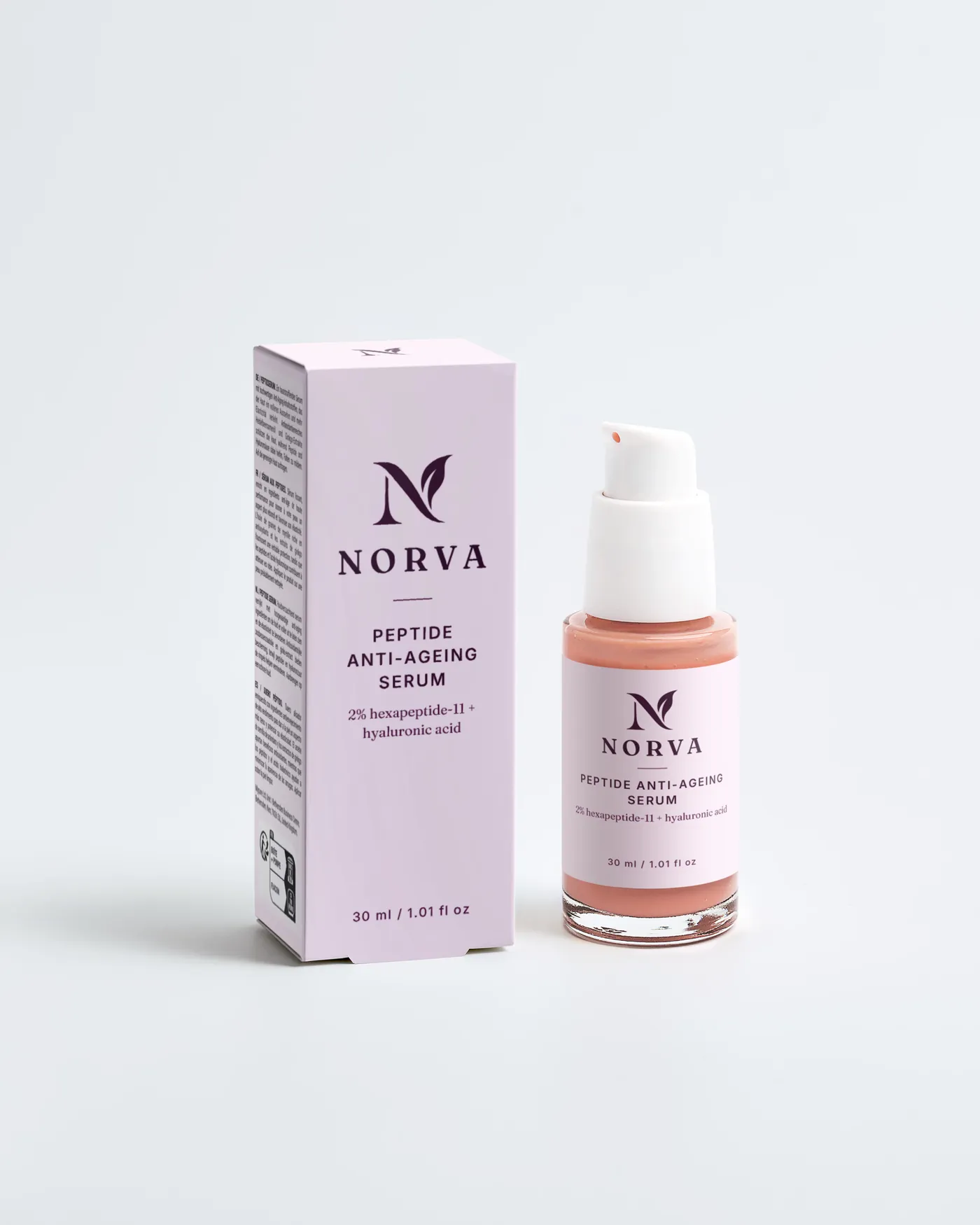
Colour. GHK-Cu serums are usually a pale blue, because the copper complex itself is blue. Hexapeptide-11 serums are whatever colour the base is. Ours has a faint tint from iron oxides.
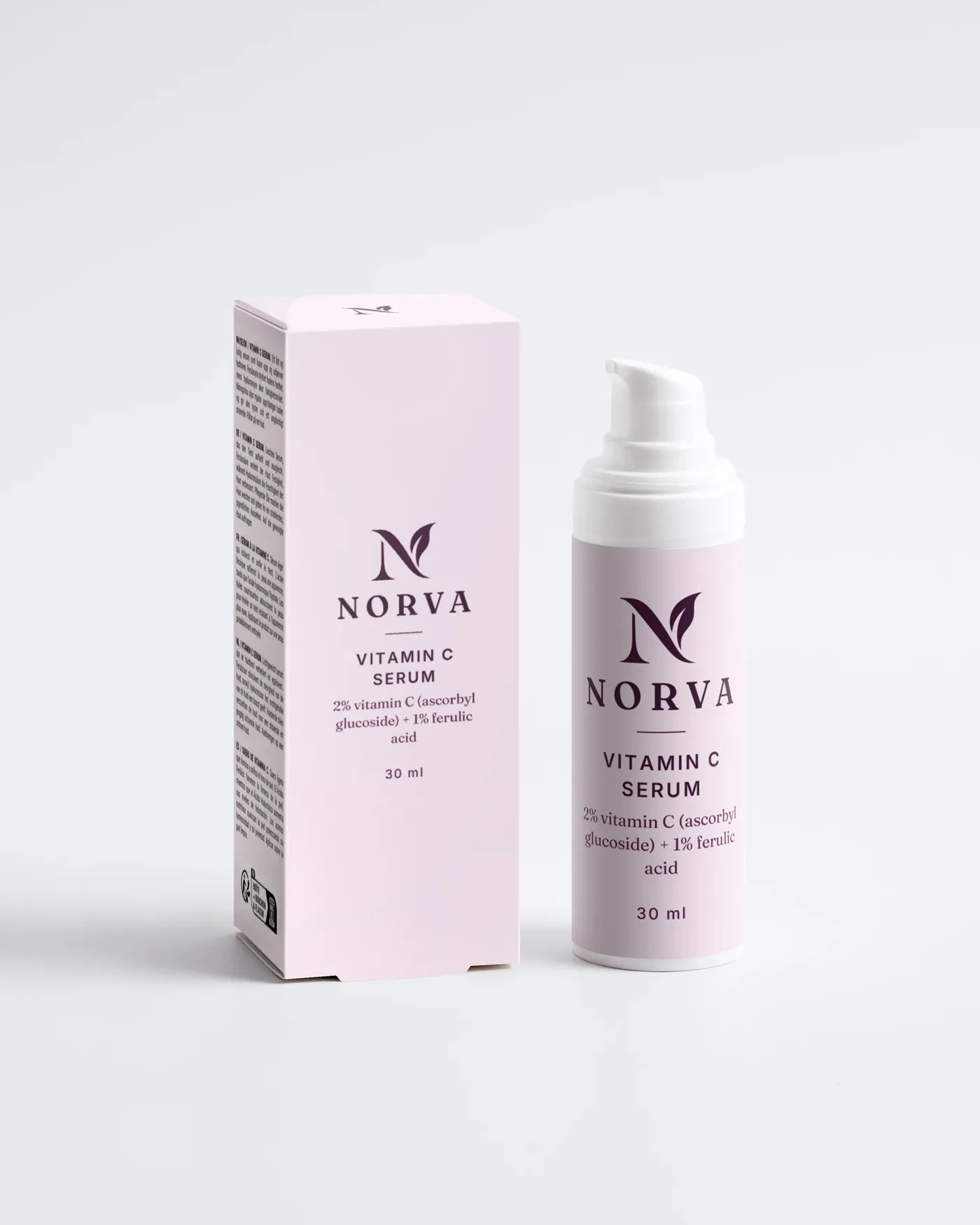
Stability and layering. Copper peptides are sensitive to pH and to strong acids and reducing agents. The common formulator advice is not to layer them directly with pure L-ascorbic acid, high-strength AHAs or, in some cases, retinoids, which is why so many routines end up as "copper in the morning, everything else at night" or the other way round. Hexapeptide-11 does not carry the same layering warnings, and we have designed our serum to sit under any moisturiser and alongside our Vitamin C Serum (2% ascorbyl glucoside, £30). We would still introduce one new product at a time.
Percentage. Copper peptides are typically used at fractions of a percent, so a "1% copper peptide" claim usually refers to a diluted supplier solution rather than pure GHK-Cu. Our serum states 2% hexapeptide-11, which is the figure for the peptide ingredient as supplied to us. When two brands quote percentages of two different peptides, they are not measuring the same thing, and neither number tells you how the product will perform.
Price. Copper peptide serums in the UK run from budget to prestige, and the blue colour is no guide to which you are getting. Ours is £30 for 30 ml, or £27 a month on a subscription.
Which peptide category are you buying?
The 2009 review by Gorouhi and Maibach sorts cosmetic peptides into four groups, and it is the most useful frame for reading any peptide label:
- Signal peptides are meant to prompt skin cells to behave in a particular way. Hexapeptide-11, palmitoyl tripeptide-1 and palmitoyl pentapeptide-4 sit here.
- Carrier peptides deliver a trace element. GHK-Cu is the classic example: the peptide carries copper.
- Enzyme-inhibitor peptides are meant to slow enzymes that break down skin proteins. Some rice and soy peptides are in this group.
- Neurotransmitter-inhibitor peptides are meant to reduce muscle contraction at the surface. Acetyl hexapeptide-8 (Argireline) is the well-known one.
So the copper-versus-hexapeptide-11 question is really carrier peptide versus signal peptide. They are aiming at different things. That is why "which is stronger" is the wrong question and "which do I want" is the right one.
Where the evidence stops
No published trial has put a GHK-Cu serum against a hexapeptide-11 serum on the same faces. That is true of almost every pair of cosmetic peptides. The category grew faster than the research, and companies have little reason to fund a trial they might lose.
What we can say is that for either peptide, the visible change to expect is on the order of "skin looks a little smoother and firmer after eight to twelve weeks of twice-daily use", not a structural rebuild. These are cosmetic ingredients. They help skin look and feel a certain way. A GP or dermatologist is the right person for anything that is a condition rather than an appearance.
Who should buy a copper peptide serum instead of ours
We would point you elsewhere if:
- You specifically want GHK-Cu. We do not make it, and we are not going to talk you out of a well-researched ingredient just because we sell a different one.
- You want the peptide with the longest research history. That is copper. Multi-peptide products like Medik8's Liquid Peptides include copper peptides in a ten-peptide blend at £59 for 30 ml (Medik8 UK page, checked 29 September 2026), and there are single-ingredient copper serums at every price.
- You are already happy with a copper routine. Do not switch on our account. Consistency beats novelty in this category every time.
Who might prefer hexapeptide-11
Our Peptide Anti-Ageing Serum (£30, 30 ml) fits if:
- You want one peptide at a stated percentage and would rather understand your serum than collect ingredients.
- You want to layer freely. No copper means no worries about acids or vitamin C in the same routine.
- Your skin runs normal to dry. The base has jojoba oil, aloe leaf juice and hyaluronic acid in two forms, so it does more moisturising work than a water-gel copper serum.
- You do not mind a light scent. The serum is fragranced, delicate floral with soft amber notes, with linalool, geraniol and citronellol from natural essential oils on the list. If fragrance is a problem for you, that is a reason to look at a fragrance-free copper serum, or at our fragrance-free Exosome & Niacinamide Serum.
On a subscription the serum is £27 every 30 days, £51 for two every 60 days, or £72 for three every 90 days. As part of The Peptide Routine with the matching cream and eye cream it is £73 for the three, £13 less than buying them separately. Everything is made to order in the EU, typically 6 to 10 working days, with free UK and EU delivery over £55 and 30-day returns on unused items.
Using either one properly
Whichever peptide you choose, the method is the same: clean, slightly damp skin, serum first, moisturiser on top, sunscreen in the morning, twice a day for at least eight weeks before you judge. Our peptide skincare routine lays it out step by step, and how to apply serums and in what order covers where other actives fit. Patch test on the inner arm for 24 hours before first use. Copper peptides in particular can cause a reaction in a minority of people, and the blue colour makes any staining of light towels obvious, which is a small thing but a real one.
Reading a copper peptide label
If you do go and buy a copper serum, here is what we would look at, because the category has some habits worth knowing.
The INCI name. GHK-Cu appears as copper tripeptide-1. Some products use related copper peptides such as copper palmitoyl heptapeptide-14, which is a different molecule with its own, much smaller, literature. "Copper peptide complex" without a name tells you nothing.
The colour versus the list. A genuine GHK-Cu serum is faintly blue on its own. If the ingredient list also carries a blue dye (CI 42090, for example), the colour is not telling you anything about the copper content.
What else is in there. Copper peptides are often sold alongside acids or high-dose vitamin C in the same bottle, which is exactly the combination formulators usually advise against layering. A short, simple list is a good sign here.
The percentage claim. A "1%" or "2%" copper peptide figure almost always describes a supplier solution, so it cannot be compared with a percentage of a different peptide. Look instead at where the peptide sits in the list and whether the brand explains what the number means.
Fragrance. Same as with any serum: parfum, essential oils and named allergens on the list mean fragrance, whatever the front says. Reactive skin and a new active are a bad time to add that variable.
Who this page is not for
If you are hoping for a verdict that copper peptides are a scam, you will not get one; the research is real, if uneven. If you want us to say hexapeptide-11 is proven better, we cannot, because nobody has tested that. And if your interest in peptides is for a wound, a scar or a medical skin condition, that is outside cosmetics entirely and a conversation for a clinician, not a serum page.
The bottom line
Copper peptides (GHK-Cu) are a carrier peptide with decades of research, mostly from one group, and a strong following. Hexapeptide-11 is a signal peptide with a smaller, independent evidence base including a human elasticity result. Neither is proven better than the other. If you want copper, buy copper from a brand that makes it. If you want a single disclosed signal peptide in a richer base, our Peptide Anti-Ageing Serum is £30, or £27 a month.
References
- 1.Pickart, Vasquez-Soltero and Margolina (2015). GHK Peptide as a Natural Modulator of Multiple Cellular Pathways in Skin Regeneration. BioMed Research International.
- 2.Pickart and Margolina (2018). Regenerative and Protective Actions of the GHK-Cu Peptide in the Light of the New Gene Data. International Journal of Molecular Sciences.
- 3.Sklirou et al. (2015). Hexapeptide-11 is a novel modulator of the proteostasis network in human diploid fibroblasts. Redox Biology.
- 4.Gorouhi and Maibach (2009). Role of topical peptides in preventing or treating aged skin. International Journal of Cosmetic Science.
- 5.Medik8 Liquid Peptides UK product page, checked 29 September 2026.
Frequently asked questions
What is a copper peptide?
The copper peptide used in skincare is almost always GHK-Cu: the tripeptide glycyl-L-histidyl-L-lysine bound to a copper ion. It occurs naturally in human plasma and has been studied for wound healing and skin appearance since the 1970s.
Are copper peptides better than other peptides?
They have the longest research history of any cosmetic peptide, much of it from one research group. Whether they are better for how your skin looks than a signal peptide like hexapeptide-11 has not been tested head to head. Neither is proven superior.
Can I use copper peptides with vitamin C?
Many formulators advise against layering copper peptides directly with pure L-ascorbic acid or strong acids. Most people either use them at different times of day or pick one. Our Vitamin C Serum uses ascorbyl glucoside, but we would still keep it in a different step from a copper serum.
Do you sell a copper peptide serum?
No. Our peptide serum uses 2% hexapeptide-11. If you specifically want GHK-Cu, another brand will serve you better and we say so on this page.
Why does a copper peptide serum look blue?
The blue colour is the copper complex itself. A pale blue tint in a GHK-Cu serum is normal and not a dye, though some brands do add colour, so check the ingredient list.
Gear for this
Related reading
Why a Small 28-Day Skincare Trial Is Weak Evidence: A Worked Example
A 49-person, 28-day study of a peptide cream reported dermatologist-assessed improvements. Using it as a case study in how to read the clinical claims on any product page.
Peptide Skincare Routine: When to Use Peptide Serum, AM and PM
When to use peptide serum: morning and night, on clean skin, before cream. A simple peptide skincare routine with the order of serum, eye cream and cream.
How to Apply Your Skincare, and in What Order
Where each Norva product sits in a morning and evening routine, how to layer a serum under a cream without pilling, and the order for the Peptide Routine, the Barrier Reset Routine and Sensitive Skin Essentials.