Loading…
Guide
Skin Barrier Repair Cream: How to Choose One That Works
10 min read
If your skin stings when you wash it, feels tight ten minutes after moisturising and has started flaking in patches, you have probably searched for a skin barrier repair cream. Good instinct. A cream is the single most useful product in a barrier routine, because it is the one that puts lipids back. The trouble is that "barrier repair" is now printed on everything from supermarket tubs to department-store jars. We make one. Here is how we would choose, including the parts where ours is not the right pick.
What is a skin barrier repair cream and does it work?
A skin barrier repair cream is a moisturiser built around the lipids your skin barrier is made of, mainly ceramides, with humectants to hold water and a base gentle enough for skin that is already reactive. Used at night over a few weeks, alongside stopping whatever was damaging the barrier, it helps skin feel comfortable and look calmer and less flaky. That is what "works" means here: a cosmetic effect on how skin looks and feels. It does not treat eczema or dermatitis, and a cream will not out-repair a routine that is still stripping the barrier every other night.
Why a cream specifically
The stratum corneum is the outermost layer of skin, and its barrier function comes from a lipid "mortar" between flattened dead cells. That mortar is mostly ceramides, cholesterol and free fatty acids, with certain ceramides bound to the cell envelope forming the scaffold everything else organises around (Proksch, Brandner and Jensen, 2008). When it is depleted, water escapes faster and irritants get in.
A serum can add water and a few actives. A cream can add lipids in quantity, plus occlusive and emollient ingredients that slow water loss while the skin makes its own mortar again. That is why, in a barrier routine, the cream is the load-bearing step. If you can only buy one product, buy this one.
Dermatologists sort moisturiser ingredients into four working groups: occlusives, which slow water leaving; humectants, which draw and hold water; emollients, which smooth and soften; and protein rejuvenators (Lynde, 2001). A good barrier cream has the first three, and most commercial moisturisers use components of several classes at once.
What the evidence says about the ingredients
Ceramides. These are the direct approach: put back the lipid the barrier is short of. A 2018 study tested a cream formulated to mimic the skin's own moisturising systems, with ceramides and natural moisturising factor components, against three over-the-counter moisturisers and a placebo. The ceramide cream significantly decreased transepidermal water loss over 24 hours and gave significantly greater hydration at 24 hours than all three reference products (Spada, Barnes and Greive, 2018). Earlier, a review of moisturiser research noted that a ceramide-dominant lipid mixture improved atopic dermatitis and lowered water loss in an open-label study in children (Loden, 2003).
Plant butters and oils. Shea butter, cocoa butter and jojoba oil bring fatty acids and sterols, which sit in the emollient and occlusive camps. They are not as specific as ceramides but they do the slow-water-loss job well, and they are what makes a night cream feel like a night cream.
Humectants. Glycerin, hyaluronic acid and sodium PCA hold water at the surface. This is not a side benefit. Every stage of barrier repair, from strengthening the corneocytes to processing lipids to producing natural moisturising factor, depends on the stratum corneum being adequately hydrated (Rawlings and Harding, 2004). A cream that is all oil and no humectant is missing half the job.
Occlusives. Petrolatum has an immediate barrier-repairing effect on lipid-stripped skin (Loden, 2003). It is not in our cream and it is not glamorous. If your barrier is badly stripped, a thin layer of plain petroleum jelly over any cream at night for the first week is cheap and effective.
What to be wary of. The same review warns that some formulations can worsen skin condition and that emulsifiers may weaken the barrier (Loden, 2003). In practice: if a "barrier" cream stings, or leaves skin tighter an hour later, it is not doing what the label says, whatever the price.
Our Ceramide Barrier Night Cream
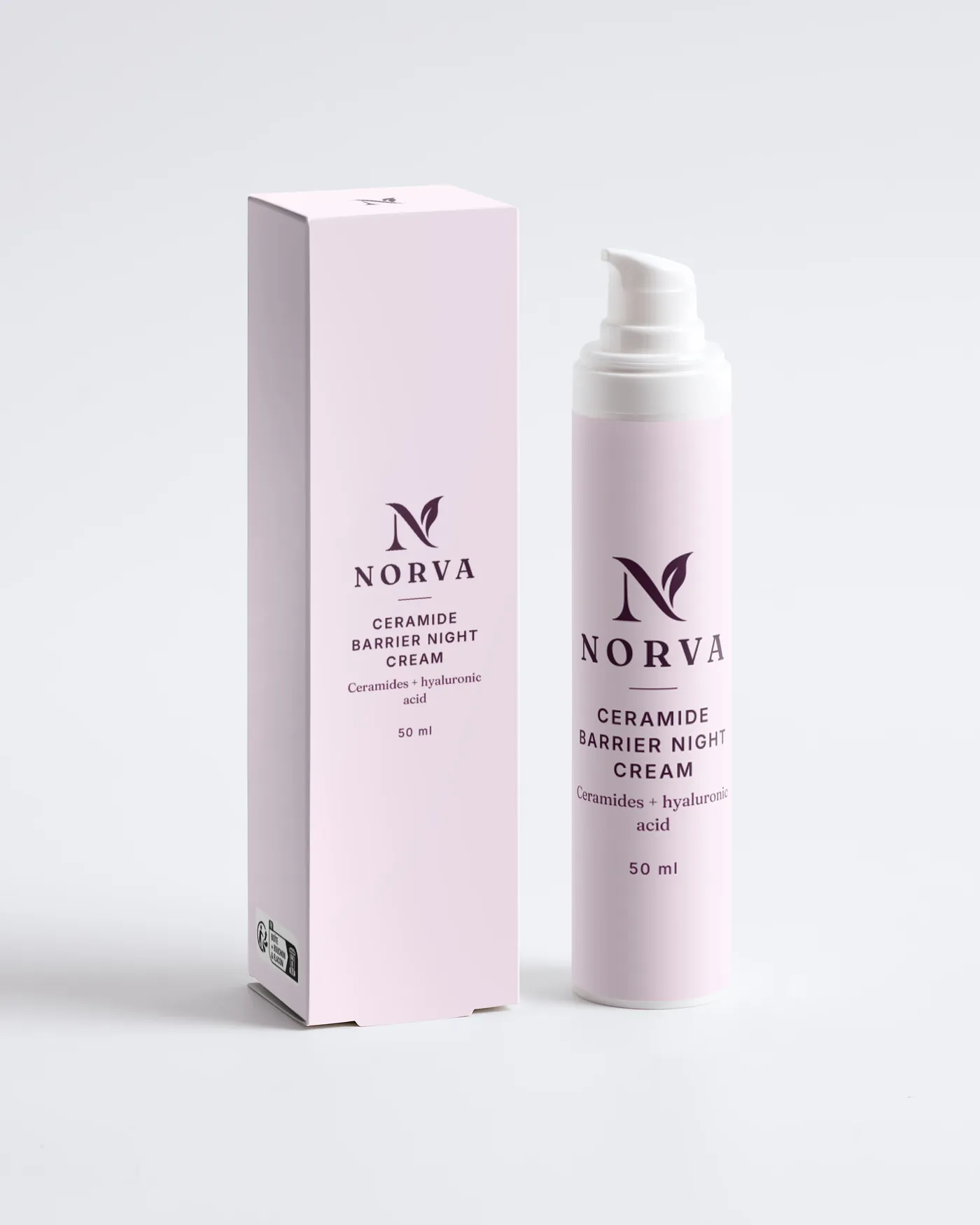
The Ceramide Barrier Night Cream is £32 for 50 ml. It is built for normal, dry and barrier-stressed skin, and it is a night cream on purpose, because that is when skin does most of its repair and when you do not need it to behave under make-up.
What is in it, from the ingredient list: ceramides (listed as glycosphingolipids), hyaluronic acid (sodium hyaluronate), sodium PCA and glycerin for the humectant side, and cocoa butter, shea butter, jojoba oil and sunflower oil for the lipid side, in an aloe leaf juice base. Sea buckthorn, peony, elder and cranberry seed oil extracts round it out. It glides on, which matters when skin is sore, and it is made in the EU.
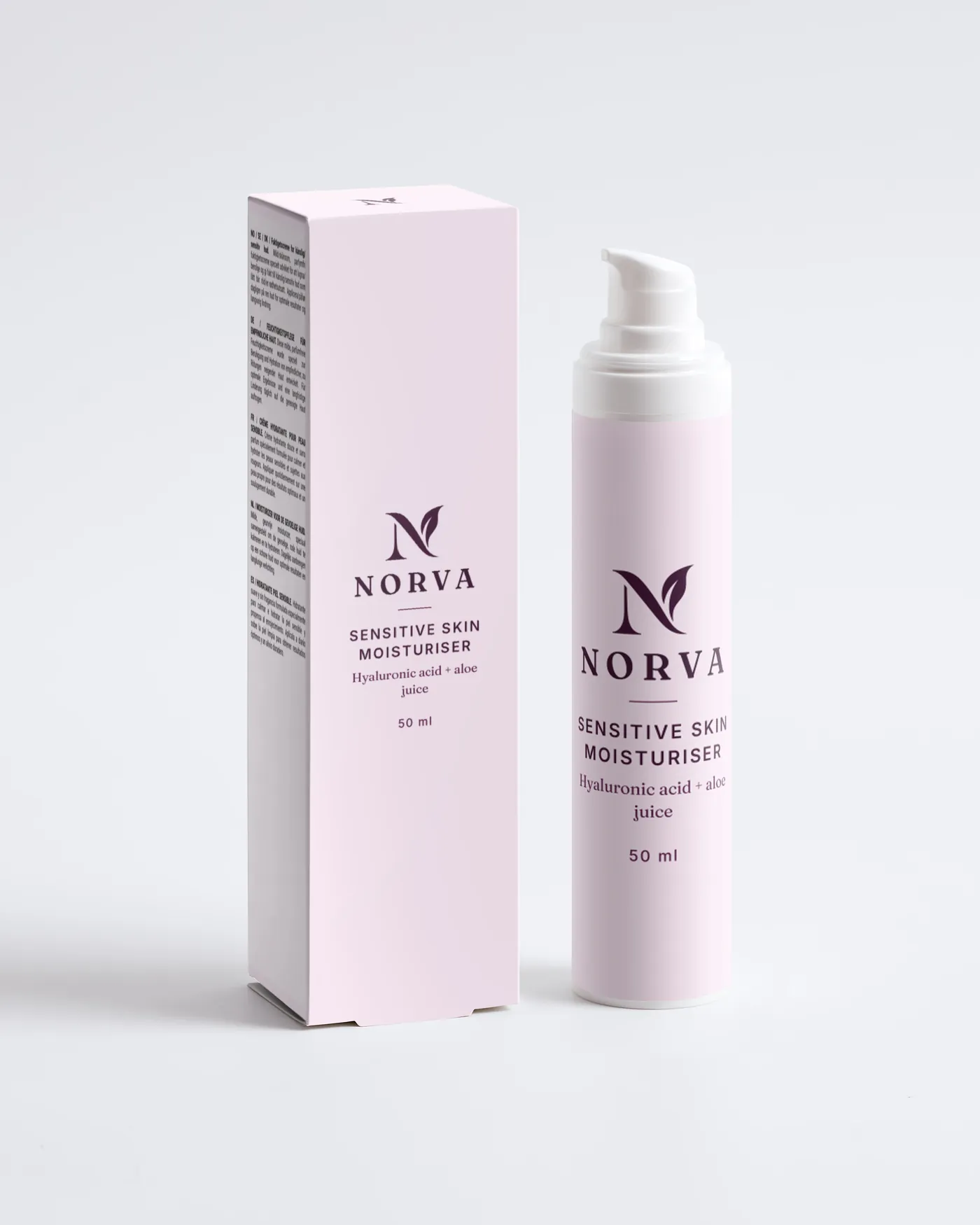
Two honest points. First, it is fragranced: white flowers and fresh lavender, with parfum, linalool and limonene on the list. Most people are fine with that. In a patch-test study of 3,119 adults across five European countries, around 1.9% had a fragrance contact allergy, roughly twice as many women as men (Diepgen and colleagues, 2015). If you are in that group, or you do not know yet and your skin is currently very reactive, our fragrance-free Sensitive Skin Moisturiser (£32, 50 ml) is the safer place to start, and fragrance-free vs unscented explains why those two labels are not the same thing.
Second, we do not publish a ceramide percentage, so we will not tell you it matches the study formula above. We are telling you which ingredient class it is built on and what that class has shown.
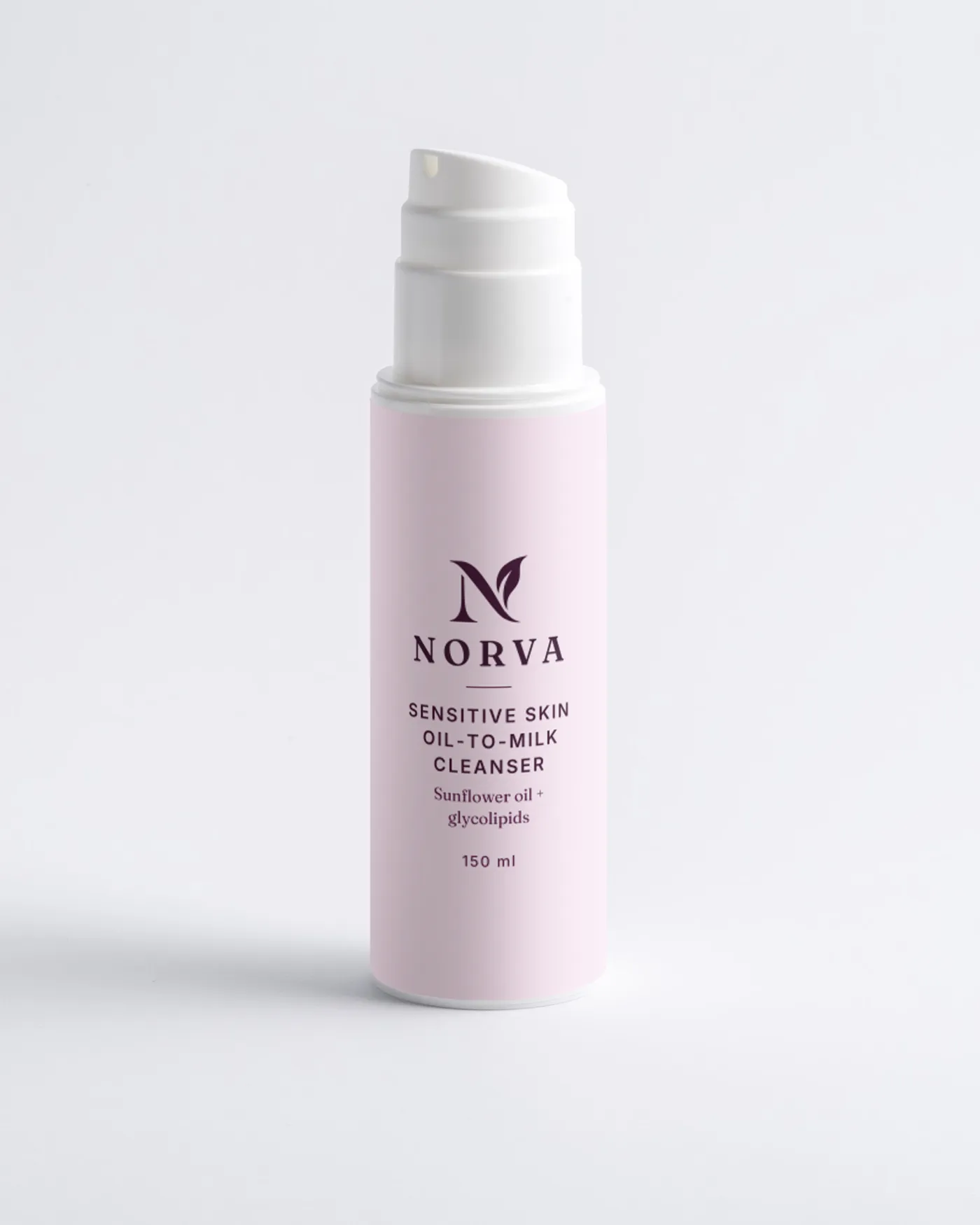
On a subscription the cream is 10% off every 30 days, 15% off for two every 60 days or 20% off for three every 90 days. It is also the night step in the Barrier Reset Routine, alongside the Sensitive Skin Oil-To-Milk Cleanser and the Bioactive Prebiotics Jelly Serum, £75 for the three, which is £13 less than separately. Made to order and shipped from the EU in typically 6 to 10 working days, free UK and EU delivery over £55, 30-day returns on unused items.
How to choose a barrier repair cream: the checklist
Whether you buy ours or someone else's, this is what we would check.
- Ceramides in the ingredient list. Look for "ceramide NP", "ceramide AP", "ceramide EOP" or "glycosphingolipids". If the word ceramide appears only on the front and not in the list, it is marketing.
- A humectant and a lipid, not one or the other. Glycerin or hyaluronic acid plus a butter or oil.
- Nothing that stings. Alcohol denat high on the list, strong essential oils, menthol and high-strength actives have no place in a barrier cream.
- Fragrance that you have decided about. Fragranced is fine if you tolerate it. If you are currently reacting to everything, go fragrance-free until you have calmed down and can test one variable at a time.
- A texture you will use every night. Too heavy and it ends up in the drawer. Too light and it is a day cream with a barrier label.
- A price you can sustain. Barrier repair is a weeks-long habit. An expensive jar used sparingly loses to a £32 one used every night.
How to use a skin barrier repair cream
Night. Cleanse with lukewarm water and something gentle. Pat dry, leave skin slightly damp. If you use a hydrating serum, apply it now. Then a pea-to-hazelnut amount of cream over the whole face and neck, pressed in rather than rubbed. Do not skip the neck; it flakes too.
Morning. You can use the same cream, but most people prefer something lighter under SPF. Our Sensitive Skin Moisturiser is the obvious daytime partner if you want to stay fragrance-free.
Frequency. Every night, for at least four weeks, before you judge. Skin turnover is slow.
What to pause while you use it. Exfoliating acids, retinoids, scrubs and high-strength vitamin C. A barrier cream cannot repair faster than those remove. Reintroduce one at a time once the stinging stops. Our full guide to skin barrier repair has the week-by-week version, and how do I repair my skin barrier on my face is the short answer if you only have two minutes.
What to expect and when
Nights one to three: skin feels comfortable going to bed and less tight in the morning.
Weeks one to two: stinging from your cleanser fades. Redness after showering settles faster.
Weeks three to six: flaky patches smooth out. Make-up sits better. Skin looks calmer and more even.
If nothing has improved after six weeks of nightly use with your actives paused, the cream is not the problem and neither, probably, is your routine. That is the point to see a GP, because persistent dry, itchy, cracked skin can be eczema or dermatitis rather than a cosmetic barrier issue.
Barrier cream, barrier serum or barrier moisturiser?
People ask us which one to buy. The honest ranking for a stripped barrier is: cream first, because it carries the lipids. Then a hydrating serum underneath if your skin is dehydrated as well as stripped. A light "barrier moisturiser" for daytime is a nice-to-have, not the foundation. If your budget is one product, make it the cream and put petroleum jelly over it for the first week.
Face cream, body cream, or the same tub for both?
People ask whether they can use a face barrier cream on their body, or a body cream on their face. Technically yes in both directions; practically, no.
Face barrier creams are formulated for thinner, more reactive skin and sold in 50 ml jars, so using one on your shins is an expensive way to get through it in a fortnight. Body creams are built for thicker skin on arms and legs, often with higher levels of actives like urea, and are sold in bigger tubes. Our 5% Urea + 2% Panthenol Body Cream is £28 for 280 ml, and both of its actives have barrier-repair evidence of their own, but 5% urea is more than most faces want, and the fragrance is fresh cucumber with lemon and thyme, which is not what we would put on a stripped cheek.
The exception is the neck and chest. Treat those as face: same cream, same gentleness, same nightly habit. They flake and redden just as readily and they get forgotten.
So: a 50 ml ceramide cream for face, neck and chest at night; a bigger body cream for everything below the collarbone; and if you can only stretch to one, the face cream, because that is where the barrier trouble shows and stings first.
Who this is not for
If your skin is oily and acne-prone and not actually stripped, a rich ceramide night cream may be more than you need and could feel heavy; a lighter gel moisturiser with niacinamide will suit you better. If you react to fragrance, ours is not the one, and we have said so twice now on purpose. If you have diagnosed eczema, psoriasis or dermatitis, a cosmetic barrier cream can sit alongside your prescribed emollient but does not replace it, and your GP or pharmacist should know what you are using. And if you want a cream that lets you keep using an acid toner every night, no cream can do that.
The bottom line
A skin barrier repair cream should be built on ceramides and other barrier lipids, carry humectants to hold water, and contain nothing that stings. Use it every night for at least four weeks while you pause the things that were causing the damage. Our Ceramide Barrier Night Cream is £32 for 50 ml, EU-made, with ceramides, hyaluronic acid, shea, cocoa and jojoba, and a white flowers and lavender scent. If you need fragrance-free, start with the Sensitive Skin Moisturiser instead. Patch test on the inner arm for 24 hours before first use.
References
- 1.Proksch, Brandner and Jensen (2008). The skin: an indispensable barrier. Experimental Dermatology.
- 2.Spada, Barnes and Greive (2018). Skin hydration is significantly increased by a cream formulated to mimic the skin's own natural moisturizing systems. Clinical, Cosmetic and Investigational Dermatology.
- 3.Loden (2003). Role of topical emollients and moisturizers in the treatment of dry skin barrier disorders. American Journal of Clinical Dermatology.
- 4.Lynde (2001). Moisturizers: what they are and how they work. Skin Therapy Letter.
- 5.Rawlings and Harding (2004). Moisturization and skin barrier function. Dermatologic Therapy.
- 6.Diepgen et al. (2015). Prevalence of fragrance contact allergy in the general population of five European countries. British Journal of Dermatology.
Frequently asked questions
What should a skin barrier repair cream contain?
Look for barrier lipids (ceramides, cholesterol, fatty acids from plant butters and oils), humectants (glycerin, hyaluronic acid, sodium PCA) and a low-irritation base. Skip anything with alcohol high on the list or that stings on application.
Is a barrier repair cream the same as a moisturiser?
Every barrier cream is a moisturiser, but not every moisturiser is a barrier cream. The difference is the lipid content. A barrier cream is built around ceramides and richer emollients; a light day moisturiser may be mostly water and humectants.
Should I use a barrier repair cream morning or night?
Night is the priority. Skin does most of its repair while you sleep and you do not need the cream to sit under make-up or SPF. A lighter moisturiser in the morning is fine.
How long before a barrier cream makes a difference?
Comfort improves within a few nights. Visible changes to flaking and redness take two to six weeks of consistent use, alongside pausing whatever was damaging the barrier in the first place.
Does your Ceramide Barrier Night Cream contain fragrance?
Yes. It is scented with white flowers and fresh lavender, and the ingredient list includes parfum, linalool and limonene. If you react to fragrance, our Sensitive Skin Moisturiser is fragrance-free.
Gear for this
Related reading
Skin Barrier Repair: What It Means and How to Do It
How to repair your skin barrier, plainly: what the barrier is, what damages it, the signs, the ingredients with evidence, and a routine that works in weeks.
Fragrance-Free, Unscented and Clean: Reading a Vegan Serum's Ingredient List
The difference between fragrance-free and unscented, what vegan and clean do and do not guarantee, and how to read an INCI list without a chemistry degree.